

This article is brought to you by American Purpose, the magazine and community founded by Francis Fukuyama in 2020, which is proudly part of the Persuasion family.
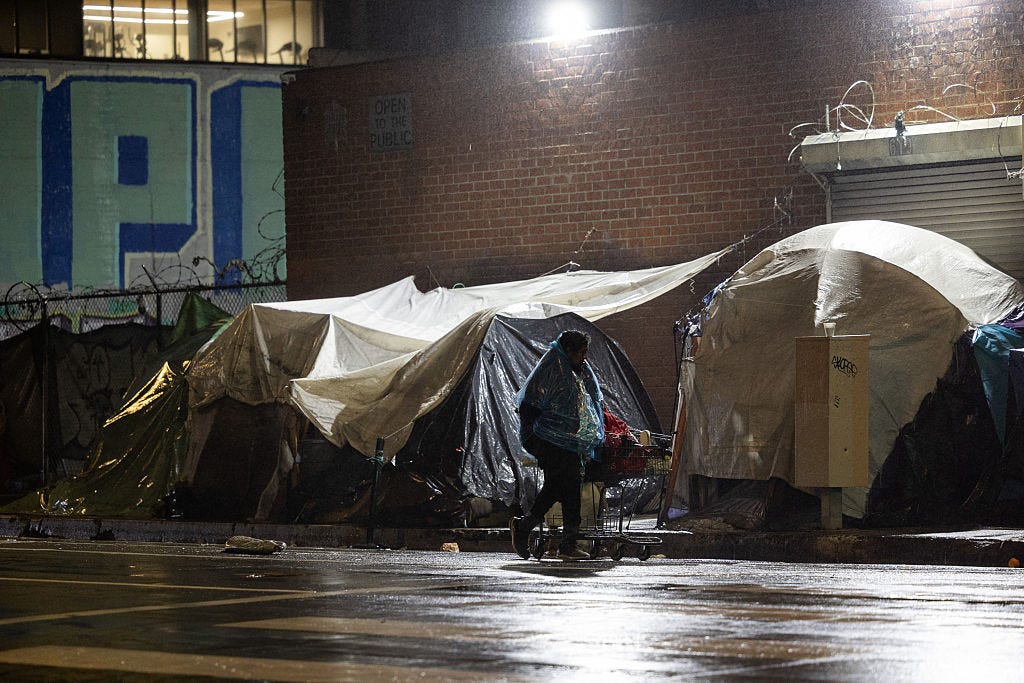
At a time when we desperately seek hope, Los Angeles’ continuing crisis of homelessness is an unlikely place to look. Indeed, LA’s homelessness is Exhibit Number One in Ezra Klein and Derek Thompson’s indictment of progressive governance in their best-selling 2025 book Abundance.
But hope can be evoked in a variety of ways.
Abundance is a clarion call for bold, decisive action. It offers a vision of a public sector that again plays its crucial market-complementing role of helping to build the things needed for a good life, and, in so doing, helps renew the legitimacy of the public sphere. The case for Abundance-style top-down decisiveness is compelling—but only for some problems, and only some of the time.
As those of us who spent decades wrestling with the challenges of achieving practical gains in the midst of political and institutional complexity have learned, while some problems lend themselves to high-visibility boldness, others call for effort that—though also results-focused—gives more weight to deliberation, transparency, and collaboration with non-governmental stakeholders: a marathon rather than a sprint. Misdiagnosing the nature of the problem at hand can result in overpromising, disillusionment, and deepening cynicism.
LA’s evolving effort to address homelessness offers valuable insight into both the hazards of over-promising and, in recent years, the gains that can come from an approach centered around engaging with complexity—skillfully, determinedly—and focusing on results.
At first sight, LA’s homelessness challenge can appear well-suited to top-down action: provide support and affordable housing for the 70,000 or so people identified as homeless in early 2025, about 50,000 of whom live on the streets. Housing 50-70,000 people with little or no capacity to support themselves in the near term is a formidable, but seemingly manageable, task. As per the title of an influential book that provides an important building block for Abundance’s critique of progressive governance in LA, the cause—and remedy—of LA’s homelessness crisis seems straightforward: Homelessness is a Housing Problem. LA has among the most expensive housing markets in the United States. Address the regulatory obstacles and other cost drivers of affordable housing and, over time, LA’s homelessness crisis would largely solve itself.
In 2016 and 2017, LA voters approved both a $1.2 billion bond for new affordable housing, and a new one-quarter percent sales tax to finance homeless services. However, within a few years it became apparent that these initiatives fell far short of what was needed.
Lack of effort is not the reason for the continuing shortfall. Contrary to popular perception, LA has a large-scale program underway to address its homelessness crisis. In 2024, for example, roughly 30,000 people lived in permanent supportive housing; an additional 20,000 received time-limited rental subsidies or vouchers to help them exit homelessness; and about 35,000 people spent some time in interim housing facilities. Further, innovative “encampment resolution” programs—the city’s Inside Safe program, and the county’s Pathway Home program—helped achieve a decline of about 15 percent between 2023 and 2025 in the number of people living on the streets. But it is very uncertain whether these gains can be sustained, both because of new fiscal challenges (on which more a little later), and because the usual way in which homelessness is understood captures only the tip of the iceberg of LA’s challenge.
Homelessness generally is measured in annual point-in-time counts—but the resulting number reflects only a moment in an ongoing flow. In LA County, roughly 60,000 people become newly homeless each year, a cumulative total of 300,000 people over five years. While most self-resolve within a year or two, a significant minority become chronically homeless, with deepening mental health and substance abuse challenges.
To keep pace with the ongoing inflow, a fully scaled-up response requires far more resources than were authorized in 2016 and 2017. The cost of providing permanent supportive housing in LA is in the order of $40,000 per adult household per year—an amount that, reflecting LA’s exorbitant housing costs, is roughly double the national average of $20,000. Add the costs of temporary rental support for people exiting homelessness, of interim housing, of outreach and basic services for people living on the street, of prevention assistance for households on the brink of becoming homeless, and of system administration—and the total annual spending for a response scaled to decisively resolve LA’s homelessness crisis would be well in excess of $2 billion.
Resources aside, addressing homelessness also raises difficult questions about competing interests and competing values. Without a stronger sense of shared purpose, hyper-local civic and political opposition can put sand in the wheels of state-level reforms to ease regulatory and local-zoning constraints on the construction of new housing. Also, from a radically different perspective, attempts to ruthlessly clear unsheltered homeless people from the streets, without regard for the many ways in which they are vulnerable—and with nowhere for them to go—will (appropriately) be met with revulsion and resistance.

Homelessness is thus a classic example of a “wicked” problem—one that is politically contested, value-laden, and embedded in complex social systems with multiple, conflicting stakeholder perspectives. Problems like these need something very different from top-down assertions of authority. They need a foundation of broad-based civic legitimacy: goals that are clear, ambitious, achievable, and widely accepted; public resources that are used efficiently and effectively; and processes of decision-making that help narrow the gap between civil society and formal political and bureaucratic processes—doing so in a way that is radically different from the performative and time-consuming public engagement processes devastatingly critiqued in Abundance.
This brings us to governance.
Unlike, say, New York City, where decision-making is centralized, governance in the LA region is notoriously fragmented: responsibilities are divvied up between a powerful LA County Board of Supervisors and 88 independent municipalities, including LA City. The result has been that LA has long been largely “flying blind” in its response to homelessness—with many actors and many activities, but no overall picture of how much is being spent, who does what, or where overlaps occur. The whole has been way less than the sum of its parts.
In the wake of the failure of their earlier efforts to reduce homelessness, LA’s political and civic leaders did not succumb to recrimination. Instead, they embraced problem-focused governance reform. The reforms comprise an innovative combination of hierarchical and horizontal governance arrangements. Together, these arrangements have provided a platform for a far-reaching, ongoing effort to restructure the region’s approach to homelessness.
The hierarchical reform involved the creation in 2025 of a powerful new Los Angeles County-wide Department of Homeless Services and Housing (HSH), a consolidation of pre-existing fragmented programs, plus a partial clawback of resources and programs from a homeless services body that had been (quite ineffectually) governed as a joint-powers city/county authority.
Complementing HSH (in fact, preceding it chronologically) were formal state- and county-level initiatives to establish three horizontal governance bodies: in 2022, a California Senate law mandated the creation of the Los Angeles County Affordable Housing Solutions Agency; in 2023, the LA County Board of Supervisors authorized the establishment of a Leadership Table and an Executive Committee for Regional Homeless Alignment. These horizontal arrangements help strengthen legitimacy by making goals, tradeoffs, and responsibilities explicit, transparent and shared among stakeholders who might otherwise contest them from the outside.
Innovative governance is, of course, not an end in itself. It only makes a practical difference insofar as it supports the desired direction of change on the ground. 2025 witnessed a sustained effort to turn intent into results-focused action, including in response to an unexpected budget crisis, originating in part in Washington, D.C.
An early fruit of the new arrangement was agreement among stakeholders on a hitherto-missing “north star” for efforts to reduce homelessness. They collaboratively crafted a set of ambitious and achievable top-line goals for 2030, which were then formally adopted by local government. One goal targets a reduction in the number of people living on the streets by about a third by 2030. A second aims for a 20% reduction in the number of people who become homeless each year. A third aims to increase the number of people who exit homelessness into permanent housing from just under 20,000 in 2025 to 30,000 in 2030.
In recent years, the number of new housing units coming onstream in LA has risen quite substantially—from about 17,000 per annum in the latter 2010s to over 28,000 in 2024. However, over 90 percent of this new supply is for households earning at least 120% of area median income. The number of new units coming onstream each year that would be affordable for the roughly 480,000 renter households earning less than 50% of median LA income is projected to rise from a paltry 1,700 in 2025 to a marginally less paltry 2,400 in 2030. The 2030 goal for new affordable units signals what those working to expand the supply of affordable housing view as doable in a five-year time span.
Housing aside, in the short and medium-term, progress in both meeting the 2030 goals and sustaining civic legitimacy will need to come from better resource use—from no longer flying blind, but transparently and credibly addressing the classic questions of effectiveness and efficiency, and then acting on what is learned.
Efficiency gains can come from ensuring that organizations that receive public resources use them well, and also by transforming a fragmented system based on individual providers into one in which homeless people can more seamlessly access the services they need. Over the course of 2025, specialized multistakeholder teams agreed on a detailed set of indicators to be used as a basis for benchmarking provider performance. Work is also moving forward rapidly to provide harmonized information on the full range of service providers across Los Angeles County—what each does, and what resources they receive.
For effectiveness, an ambitious effort is underway to assess the relative social and financial value of a variety of interventions. Relevant questions include: Which interventions are most effective in reducing the number of people falling into homelessness? What facilitates rapid exit from homelessness? Which services and supports—psychological and social support, rental subsidies, interim housing—best help homeless people get permanently housed? Are scarce dollars better spent on time-limited rental subsidies or permanent supportive housing? Work on questions such as these is likely to create major opportunities for reallocating resources towards underfunded activities that cost-effectively deliver high social returns.
But even as work to address efficiency and effectiveness gets underway, the new governance arrangements face a trial by fire. An unanticipated fiscal crisis—the result of a combination of cost escalations, the drying up of short-term state and local financing, and federal budget cuts—has necessitated major budget restructuring, conducted at breakneck speed.
In making budget cuts, there has been a determined effort to protect the number of permanent and interim beds available to house the homeless. This has come at the cost of significant reductions elsewhere. These include a sharp decline in time-limited rental subsidies (from over $200 million in 2024/5 to under $100 million projected for 2026/7) along with about $127 million of planned cuts in 2026/7 for a wide range of homeless services (including the elimination of 32 ongoing programs).
By making trade-offs more visible and more contested, the fiscal belt-tightening has placed renewed pressure on civic legitimacy. The way in which these pressures are being addressed is very different from Abundance’s implicit prescription. Instead of headline-making “just do it” decisiveness, the process of deciding which homeless services to cut has included intensive back-and-forth dialogue on trade-offs with the Leadership Table and the Executive Committee, along with a series of open forums. The result has been broad acceptance of the legitimacy and necessity of the proposed cuts, notwithstanding the pain they will cause for both providers and service recipients.
More broadly, LA’s experience in addressing homelessness over the past decade suggests that, especially in addressing “wicked” problems, clarion calls for bold action risk backfiring—not because ambition is misplaced, but because the pathways to durable change are different. LA’s false start in 2016 and 2017 highlights the hazards of over-promising and under-delivering. By contrast, the momentum of recent years points to the potential of a very different pathway.
Inspiration need not come only from headline-making boldness. Bringing attention to the practical can also inspire people—in its focus on concrete gains, in its evocation of human agency, in its commitment to building a shared understanding of the complexity of the challenge, and in the power that can come from cultivating shared (problem-level) purpose to get things done. Embracing workaday realities need not detract from Abundance’s vision; it can align with it—and, in its practicality, give it greater potency.
To be sure, what comes next is uncertain. LA has to balance unexpected fiscal stringency on the one hand, and the massive, ongoing needs of an effective system to reduce homelessness on the other. More efficient and effective use of resources will be key both to finding that balance, and to sustaining civic legitimacy. Can LA’s hard-won, innovative, and results-focused center hold in the face of the adversities that are sure to come? Over the course of 2026, the answer will become increasingly evident.
Brian Levy teaches at the Luskin School of Public Affairs at the University of California, Los Angeles.
Follow Persuasion on X, Instagram, LinkedIn, and YouTube to keep up with our latest articles, podcasts, and events, as well as updates from excellent writers across our network.
And, to receive pieces like this in your inbox and support our work, subscribe below: