

Colombia Just Elected A Maverick Lawyer As President
The country is about to find out what it means to govern without ideology.

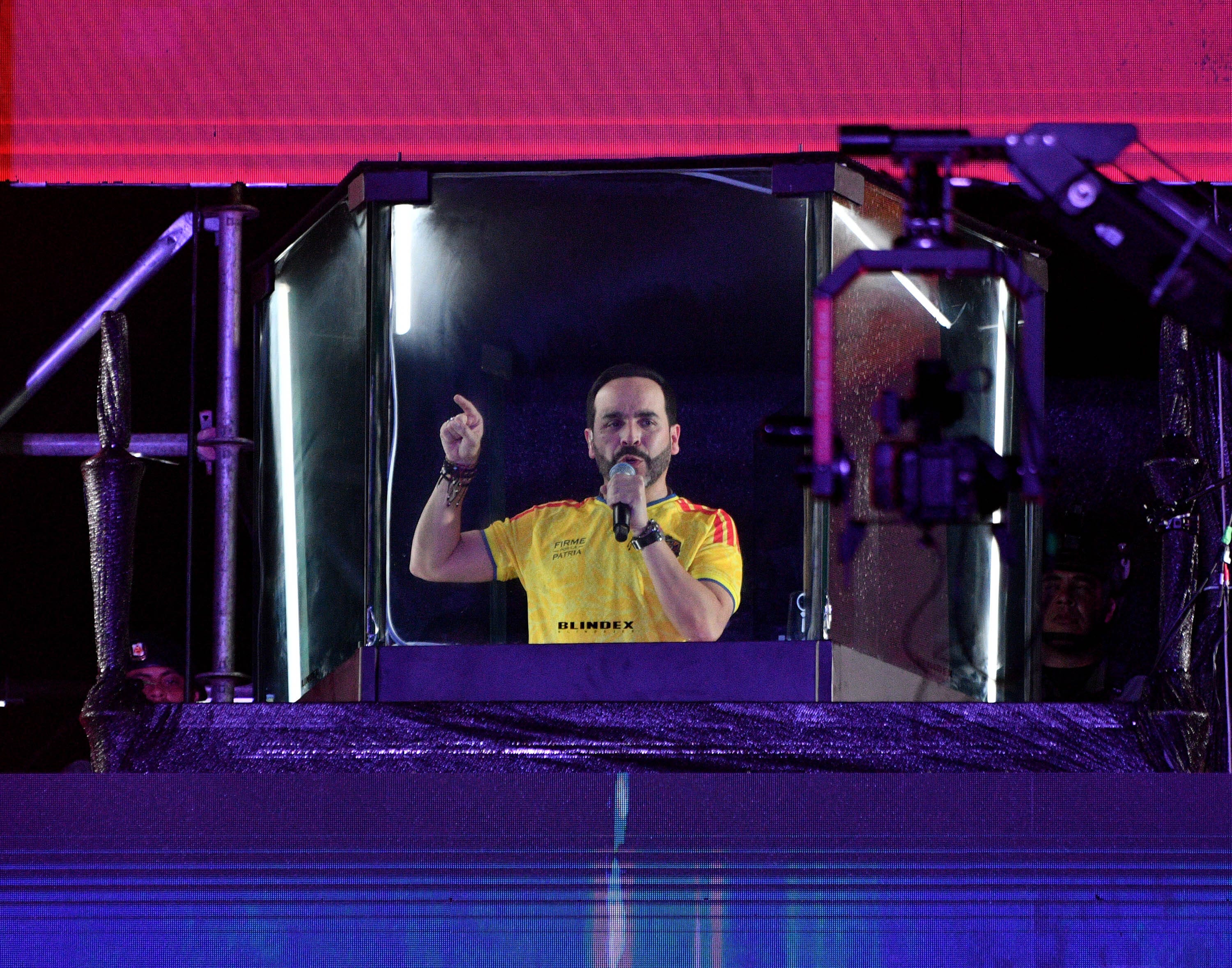
On Sunday, Abelardo de la Espriella won the second round of Colombia’s presidential election. A lawyer and businessman who founded his political party—Defenders of the Homeland—two years ago, he defeated the incumbent left-wing president Gustavo Petro’s handpicked candidate, Senator Iván Cepeda, by a razor-thin margin: just under one percent of the vote. It’s clear from the results that the left was defeated. What’s less clear is what ideology won.
As the vote coincided with the start of the World Cup, de la Espriella regularly wore the country’s yellow jersey to rallies, a move that mirrored a similar campaign by former Brazilian President Jair Bolsonaro. President Petro angrily demanded that de la Espriella stop using national symbols while campaigning, and a court briefly ordered him to do so—an absurd request amid global football fever. De la Espriella leaned into the controversy, encouraging all his followers to wear the yellow jersey.
The twist: it turns out Colombia’s president-elect doesn’t even like soccer. De la Espriella told the author of his 2012 biography that he detested soccer, had never gone to a stadium for a game, and did not care about the World Cup.
The cynical use of soccer for political purposes fits a larger pattern of behavior, and is symbolic of everything Colombia must now deal with as de la Espriella becomes president. He wears the Colombian jersey while holding U.S. and Italian passports and owning a Miami mansion paid for by decades of representing unsavory clients. He is a self-described atheist turned Catholic who courted and won the evangelical vote. He promises to wipe out the cocaine traffickers he once defended as a lawyer for paramilitary groups. He vows to keep Colombia from sliding into a Venezuela-like mess despite having worked for Alex Saab, a fixer who helped former Venezuelan President Nicolás Maduro evade sanctions and remain in power for over a decade.
So while many Colombians fear that the country has elected a far-right populist, they should perhaps be more afraid of the fact that they elected a lawyer without ideology or ethics. In a country with the world’s largest cocaine economy, a candidate known for accepting any job from the highest bidder is a worrying occupant of the presidential palace.
Colombian voters did not have a great choice in this second round. De la Espriella’s narrow victory was, above all, a rejection of the outgoing President Petro—a former left-wing guerrilla—and the four years of fiscal deterioration and failed security policy that he oversaw.

Iván Cepeda, the candidate Petro chose to run as his successor, struggled to differentiate himself from his predecessor in any meaningful way. He pledged to double down on Petro’s “Total Peace” strategy of negotiating with armed groups. His campaign focused on criticizing Colombia’s traditional right-wing parties even after it became clear that de la Espriella, an outsider very much not of the traditional right, was his main opponent.
In other words, this was a rejection election—and de la Espriella should have won it more easily. Petro’s approval sits near 45 percent, and presidents that unpopular rarely drag their successors across the line. That de la Espriella won by a single point in an environment built for anti-incumbency tells you how thin his coalition is. This could cause problems down the line: Petro is already posting conspiracy theories about voting machines being rigged, sowing the seeds for challenges to de la Espriella’s legitimacy.
De la Espriella, for his part, will not read a narrow victory as a reason for caution or moderation. That is not who he is. His party lacks a congressional majority, having only won a few seats in the March legislative elections, so he plans to govern by decree. He has promised to push through his agenda “by reason or by force.” He has said that the Congress will be considered treasonous if they block or stall his agenda. He has preemptively threatened to crack down on any street protests organized against his presidency. As a lawyer, he had a history of suing journalists, and now he’ll have state resources at his disposal. He’s also promised to push for Colombia’s exit from the UN, the Organization of American States, and the Inter-American Court of Human Rights, institutions which he claims hold Colombia back.
Like many presidents who win narrow mandates, de la Espriella will be looking for an early win, and will likely turn to a security-populist agenda to achieve it. He has planned a military campaign to retake all of the country’s territory from the gangs in 90 days, and while that timeframe is unrealistic, it signals that a major military surge is coming. He has also promised to build ten mega prisons in the style of El Salvador’s Nayib Bukele, threatening to detain a large number of citizens in his effort to drive down the crime rate.
But that security agenda will be expensive, which is why de la Espriella is almost certain to break his big campaign promises on the economy. He ran as an austerity hawk in the mold of Argentina’s libertarian president, Javier Milei. But whatever else one thinks of Milei, he is genuinely committed to austerity—a man even more in favor of cutting budgets than the IMF. De la Espriella is not. He has promises to keep and a congressional coalition to buy. So he will govern as a right-wing spender in the Bolsonaro-Trump tradition, the kind who praises austerity and then opens the taps. His expensive security agenda is his top priority, and the promised budget cuts will never be more than a symbolic way to target the programs that he views as helping his political opponents.
That matters, because Colombia’s fiscal hole is real. The deficit is the worst it has been since the COVID pandemic, public debt has pushed past 60 percent of GDP, and Moody’s and S&P have downgraded the country deep below investment grade. Petro’s government shifted around debt payments so that the bills will come due during the next presidential term. Facing an expensive security agenda and a need to cut the budget, de la Espriella will struggle to fulfill the promises he made to voters if he remains constrained by democratic institutions. Whether you call it right-wing populism or an illiberal power grab, expect his authoritarian instincts to come to the fore.
The good news is that Colombia has been here before, and its institutions held. In 2010, the Constitutional Court blocked Álvaro Uribe, the incredibly popular strongman president who had already rewritten the constitution to run for a second term, from holding a referendum to seek a third term in office. Uribe, to his credit, respected that decision. The same court constrained Petro from the left, striking down the economic emergency he declared when Congress wouldn’t fund his proposed budget. Colombia has its political caudillos who dominate their ideological coalitions, but courts, Congress, and an independent central bank are the reason no strongman, of the right or the left, has yet been able to remake the country in their image.
But institutions move slowly, and the opposition is divided in defeat. That means de la Espriella has an opening. The courts can rein him in, but the process takes time. A president who spends his first hundred days issuing decrees can outrun the judiciary for a season.
De la Espriella knows the honeymoon period is short. Across Latin America, recently elected presidents in Chile and Bolivia have watched their early goodwill collapse as approval sank and their congresses balked. De la Espriella sees the sand running low, and he will press hard before the reality that he cannot deliver everything he has promised catches up with him. The institutions held against Uribe and Petro, the ideologues of right and left. But now they face a different challenge: a wily lawyer who cares less about ideology than about the power and influence the office of president confers.
James Bosworth (Boz) is the author of the Latin America Risk Report and a non-resident fellow at the Stimson Center’s Latin America Program.
Follow Persuasion on X, Instagram, LinkedIn, and YouTube to keep up with our latest articles, podcasts, and events, as well as updates from excellent writers across our network.
And, to receive pieces like this in your inbox and support our work, subscribe below:
 | A guest post by
|
Since Bosworth notes that this fellow has no legislative strength to speak of, if he starts to rule by decree and arrests, or even threatens to arrest, legislators, or otherwise prevent its independent action, can and will the Colombian Congress impeach him and get rid of him?
Buena suerte Colombia 🇨🇴