

Germany Has Lost the Thread on Immigration
Last week’s terror attack makes that clear.

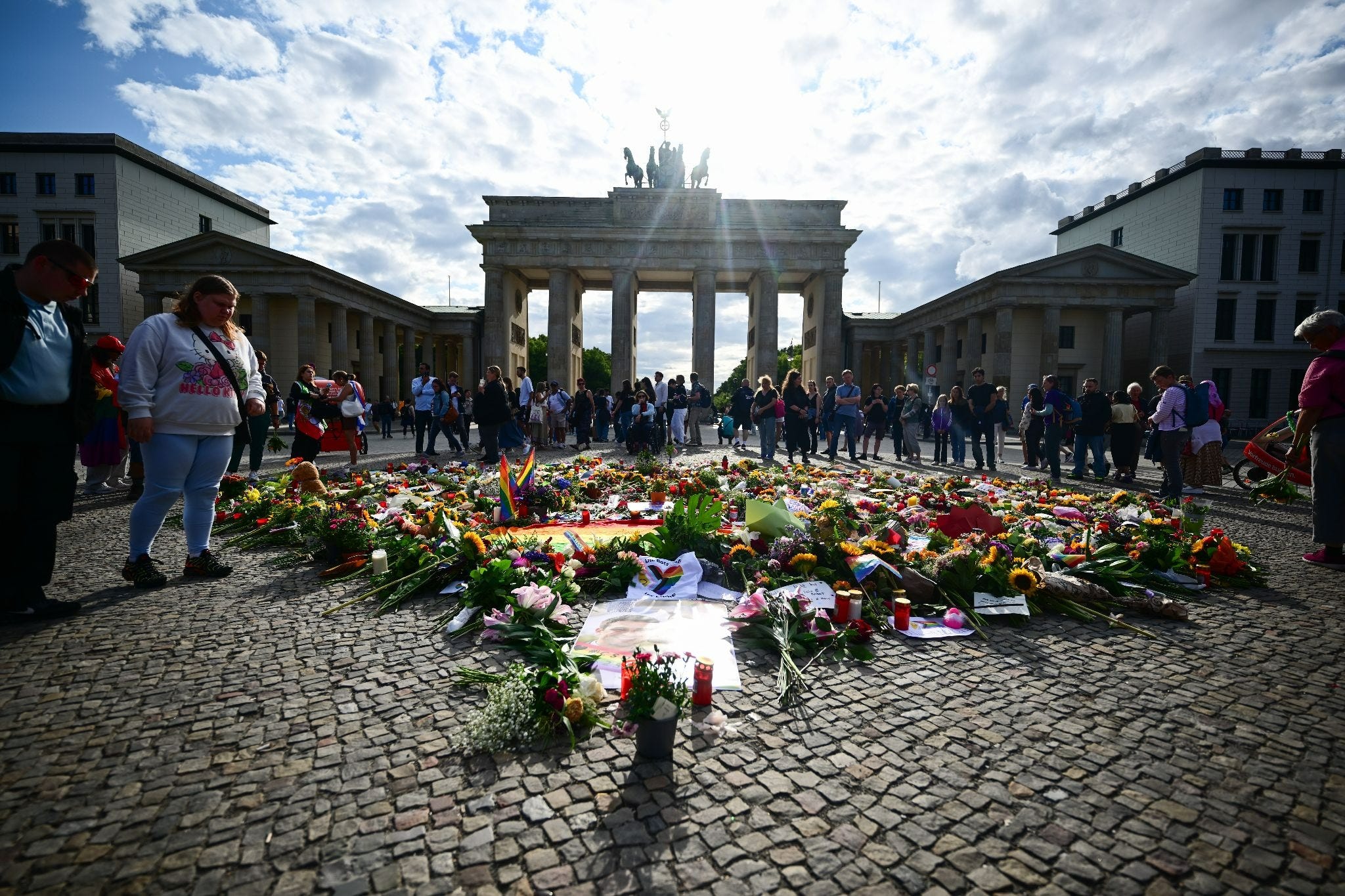
On July 25, Berlin’s Christopher Street Day celebration ended in horror. A van was driven into a crowd near the city’s Pride festivities, killing one person and injuring 29 others. The perpetrator, a 21-year-old German citizen with Lebanese roots, was well known to authorities.
He had previously been convicted of assault and other crimes, had posted ISIS propaganda on social media, and in 2025 left Germany to try to join the Islamic State in Syria. Before he was able to do so, he was arrested in Lebanon and then returned to Germany. Despite being convicted by a German court of preparing “state endangering activities,” he was only given one year and ten months in youth custody, with the sentence suspended.
The immediate response to such an attack is, and should be, grief. But alongside mourning, the attack raises questions for German democracy, and in particular for its mainstream political parties.
Currently, the far-right Alternative für Deutschland (AfD) is leading national polls, and in the eastern state of Saxony-Anhalt, which holds elections in September, it has been polling above 40 percent. Depending on whether smaller parties clear Germany’s five percent electoral threshold, the AfD could come within reach of an absolute majority. If that happens, Germany will face something unprecedented in its postwar history: a far-right party not merely joining a regional government, but potentially running one itself.
Responding to the Christopher Street Day tragedy requires holding two ideas in mind at once, and it is precisely this that German political debate, like its counterparts elsewhere in Western Europe, has thus far proven unable to do.
The first idea is that the AfD’s response to this attack is both morally wrong and hypocritical. Party figures have used the tragedy not merely to attack the government for incompetence on security and law and order but to present the attack as the inevitable consequence of unfettered migration. The party has accordingly called for foreign citizens deemed potential threats to be deported immediately, for dual nationals to have their German citizenship revoked, for German citizens deemed potential threats to be taken into custody, and for “remigration” and reform of German citizenship laws. Such rhetoric is inflammatory and over-generalized. It turns millions of law-abiding citizens and residents into suspects. It is also hypocritical since, despite outrage at an attack on Germany’s LGBTQ+ community, the AfD opposes liberal and pluralist values and has consistently worked to undermine LGBTQ+ rights.
The second idea is that Islamist terrorism, failures of integration, migration-related crime, and the state’s inability to monitor or remove dangerous individuals as well as those who have no legal right to remain in Germany, are real problems. Since the 2015–16 refugee wave Germany has experienced many high-profile attacks by Islamist sympathizers, as well as highly-publicized mass sexual assaults on New Year’s Eve 2015–16, which had a significant effect on German public opinion about migration. In addition, although overall crime and violent crime in Germany have declined, official statistics show that non-German suspects remain significantly overrepresented in crime statistics, particularly if migrants from other European countries and Ukraine are eliminated from the data.

These two ideas do not cancel out one another. Immigrants are not inherently dangerous, and diversity is not incompatible with democracy. But as with rapid economic or technological change, rapid social change requires strong, adaptable government. Immigration can enrich societies but it can also generate conflict, anxiety, competition over scarce resources, and fears about crime, terrorism, assimilation, and national identity—especially when citizens believe their government has lost control over who enters, who stays, who integrates, and who should be removed or monitored.
This is the deeper context of Germany’s current predicament. German security authorities estimate that thousands of people in the country belong to Islamist extremist milieus, with a smaller subset that is potentially violent. Meanwhile, more than 220,000 people currently in Germany have no legal right to be there, but in 2025 Germany deported less than 23,000 of that cohort. A state that knows that it has large numbers of people within its borders, including some who may pose security risks, and whom it cannot fully monitor, integrate, or remove, has not merely inherited a problem, but has helped to create one. By appearing unable or unwilling to act, moreover, the government almost certainly loses legitimacy in the eyes of many citizens.
More generally, the common claim that immigrants are “net contributors” is highly contingent on the skill and education of those who are admitted and the time horizon chosen. In the United States, with its comparatively limited government subsidies and its open labor market, the fiscal balance may well be positive. In European countries that have admitted large numbers of people on humanitarian rather than economic grounds, and which frequently have more developed welfare states and restrictive work laws, the picture is very different.
As I have previously argued, the rise of radical-right parties like the AfD cannot be understood apart from the gap that has opened between mainstream parties and the electoral majority in their views on immigration. While migration was transforming Western European societies, mainstream parties often chose not to address its far-reaching social and economic consequences, creating an opening that right-wing populists were able to exploit. Research by Laurenz Günther and others has shown that in Germany and other European countries during the first decades of the 21st century, parliamentarians became “much more liberal than the electoral center,” and even conservative and Christian democratic parties became more liberal than the mean voter on cultural issues, immigration above all. Germany admitted very large numbers of people without a commensurate reckoning with the integration challenges this would pose, and without a mainstream party willing to fully recognize such challenges and consider the state capacity that would have been necessary to meet them.

Voters can see the costs of poorly regulated immigration. Many will, unfortunately but understandably, view the Christopher Street Day tragedy as another consequence of mainstream parties’ unwillingness to recognize and deal with these challenges.
Conceding that immigration has benefits and costs is not a concession to the radical right. It is the precondition for designing a policy that produces more of the former and fewer of the latter. Cross-national evidence suggests that governments which manage migration in demonstrably beneficial ways—selective admission, explicit and enforced integration expectations, visible benefits to receiving communities, and a functioning capacity to remove those with no right to remain—are rewarded with considerably more public support than governments that suppress or dissemble inconvenient findings and real tradeoffs. This realistic approach is how immigration is made popular, and how diversity is reconciled with democracy.
We are looking at the alternative right now: the strong possibility of an AfD government in Saxony-Anhalt in September, and no obvious way to keep the AfD from becoming the largest party in Germany at the next federal election.
Sheri Berman, a contributing writer at Persuasion, is a professor of political science at Barnard College, Columbia University. Her most recent book is Democracy and Dictatorship in Europe: From the Ancien Régime to the Present Day.
Follow Persuasion on X, Instagram, LinkedIn, and YouTube to keep up with our latest articles, podcasts, and events, as well as updates from excellent writers across our network.
And, to receive pieces like this in your inbox and support our work, subscribe below:
 | A guest post by
|
The Nordic countries seemingly have moved far in their reversal in previous liberal immigration policies. What is taking Germany so long to get the memo?