

Reading Is Dead. And We Killed It.
What BookTok is doing to the industry—and our minds.

Earlier this year, publishing house Hachette pulped the upcoming horror novel Shy Girl by Mia Ballard, following allegations that Ballard relied on artificial intelligence to write the book. Meanwhile, half of novelists in the UK fear they will be completely replaced by AI. As artificial intelligence continues to replace creative activities previously considered uniquely human, there’s a fear that fiction will grow ever more distant from the human experience, with predictable plots and simplistic dialogue and characters. Literature will start to function as synthetic junk food for the brain.
Unfortunately, we didn’t need AI to do this. Literature has been functionally artificial for a number of years now, since long before ChatGPT came on the scene. It wasn’t computers that did this, it was us—publishers, agents, writers, and readers. Over the last 20 years, modern novels have become shorter, with simpler language and shorter sentences. At the same time, people are reading less. In 2023, the number of Americans aged 15 and older who read for more than 20 minutes a day was 15 percent, compared to 22 percent in 2003. In some ways, shorter novels can be a blessing (I know it’s supposed to be Charlotte Brontë’s best novel, but I spent most of Villette wishing the main character would just get on with it), but it’s worrying that authors are now writing for diminished attention spans.
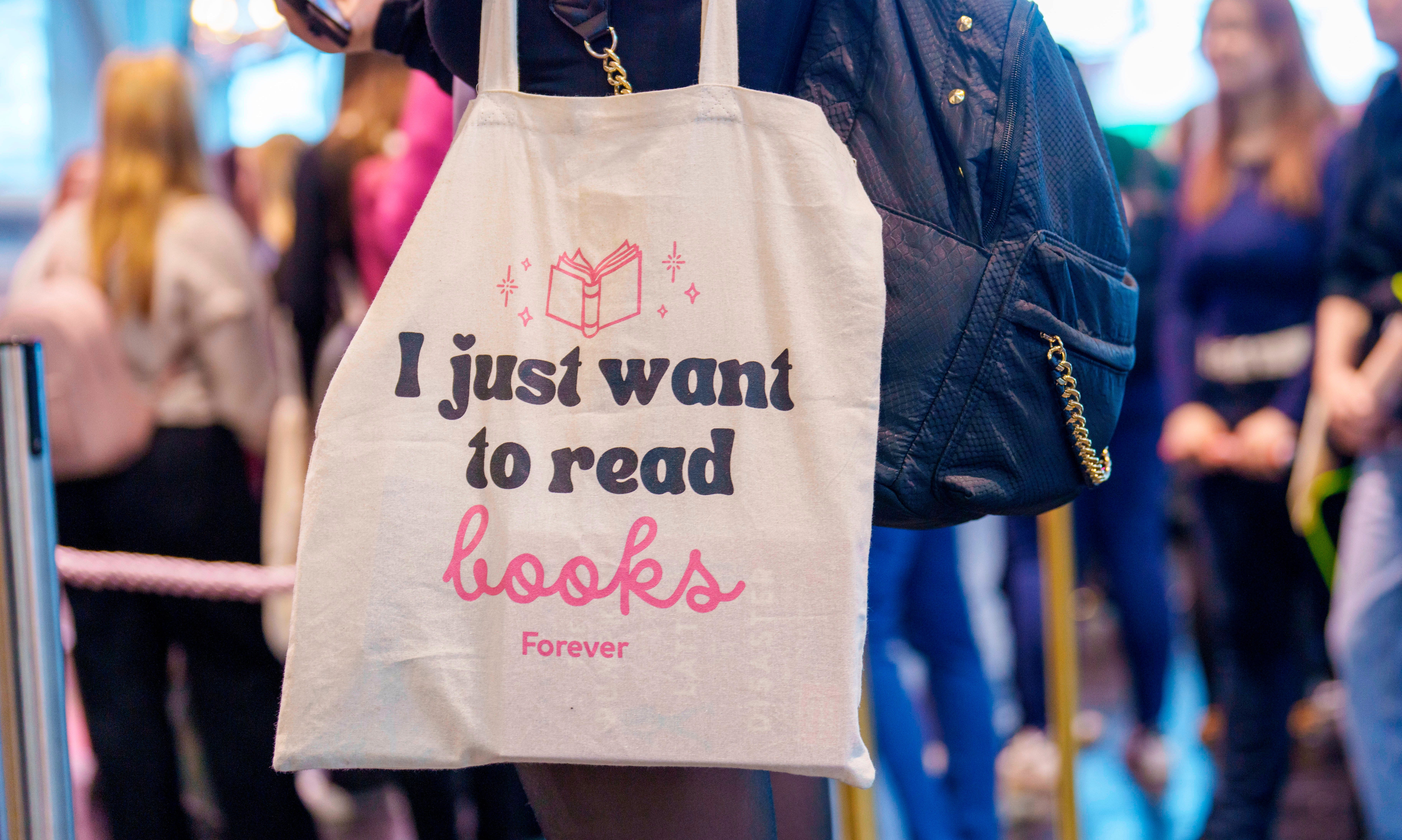
A major culprit dumbing down literature is the rise of influencer culture—including influencers cosplaying as readers. BookTok is one of the largest communities on TikTok. Posters share which books they’re reading (or, more accurately, buying), and review their favorites, sometimes coordinating their books with a particular aesthetic. In 2025, there were over 35 million videos with the hashtag #BookTok, with a total of 370 billion views. In the United States alone, around $59 million of print sales could be linked to BookTok in 2024. Users tend to be young and spend an average of 1.5 hours a day on TikTok.
This content is necessarily short-form, which means it has to be easily searchable. Featured books are broken down by trope, with popular themes including things like “enemies to lovers,” “romantasy,” and “grumpy x sunshine” (the latter being a trope describing a relationship between a miserable person and a happy one). Such labels, which also function as hashtags, make it easy to discover a book based on your exact mood or preference—without the risk of any surprises or complexity. In this way, BookTok echoes online fan fiction spaces, where readers can select their favorite characters from any popular book and settle in to read a story about those two characters having a spicy relationship—again, without much in the way of surprise or literary merit.
By reducing books to their key tropes, BookTok actually makes it harder to find new books outside the select few favored by the algorithm. Author Stephanie Danler, when reflecting on her experience of BookTok, said: “It seemed impossible to discover different fiction. It was the same 20 books over and over.” Categorizing books in this way shows the limitations of labels—it’s hard to imagine Tolstoy reducing Anna Karenina to “grumpy x sunshine.”

That hasn’t stopped publishers and agents from trying to anticipate the next BookTok trend and responding to market demand. Many, for example, are choosing to prioritize romantasy fiction. Publishing houses are in a bind here—this stuff sells (a lot), but when the fiction bestseller list is dominated by easy reads driven by short-form internet creators who slap digestible labels on them, something has gone wrong with the industry.
This is not to say that all genre books are worthless. Donna Tartt’s 1992 classic The Secret History, which is certainly not shallow, is often used as an example of “dark academia,” a trend which pairs books with an aesthetic of gothic clothes and posing moodily amongst old buildings. But even then, the trouble with trends is that they quickly pass. Reading “dark academia” books, no matter their literary merit, may one day seem as passé as wearing skinny jeans or a baker boy hat.
A core feature of BookTok is that it’s female. The largest group of BookTokers are women aged 25-34, followed by women aged 18-24. This makes sense—women read more fiction than men, a trend that holds despite both sexes reading less than a few decades ago. BookTok users also tend to be predominantly Millennial and Gen Z, so it gives a useful insight into how online culture is shaping girlhood and young womanhood. Young women today are caught between the pressure to live performatively online and the pressure to prove that they’re more than just their appearance. It’s understandable that a reaction to these conflicting pressures is to perform the fact that they’re reading.
Works by writers such as Sally Rooney and Jia Tolentino are labelled “Hot Girl Books.” One is made more attractive, the internet claims, merely by reading or even just holding works by these authors. “Reading While Hot” reduces books to a fashion accessory—the highbrow equivalent of Labubus.
This focus on appearance is reinforced by changing styles in book covers. Those that are instantly recognizable on video—especially if they label which tropes are held within—are the most popular. Many videos glamorize choosing a book purely on how pleasing its cover is, as if a book’s primary job is to match your outfit or interior design.

What you read drives what you think, and BookTok not only limits exposure to new fiction and difficult themes; it also makes literary criticism shorter, snappier, and shallower, as analyses that would once have been essays or long YouTube videos are compressed into a few minutes or seconds. What’s more, cancel culture remains alive and well on BookTok, perhaps because of its similarities to teen blog sites such as Tumblr. In June 2025, Ali Hazelwood, a romance author popular on BookTok, was bullied off Instagram after saying she preferred a different love interest for the protagonist of the teen series The Hunger Games. Meanwhile, blogs and videos helpfully point out why common romance tropes are “harmful.” And of course, only the very, very brave would admit on BookTok that they still read JK Rowling.
Reading trashy books is one of life’s great joys. But presenting them as great literature just because everyone else is reading them closes readers off to more difficult but rewarding works that genuinely challenge them. On the surface, BookTok seems to encourage reading, but in the long term it reflects the broader crisis of the humanities. No longer are great works of literature a vehicle for self-development or understanding the inner lives of others. Books are now just another way to curate a performative self online, even as we read—and understand—less and less.
Leonora Barclay is Head of Podcasts at Persuasion.
Follow Persuasion on X, Instagram, LinkedIn, and YouTube to keep up with our latest articles, podcasts, and events, as well as updates from excellent writers across our network.
And, to receive pieces like this in your inbox and support our work, subscribe below:
So much despair here! I understand your worries, but I just don't think these much talked-of surveys tell the whole story (so to speak). And since I'm not much for social media, BookTok doesn't trouble me that much. That's the thing about social media. It's like HAL 9000, only less hard to turn off. The solution to it is to pay it no attention. I believe everyone will eventually realize this and it will go the way of the dinosaur.
I wish those of you who are troubled by stats indicating a decline in reading could come do my library job for a while. People DO still read and many of them read deeply. Sure, we stock romantasy and dark academia, but there's plenty of thought-provoking stuff on our shelves--and readers who read it. I have great conversations about books with patrons and coworkers all the time, and also with friends. I'm in two book clubs, one of which is reading The Master and Margarita and the other two Shakespeare plays. My college-aged kids are both readers, my son into nonfiction and my daughter into fiction. There are plenty of people like us out there. Maybe we're just hard to scare up. Seriously, go to the library. You'll all feel better.
Once again a Persuasion article puts into words a frustrating reality that doesn't seem to get enough attention.
What literature is everyone reading right now? I'm reading "The Sot-Weed Factor" by John Barth, and am very impressed. It's funny, insightful, and absurd -- a winning combo for me.