

Iranians Just Want a Normal Country
A complex—and radical—ideology undergirds the current uprising.

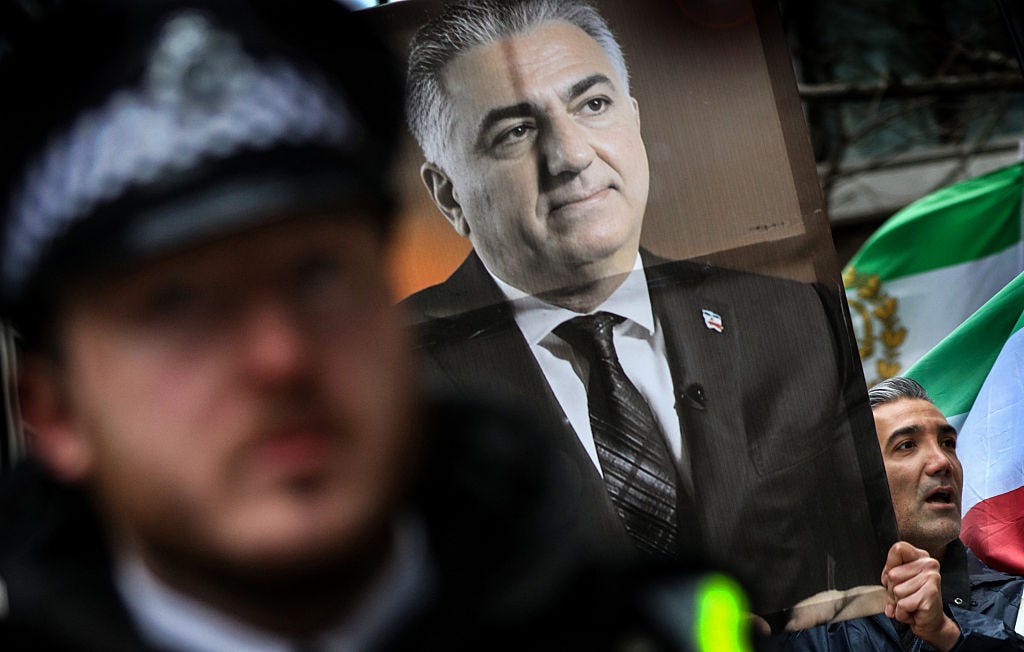
As the Iranian regime faces the greatest ever challenge to its authority, we are pleased to publish this piece by Roohola Ramezani, a journalist and philosopher who left the country a few days after the government imposed a total information blackout. Having witnessed firsthand the uprising taking place inside Iran, Roohola analyzes the new ideology of resistance that has seized the streets.
—The editors.
For decades, the world has viewed Iran through a series of familiar, if increasingly obsolete, lenses. From the “clash of civilizations” to the “struggle for reform” and the poignant aesthetics of “Women, Life, Freedom,” Western observers have sought a narrative that fits their own political taxonomy.
But today, as the Islamic Republic plunges the country into total digital darkness—cutting fiber optics and cellular signals alike—a new reality is hardening in the silence. The information that trickles out via Starlink and clandestine dispatches reveals a fundamental shift that many in the West find difficult to reconcile with their existing frameworks: Iranians are no longer asking for a seat at the table. They are demanding a different table entirely.
The movement that has gripped Iran since December 28 is not a plea for human rights within a theological framework, nor is it a subset of global identity politics. It is a profound, pragmatic, and increasingly radical return to secular nationalism. The protests originated in the bazaars and spread to the most conservative provinces; in doing so, they moved past the reformist nuances that have enchanted liberal Western media for 20 years. This is a movement of ideological exhaustion. Almost 50 years after an “Islamic Revolution” that has delivered only economic ruin and international pariah status, the Iranian street has embraced a blunt realism.

Central to this new political imagination is a surprising turn toward “restorationism.” Where Western commentators see a feminist uprising, the people on the ground are increasingly chanting for the return of the Pahlavi monarchy—not as a return to absolute autocracy, but as a symbolic and institutional bulwark against the perceived failure of clerical “republicanism.” What Iranians want is to cease being an extraordinary ideological project and to finally become a “normal” country.
The global embrace of the “Women, Life, Freedom” slogan following the death of Mahsa Amini and the protests of 2022 was a masterclass in Western media consumption. It provided a clean narrative: brave women burning headscarves in defiance of a bearded, medieval patriarchy. While this feminist core was—and remains—a vital catalyst of dissatisfaction with the regime, the Western focus often acted as a filter, screening out the more uncomfortable, systemic demands of the movement.
For the shopkeeper in Isfahan or the laborer in Khuzestan, the hijab is not just an oppressive piece of clothing; it is the most visible thread in a tapestry of ideological control that has strangled the national economy. To many Iranians, framing this exclusively as a “rights-based” struggle feels like a simplification. They see a Western media landscape that is eager to support Iranian women’s right to show their hair, yet remains hesitant to cover the burning of mosques or explicit calls for the total dismantling of the clerical state.
This disconnect reveals a deeper tension between Iranian aspirations and Western progressive sensibilities. The movement has moved beyond “reform”—the hope that the system can be fixed from within—to a desire to “overthrow” (barandazi) the system entirely, reclaiming the state from an entity they view as an occupying ideological force.

Perhaps the most challenging aspect of this movement for Western intellectuals to digest is the surge in monarchist sentiment. In the squares of Tehran and the streets of smaller, traditionally religious towns, the chant “this is the last battle; Pahlavi is returning” has become a staple. This reference to Reza Pahlavi—exiled son of the Western-backed Shah deposed by the 1979 Islamic revolution—is not a collective amnesia regarding that era. It is a calculated, pragmatic response to the failure of “republicanism”—a word that, in the Middle East, has become synonymous with either Islamic fundamentalism or military dictatorship.
Many Iranian intellectuals now argue that in a society where religious institutions have been deeply entrenched for centuries—and radically weaponized for the last half-century—any future republic inevitably risks collapsing back into an “Islamic Republic.” They point to the grim reality that the current theocracy already claims the title of a republic, using its mechanisms to give a veneer of popular mandate to clerical rule. The growing consensus among the opposition, therefore, is that democracy is perfectly compatible with monarchy. By pointing to stable, secular democracies like Sweden, Japan, or the United Kingdom, they argue that a constitutional monarchy can serve as a neutral institutional anchor that a fragile, newly-formed republic might lack. The throne is reimagined not as a seat of power, but as a secular shield—a protective shell ensuring that the national interest takes precedence over sectarian interest.
This movement does not align with the political “right” as this term is understood in the West. Rather, it claims that in the specific context of Iran, liberal ends—human rights, individual autonomy, and the rule of law—can only be secured through what Westerners might call the “conservative” means of constitutional monarchy.
Consequently, Pahlavi has emerged as the focal point for this aspiration—not necessarily as a king in the traditional sense, but as a symbol of a “normal,” secular, pro-Western country. His supporters view him as the only figure capable of uniting disparate groups and managing a transition that avoids the chaos of a power vacuum.
For decades, Western diplomacy has been predicated on the idea that the Iranian people are caught between “hardliners” and “reformists.” Today, that binary is dead. The current movement is characterized by a visceral, almost existential rejection of the clerical establishment as a whole.
The sense of betrayal has been fueled by recent revelations about the national budget, showing massive increases for unproductive religious institutions and ideological propaganda machines even as the country faces a staggering deficit. Iranians see their national wealth being cannibalized to fund a “theological vanity project” that has no interest in the welfare of the citizenry.
This “New Iranism” places the movement in direct friction with the international progressive movement. The increasingly prominent slogan “Neither Gaza, nor Lebanon, my life only for Iran” is the phrase that’s perhaps the most misunderstood. To Western leftists, this sounds like parochialism or even heartless isolationism. To an Iranian, it is a cry of anti-colonial resistance against their own government. The Iranian street has increasingly come to view the Palestinian cause—to which the Iranian regime has dedicated massive resources—as a black hole into which their life savings, infrastructure, and international standing are disappearing.
This is why, during last year’s twelve-day war between the Islamic Republic and Israel, many Iranians openly celebrated strikes against regime infrastructure, viewing foreign military pressure as a potential catalyst for liberation. This is not “pro-war” sentiment in the traditional sense; it is the desperation of a captive population.

Likewise, a widely-held view among the protesters today is that the current regime structure is fundamentally incapable of economic reform because its very survival depends on an anti-Western, anti-American ideology that necessitates isolation. This realization has led to a controversial shift in the Iranian political imagination: a growing openness to external pressure. When segments of the Iranian intelligentsia, including liberals and former leftists, sign letters to Western leaders asking for “maximum pressure” and “targeted strikes,” they are not abandoning their country’s sovereignty. They are articulating a belief that the internal mechanism for change has been so thoroughly crushed by digital blackouts and paramilitary violence that only an external shock can break the stalemate.
Iranians want neither a better version of the Islamic Republic nor a utopian revolution. They want the extraordinary era of Iranian history to end. They want to return to being a normal nation state that prioritizes its borders over ideological “frontiers,” its citizens over “martyrs,” and its future over seventh-century grievances.
A fierce, secular realism is emerging. The protest movement is redefining Iranian identity not through the lens of a “Global South” struggle against the West, but as a struggle to rejoin the West’s political and economic orbit. It’s a movement that does not fit neatly into the categories of anti-imperialism or identity politics; but it is, nevertheless, perhaps the most authentic democratic project of our time.
Roohola Ramezani is an Iranian journalist and writer with a PhD in philosophy. He writes on ideology, political discourses, and Middle Eastern politics.
Follow Persuasion on X, Instagram, LinkedIn, and YouTube to keep up with our latest articles, podcasts, and events, as well as updates from excellent writers across our network.
And, to receive pieces like this in your inbox and support our work, subscribe below:
 | A guest post by
|
If I understand the situation correctly, the Iranians are open in rebellion to catalyze revolutionary change in the way the country is governed. Unfortunately, revolutions tend to consume their young, which is what happened after the Shah was deposed. Let's hope the Iranians are successful in government change without a concomitant bloodbath. Too many Iranians have already lost their lives.
More power to the insurgents!
This is a story every American should heed with regard to the continual SCOTUS assault on our Establishment clause and to the forces of Christian Nationalism which had so much to do with re-electing Donald Trump.