


This article is brought to you by American Purpose, the magazine and community founded by Francis Fukuyama in 2020, which is proudly part of the Persuasion family.
The second Trump administration has undermined American democracy at a speed “unprecedented in modern history.” While many proposed remedies focus on the federal government, as the Republican-controlled Congress continues to abdicate its constitutional powers and the Supreme Court continues to help Trump concentrate executive authority, effective solutions may need to come from outside of Washington, D.C.
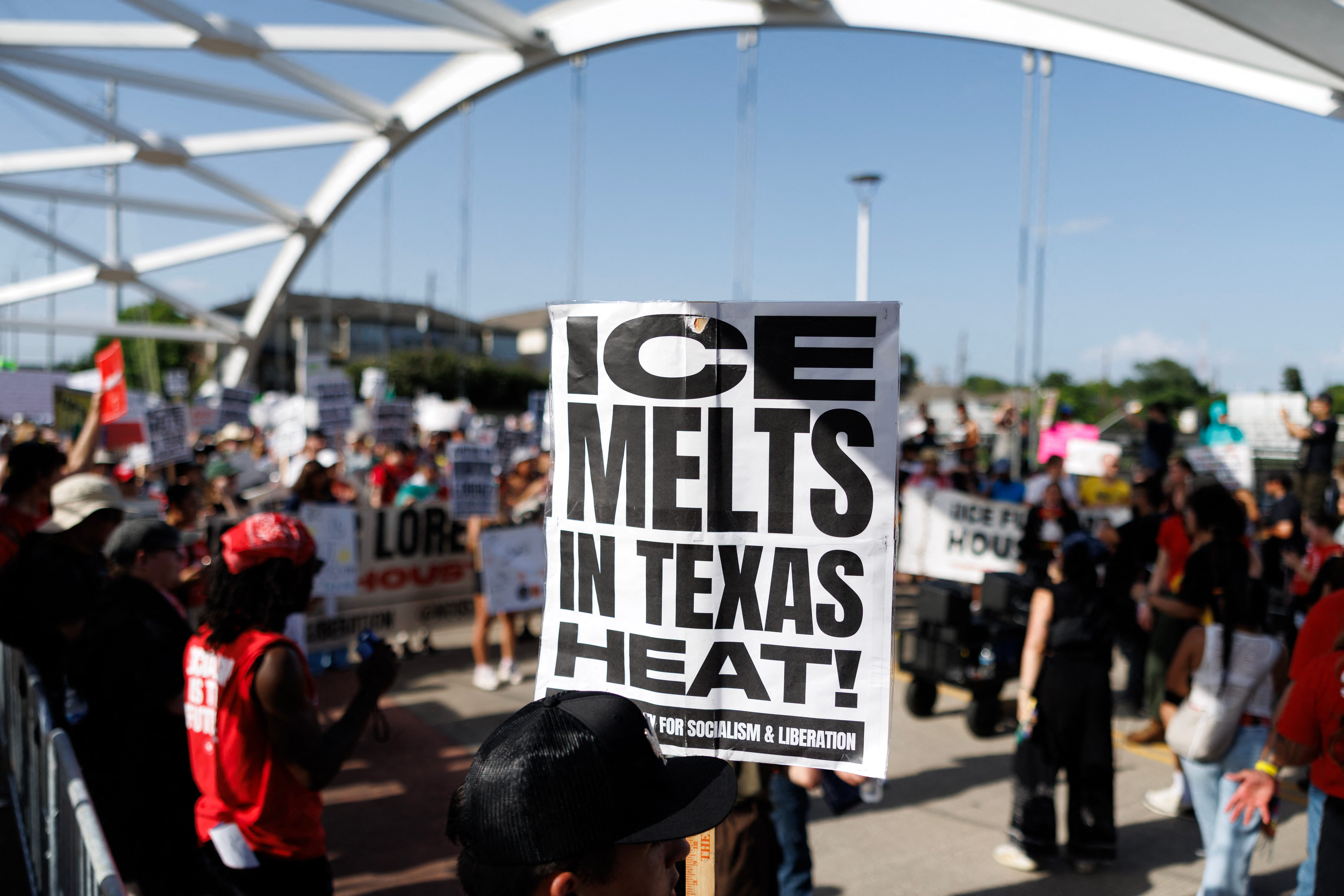
As a federal republic, many Americans hope that states and localities will serve as counterweights to Trump’s agenda. During the Minnesota protests against ICE earlier this year, some of the most notable resistance came not only from progressive activists and immigrant rights organizations, but also from conservatives and Republicans who felt a strong obligation to their state and its residents. Elizabeth Kautz, longtime Republican mayor of Burnsville, decried “the people of Minnesota [being] cruelly treated” by ICE. After witnessing a 70% decline in attendance at his church—largely driven by congregants’ fears of detention—Minneapolis pastor and former MAGA supporter Sergio Amezcua concluded that “what Trump had in mind was ethnic cleansing.” Outside of Minnesota, governors and state attorneys general have resisted the administration—particularly its ICE and DHS deployments—in both rhetorical and legal ways.
Subnational governments are powerful arenas for resisting democratic backsliding, but not only because of their institutions and elected leaders. Equally important are the shared loyalties and identities that states and localities inspire, such as being a Minnesotan, Chicagoan, or Californian. Few developments have galvanized Americans to defend their constitutional rights more than federal attacks on their states, cities, and fellow residents—regardless of partisanship or immigration status.
In Minnesota, ICE was successfully repelled because of large-scale, collective action by ordinary people, united by a shared sense of being Minnesotan and working through existing civic, religious, and labor networks. The protesters bore significant costs—time, resources, legal risks, and even the possibility of death. Yet they also imposed significant political and operational costs on ICE and DHS. Checking the Trump administration requires taking seriously the attachments that make resistance seem worth the costs.
States and localities are powerful focal points for resistance: if two Mainers asked each other “why should we protect those people from being unlawfully detained?” a likely answer would be “because they’re Mainers.” States and localities generate many focal points: shared histories, foods, weather, industries, manners, landscapes, and, of course, sports. These identities do not emerge spontaneously but rather are developed and reinforced by a host of groups and institutions—unions, churches, civic organizations, schools, and local media—as well as by a shared sense of history and cultural reference points.
Subnational identities have played an important role in other countries—both federal and non-federal—confronting democratic backsliding and autocratization. In India, states with strong regional and linguistic identities have acted as important counterweights to the centralizing, illiberal vision espoused by Narendra Modi and his Bharatiya Janata Party. Similarly, Brazilian states became important centers of opposition to Jair Bolsonaro’s COVID-19 denialism and executive overreach. In Hungary, Poland, and Turkey, ruling parties have faced significant public resistance in opposition-controlled cities and municipalities. In each case, subnational identities have helped citizens and elected officials mobilize voters, resist interference from central governments, and articulate alternative political visions.
This is echoed in acts of domestic resistance outside Minnesota. In Chicago, civic, religious, and neighborhood groups alike understood ICE operations as an attack on a city defined for over a century by its immigrant communities. Organizers in Washington, D.C., meanwhile, tied the federal government’s efforts to broader claims about self-government and home rule. Resistance even emerged in rural, conservative communities—for example, in Appalachia—which saw those targeted by ICE not as outsiders but as coworkers, congregants, and neighbors.
Subnational identities do more than mobilize citizens; they can also shift the loyalties of local officials aligned with authoritarian leaders. Indeed, state police, bureaucrats, and elected leaders are themselves local residents, who are caught in the middle between their federal superiors and local communities. As federal abuses mount, these individuals may feel more in tune with local solidarity, making noncompliance and “defection” appear rational and morally justified. This dynamic may help explain why Chris Madel, a Republican gubernatorial candidate in Minnesota, ended his campaign after condemning the “federal retribution on the citizens of our state.”
That states in particular can motivate costly political action is not a new insight. The Founding Fathers understood states not merely as administrative subdivisions but as sources of loyalty in a large republic, essential for checking federal overreach. The iconic system of checks and balances would thus be grounded not only in institutions but in social and psychological ties.
Yet modern American politics has decisively nationalized: people increasingly vote for the same party in federal, state, and local elections, local news media report on national political issues, and policy views cluster into mutually exclusive, national party bundles. As a consequence, some observers argue that the political significance of state and local identities has declined. Academics have tended to view states mainly as arenas for the implementation of national priorities, with subnational attachments too limited to serve as focal points for meaningful political action.
At the same time, states are increasingly legislating in opposition to federal policy, whether on guns, healthcare, or COVID‑19. Several amendments to the U.S. Constitution were first advanced through state-level reform movements, including women’s suffrage and the direct election of senators. Americans continue to sort themselves in a partisan, geographic manner. Surveys demonstrate that even as partisan national identities harden, state attachments remain strong—albeit varying in intensity.
Subnational identities facilitate resistance to authoritarianism because they transcend zero-sum partisan politics. Indeed, the resistance to ICE in Minnesota was not a victory for Democrats but for Minnesotans. At a time of growing political apathy and disillusionment with the two-party system, appeals to state and local identity invoke more durable and disarming ties to one’s neighbors and communities. These messages resonate with those who would otherwise sit on the sidelines in a partisan fight, broadening participation and thus increasing the political costs of state violence.
Subnational identities also make sacrifice feel meaningful and reciprocal: activists in Chicago, D.C., and in rural conservative communities acted in part because they believed their neighbors would do the same. This matters because protesting or striking against anti-democratic leaders often presents serious risks, from surveillance to detention or worse. Finally, strong subnational identities can embolden local officials to place their careers on the line, as they come to proudly see themselves as protectors of residents, rather than mere arms of a national political machine. In turn, visible public action reassures local officials that their unwillingness to go along with authoritarian pressures will be rewarded.
To be sure, subnational identities should not be romanticized as inherently progressive. In conditions of ethnic and racial conflict—under Jim Crow, or today in places with high immigration rates—subnational identities can reinforce insider-outsider divisions and exclude newcomers. These risks should not be minimized.
Yet in moments of anti-constitutional behavior and unchecked executive power, drawing on imperfect identities may be better than drawing on none at all. This is critical because authoritarian leaders skilfully mobilize identities of their own—those “left behind,” the native-born, or those cast as fighting against a greedy and condescending elite.
Democratic resilience depends not only on political institutions and elected leaders, but on the identities and civic organizations that enable people to engage in costly, collective action. As American politics continues to nationalize and polarize, subnational identities—along with the civic networks that sustain them—may provide valuable tools for mobilization across partisan and ideological lines. They ought to be taken as seriously now as the Founding Fathers took them over two hundred years ago.
Adam Fefer is Senior Researcher with the Horizons Project and Researcher with the Stanford Center on Democracy, Development and the Rule of Law. His research focuses on democratic backsliding, civil resistance, subnational and federal politics, and ethnic conflict.
Follow Persuasion on X, Instagram, LinkedIn, and YouTube to keep up with our latest articles, podcasts, and events, as well as updates from excellent writers across our network.
And, to receive pieces like this in your inbox and support our work, subscribe below:
 | A guest post by
|