

The Prosecution of Jerome Powell
Forget the tasteless tweets. Powell's prosecution attacks the two democratic guardrails that matter most.

One of the fundamental problems with populist leaders is that they love to do so many outrageous things that it becomes incredibly hard to separate the grave from the trivial, the wheat from the chaff, the action that is worth pondering at length from the one that will inspire an endless litany of ephemeral takes. But over the course of the dozen or so years of my life which I have now spent thinking about figures like Viktor Orbán and Recep Erdoğan and Narendra Modi and Benjamin Netanyahu, I have developed strong views about what is a distraction and what is actually consequential.
What tends to be a distraction is individual breaches of run-of-the-mill political norms. I fully understand why people are dismayed when populists hurl insults at their enemies, insist on claims that are evidently untrue, or engage in shameless self-flattery. It is certainly important to stay attuned to the ways in which this poisons a political culture, laying the ground for a personality cult and making it easier to demonize the opposition. But when the media obsesses over every tasteless remark made by a political leader, it hands him total control over the political agenda—and many ordinary people wrongly get the impression that objections to him are rooted in the aesthetic sensibilities of the professional-managerial class rather than the actual damage he is doing to the country.
Far more consequential are breaches of the fundamental political norms that make democracy possible. There are numerous such norms. They include such things as a willingness to respect the decisions of the courts, to appoint key officials on the basis of competence rather than blind loyalty, and to accept the outcome of free and fair elections. But when I look at the countries which have fared the worst under the rule of populists, from Turkey to Venezuela, there are two fundamental norms which stand out as especially important in terms of their impact on ordinary people.
The first of these fundamental norms is that the state should not be able to prosecute political opponents on spurious grounds. The ability of the state to imprison its citizens is one of the most fearsome powers it holds. When the machinery of justice is perverted to serve as a tool of revenge against anybody who stands up to the government, it creates an especially chilling effect on the opposition’s ability to restrain abuses of power. And while the first prosecutions are usually directed against political elites that have little in common with ordinary people, they often broaden to go after ordinary citizens. This is how authoritarian populists have, again and again, used supposedly legal means to transform formal democracies into de facto autocracies.
The second of these fundamental norms is that there must be some limit on the extent to which economic policy is subject to the will and the whim of the central government. For politicians who are subject to the electoral cycle, it is always tempting to juice the economy in such a way that their countries find themselves at the top of a boom in an election year. The easiest way to do that is to ease monetary policy to stimulate the economy. But this also leads to significant inflationary pressures. And when partisan apparatchiks rather than serious economists are setting interest rates, those inflationary pressures can easily turn into unstoppable spirals.
There are many missteps which explain how both Turkey and Venezuela went from flawed-but-real democracies with unequal-but-flourishing economic systems to repressive autocracies that are in the grip of inflationary spirals which are impoverishing much of their population. But the fact that both Hugo Chávez (as well as his successor, Nicolás Maduro) and Erdoğan (as well as his son-in-law, Turkey’s longtime finance minister) repeatedly broke these two fundamental norms is probably more responsible for the disastrous outcomes for ordinary Turks and Venezuelans than any other single step they took.
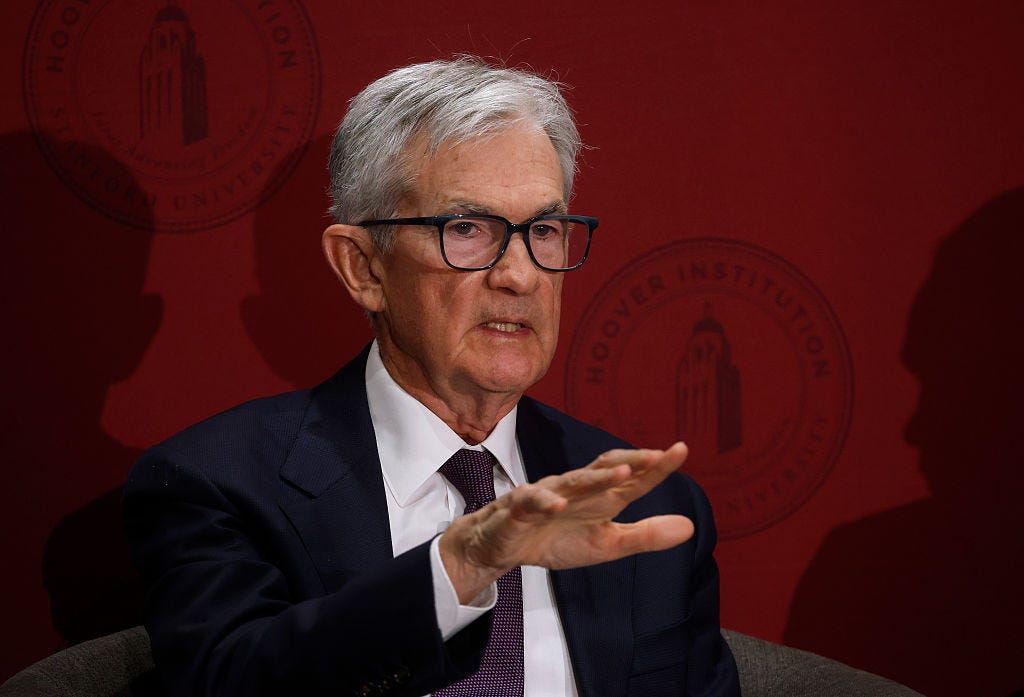
That is what makes the news that the Department of Justice is prosecuting Jerome Powell, the Chair of the Federal Reserve, particularly striking. In a crowded news environment, it will be tempting to write this off as one more norm that the Trump White House has decided to break, one more extreme thing about which we should roll our eyes before moving on to discuss yet another unhinged post on Truth Social. But it is far more significant than that.
Powell is only the latest in a litany of political opponents, from James Comey to Letitia James, that Trump’s Department of Justice has prosecuted for evidently partisan reasons. In the case of Powell, the ostensible ground for his prosecution is that he supposedly perjured himself in his testimony regarding the costly renovation of the Fed’s headquarters. But the Trump administration is barely even trying to conceal its true motivation: a battle over the control of America’s monetary policy.
Trump has repeatedly voiced his displeasure with Powell’s reluctance to lower interest rates as far and as fast as he prefers, and has put enormous pressure on him to resign before his statutory term ends this year. In other words, Trump has, in a single political act, doubled down on his willingness to dispense with the two most important guardrails which stand between the freedom and prosperity of the United States and the fear and impoverishment experienced by countries like Turkey and Venezuela.
This is not to say that the same fate necessarily awaits the United States. For now, significant checks and balances remain. Getting grand juries to indict defendants is notoriously easy in America; as one prosecutor famously put it in the 1980s, he could get a grand jury to “indict a ham sandwich.” Securing convictions is thankfully much harder. Indeed, the Trump administration’s previous attempts to go after James Comey and Letitia James—on similarly spurious grounds in the case of the former, on marginally less spurious grounds in the case of the latter—both failed badly.
Thanks to the statutory independence of the Fed, it even seems likely that Powell will be able to serve the rest of his term. More likely than not, monetary policy in the United States will continue to be set by a competent economist until May.
But none of this diminishes the significance of this step. The desire of the Trump administration to break with our system’s most important guardrails is more evident than ever. If they succeed, the victim will not just be a decent public servant unjustly prosecuted, but rather the livelihood of millions of Americans, including both those who hate and those who love Trump.
Just over a week ago, Trump captured Nicolás Maduro in a spectacular raid on Caracas. While there are good reasons to worry that things won’t actually improve for ordinary people in Venezuela, Maduro was a brutal dictator who undoubtedly deserves to be in chains. That makes the timing of Powell’s indictment bitterly ironic: the man who ordered Maduro’s capture is, in his own country, now emulating the worst sins of the regime that led Venezuela into such a terrible political and economic catastrophe.
Trump is known for changing official names.
The Department of justice should be changed to the Department of Trump.