

Trump’s Threat to Scientific Research
Why the administration’s plan will shift accountability from scientific standards to political review.

This article is brought to you by American Purpose, the magazine and community founded by Francis Fukuyama in 2020, which is proudly part of the Persuasion family.
In 2025, the Trump administration scrambled scientific research by turning off the tap of funds. Among those to be shut down were clinical trials for promising treatments for cancer and dementia. In the National Institutes of Health alone, the administration terminated nearly $4 billion across 2,300 grants.
The Trump team reluctantly began restoring funding and then, in March, a federal appeals court ruled that the administration’s action was arbitrary, capricious, and likely to produce “irreparable harm.” The administration has responded by counter-attacking with a proposed regulation, published on May 29, that would take decisions about research grants out of the hands of scientific experts and give ultimate control to political appointees.
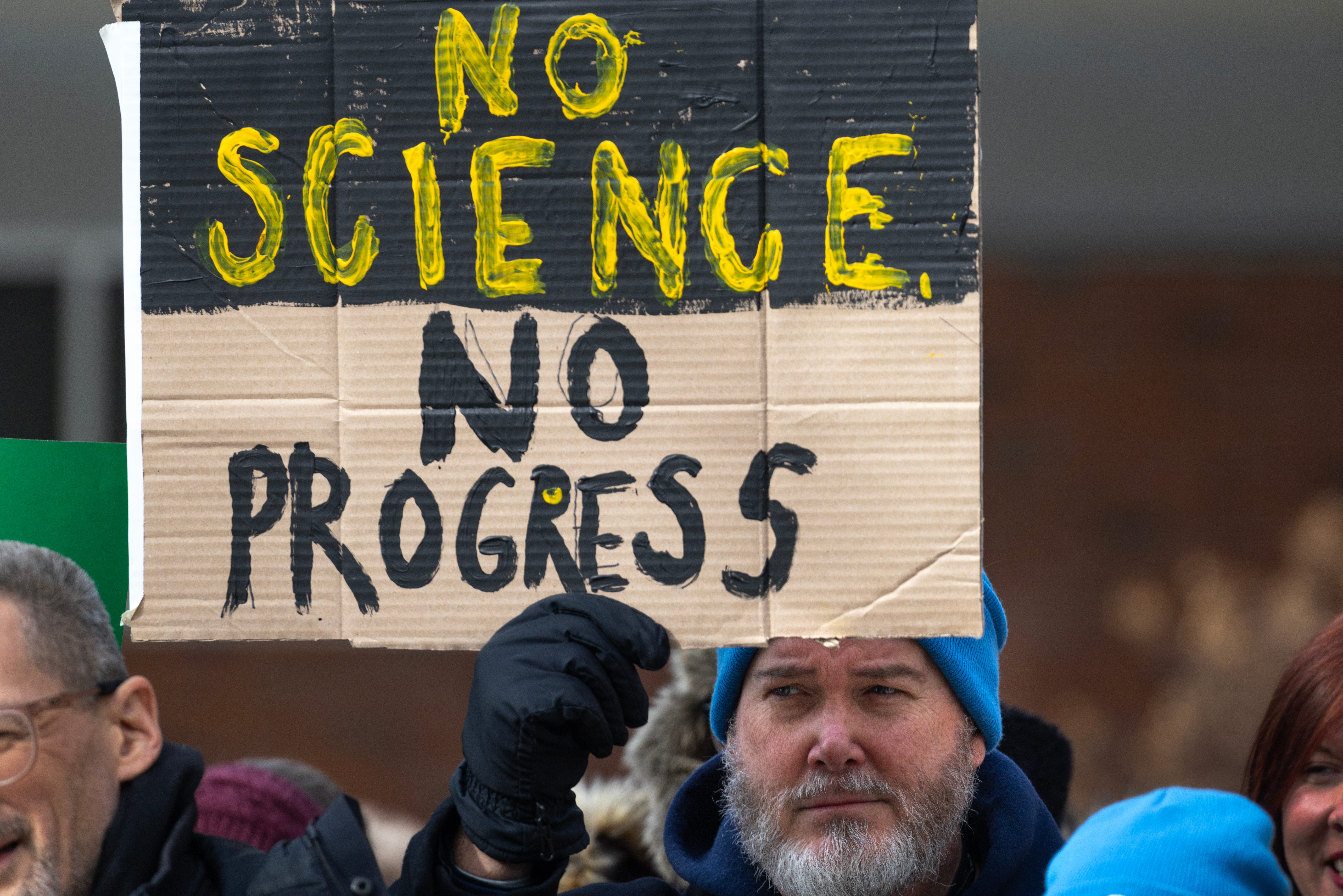
The scientific community is in an uproar, with funding having stopped, then started, and now threatened. One survey found that, among researchers receiving part of the $40 billion in funds distributed every year by the National Institutes of Health, more than half found their pipeline disrupted. More than four out of five younger researchers are worried that the cuts could destroy their careers.
The administration’s new proposal threatens even more damage in the future.. In a field where success only comes through the long term, the future would suddenly be unpredictable.
It is not enough to say that just some projects would be affected. All would be. And not just now. But forever—even as the tastes and values of new political appointees change.
The proposal runs to 108 pages and covers every agency making grants to researchers. Wading through it all requires superhuman patience or an unlimited budget for legal billing. Still, let’s compare the current process with the key points of what the Office of Management and Budget (OMB) proposes.
Currently, the grant process across most of government works in a similar way. The agency posts a notice that it’s going to make grants on a particular problem and gives a deadline for applications. Agency staff members screen the proposals when they come in to ensure that they fit the basic requirements of the program. The agency staff then sends proposals out for peer review, and the reviewers score each proposal. The agency staff then sorts the applications by score and generally makes grants in order of the ranking until the money runs out. Successful grantees work on the projects, make regular progress reports, and submit to financial auditing. They continue work until the end of the grant period and, with luck, science blooms.
The new OMB proposal, on the other hand, goes down a very different road—paved by a series of reports from the right-wing Heritage Foundation, which contend that the federal government had developed a “leftwing funding apparatus,” which “only employs progressives.” The OMB initiative seeks to defund “a woke policy agenda” that runs against the Trump administration’s plans.

The most important parts of the Trump administration’s new proposal are:
Peer scientists would still do reviews and rankings, but political appointees would make the final decisions. They could overrule the experts on which projects have the most merit. The decisions of Health and Human Services Secretary Robert F. Kennedy, Jr., and the rise of his Make America Healthy Again movement show how some research get canceled and new, sometimes offbeat projects take their place. Instead of building systematically, scientific research would careen from administration to administration, in a way that would inevitably harm America’s place in the research world.
Once a project starts, political appointees could shut it down at any point, including ‘‘‘for convenience’ whenever it determines that termination is in the government’s interest.” Any new administration could come in and shut down any—and all—existing grants by using the “for convenience” clause. Important work requires sustained effort, and no researcher can keep a lab going if the spigot is turned on and off. Moreover, much medical research requires double-blind studies over several years. Researchers worry whether they can ethically enroll patients in a study if their trial can be quickly shut off.
Grantees couldn’t use federal funds to attend conferences, unless the funding agency explicitly approves the trip. Scientists shake out the bugs in new projects and share their findings with others at conferences. They often come back with ideas for new projects and improvements for old ones. This would end with the new rule. Cross-fertilization of work would dry up.
Grantees can’t use grant funds to pay publication costs in professional journals. A little-known development in the recent past has been the charge that journals make for publishing articles. Articles are often available online (eventually) or through university libraries, but in fast-moving fields researchers need “open access,” or immediate free distribution to readers. For the Journal of the American Medical Association, the cost ranges from $4,000-$6,000. The leading journal in public policy, Journal of Policy Analysis and Management, charges $3,960. Grants now often pay these charges, but if that ends, an important avenue for quick access to important new work would shut down. Few researchers can pay these fees out of their own pockets.
All grant recipients will be required to take part in the E-Verify program, which employers use to track whether workers are eligible to work in the country, and ensure that everyone paid with the funds does as well. This could make it much harder to hire the advanced researchers from other countries that are essential to many labs.
Draining the Gold from Science
The proposed rule promises “Gold Standard Science,” without defining how it would get there. Researchers themselves worry that the rule will be anything but. The editors of the New England Journal of Medicine bluntly wrote, “We know that what counts as gold-standard science can be determined only by peer review conducted by experts in the field—the current system.”
Moreover, the editors said, “When science becomes politicized, everyone loses.” The American College of Surgeons posted that the proposed rule “threatens to devalue surgeons’ scientific expertise,” while the American Physical Society, collaborating with more than two dozen other professional associations, said that “the proposed changes would fundamentally alter the practice of science in the United States.”
The proposed rule is open for public comment until July 13. OMB has already collected tens of thousands of comments, and the wheel on the comment counter is rapidly spinning upward.
Boosting the President’s Powers
Stretching beyond the worries of scientists, the proposed rule is part of a broader Trump administration strategy emanating from OMB. It flows as well to efforts to rein in control of federal grants to state and local governments and turn more federal civil servants into at-will employees.
The basic principles are the same: a foundational belief that the radical left had taken over the federal government and was spending public money to advance woke causes; a desire to shrink the federal footprint, both financial and administrative, across the government; and tactics to pull control of programs and money out of the hands of career experts and give it to political appointees—who can more directly steer who does what and who benefits.
So OMB’s proposed rule on research is important in its own right. But it’s also part of the Trump plan to magnify the president’s powers. Article II, Section 3 of the Constitution says, “he shall take care that the laws be faithfully executed.” Trump takes “he” personally: he views “faithfully executed” in terms of his own policy goals, not what the law says. In fact, that clause imposes a duty on the president to implement the laws that Congress has enacted, not create his own law independently through Executive Orders.
This draft rule ought to be opposed by every scientist and responsible citizen.
Donald F. Kettl is author of The Right-Wing Idea Factory (2026). He is also Professor Emeritus and Former Dean of the University of Maryland School of Public Policy.
Follow Persuasion on X, Instagram, LinkedIn, and YouTube to keep up with our latest articles, podcasts, and events, as well as updates from excellent writers across our network.
And, to receive pieces like this in your inbox and support our work, subscribe below:
 | A guest post by
|
The administration’s actions make a mockery of one of the core tenets of the Constitution, ‘to promote the general welfare’.
Instead, of course, this administration is most concerned only with establishing, maintaining, and promoting its own welfare (and power and wealth and protection from legal or Constitutional sanctions).