

Ukrainians Will Never Be the Same
As the war passes another grim milestone, we’re mobilizing for a new reality.
In a few hours, the Ukraine-Russia war will have lasted longer than the entirety of World War One—a vivid illustration of the war’s human cost.
Long-time readers will know that since shortly after the Russian invasion in February 2022, Persuasion has been following the war through the voice of one Ukrainian, Kateryna Kibarova. Kateryna’s accounts of the ongoing horrors—from the first days, to her return home to Bucha, to surviving the most recent winter amid constant bombardment—capture the seemingly never-ending nightmare facing civilians far from the frontlines.
In February, members of the Persuasion team launched a fundraiser which allowed Kateryna to replace her generator after repeated power surges destroyed it. She was deeply moved—as were we—by how quickly our readers responded, as you will see from the opening of her piece below.
Thank you for being part of our community, and for continuing to follow Kateryna’s story.
—David, Senior Advisor.
I would like to begin by expressing my deep gratitude to every reader, to those people who showed such heartfelt compassion regarding the tragedy I went through this past winter, and to those who helped and spread the word. It is thanks to all these people that I am still alive today.
This winter, there was no electricity, no heat. Everything was broken. My refrigerator burned out. People got food poisoning because everything in the supermarkets was going bad. When we finally ordered the power unit—which was fully installed and connected in April—it provided us with uninterrupted electricity throughout the entire day. It charges itself and handles everything automatically; it has truly been a lifeline for us.
Last month, Russia launched a massive wave of attacks: one Oreshnik, two Zircon, three Kinzhal missiles, 30 ballistic missiles, 54 Kh-type cruise missiles, and 600 UAVs. Of these, eleven ballistic missiles and 44 Kh-101 cruise missiles were shot down. The Oreshnik was not intercepted; neither the Kinzhal nor the Zircon missiles were shot down. There is likely not a single district in Kyiv that was left unscathed.
People who lived near a metro station took shelter in the subway, while those with access to underground parking garages headed down there. I was jolted awake by the distinct sensation of a vacuum—the specific feeling you get when a missile is flying overhead. I sprang out of bed and ran to the basement. Shortly after that, a massive wave of Shahed drones flew right over us. They sounded like mopeds. The missiles came one after another. Missiles, Shaheds; missiles, Shaheds. We sat there, terrified, for three or four hours.

Every district of Kyiv sustained strikes. Lukyanivka was destroyed. There used to be some kind of factory there, but they’ve struck it so many times that it hasn’t been operational for ages. A shopping mall burned down; the market burned down. All the residential buildings were heavily damaged. People in Lukyanivka have learned to immediately run to the metro, which is 70 meters deep. The escalator takes about five minutes to reach the bottom. The explosions and impacts reverberated all the way to that depth, and were so intense that plaster was raining down from the ceiling where people had taken shelter.
What does a typical day look like? An air raid alert goes off while we’re at work. Just like in any office, we have one designated “alarmist” who monitors all the Telegram channels to figure out exactly which direction the attack is coming from and when it’s expected to reach us. The moment we know a Shahed drone is approaching our office, everyone scrambles toward the exit. We head down to the shelter, wait for the drones to pass, and then we go right back to our workstations. In other words, we’ve adapted to living in absolute chaos.
When a specific situation arises—say a café gets bombed or something similar—people help out. They band together and offer assistance. But you understand that you need to keep your documents close at hand. You need to be able to grab them and any cash you have on hand and run. You have to figure out how to survive on your own.
One thermal power plant in Kyiv was hit six times, and is now completely beyond repair. To repair a thermal power plant, you have to order spare parts, which is a very lengthy process. And while they were (and still are) working to get things running again, many people—specifically from DTEK, the company responsible for restoring these power plants—have been killed. The Russians have developed a specific strategy: they strike a target. Then they hit it again just as ambulances or repair crews arrive. Striking twice kills both the staff and the people who might otherwise have survived.
Meanwhile, back in Zaporizhzhia, my mom’s washing machine won’t run. There isn’t enough electrical current to power it. That’s the constant struggle with electricity all across Ukraine right now. If someone had told me just five years ago that I’d be figuring out the ins and outs of generators, or walking to the gas station with jerrycans to fill up on petrol and haul it all the way home, I wouldn’t have believed them.
Ukraine is winning the drone war. Drones are assembled not only in large industrial facilities but also in ordinary garages by anyone with a basic grasp of electronics and a soldering iron. Regardless of how much Donald Trump might deny it—or claim “We don’t need your training, and we don’t need Ukraine”—we have truly surged ahead.
I know a guy—an ordinary guy, but a skilled IT specialist applying his knowhow—who developed a specialized targeting technology, something that increased the speed of execution. It is being used today in combat operations.
One young woman, an ordinary mother of two, went off to fight, leaving her children at home in the care of their grandmother. While she was serving in combat, she fell in love. This is how we got to know her—my company has a project where we donate wedding rings to military personnel currently in active service. Other companies have joined in to help: some provide wedding dresses, others catering.
Early in the war, our guys were unprepared. Their only knowledge of war came from the Counter-Strike video game. Now there are more instructors, training camps, and specialized programs. Additionally, we’ve appointed a truly excellent Minister of Defense, Mykhailo Fedorov. He previously developed a mobile app called Diia, which serves as a centralized digital repository for personal documents.
Whenever our forces launch drone strikes, the Russian authorities cut off internet access because our drones navigate using mobile network signals. People in Russia are left for weeks on end without any internet connection. Now, the government has even started releasing propaganda videos claiming that the internet isn’t necessary—that life is better without it. Russians are asking: “What is this? We’re living in the 21st century. Are you trying to drag us back to the era when all we had was Tetris?”
On our side there is an intense focus on preparation, training, and self-assessment. That is why we are achieving results and that is why territories are gradually being liberated. Still, I can’t say that we currently feel like we are definitely going to win. People are experiencing a profound sense of fatigue. Men in particular are under an immense psychological burden; I’m referring to those who are not currently serving and who are, quite simply, afraid to step out onto the street because military recruitment officers might pick them up.
For years before the war, our army wasn’t properly built up. Russia wanted Ukraine to be an easy target, unable to offer resistance, and so during the periods Russia was influential in Ukrainian politics, military training was neglected. Now, naturally, men are afraid to fight, because they don’t know how. It’s like putting someone behind the wheel who doesn’t know how to drive and telling them to floor it up to 100 kilometers an hour.

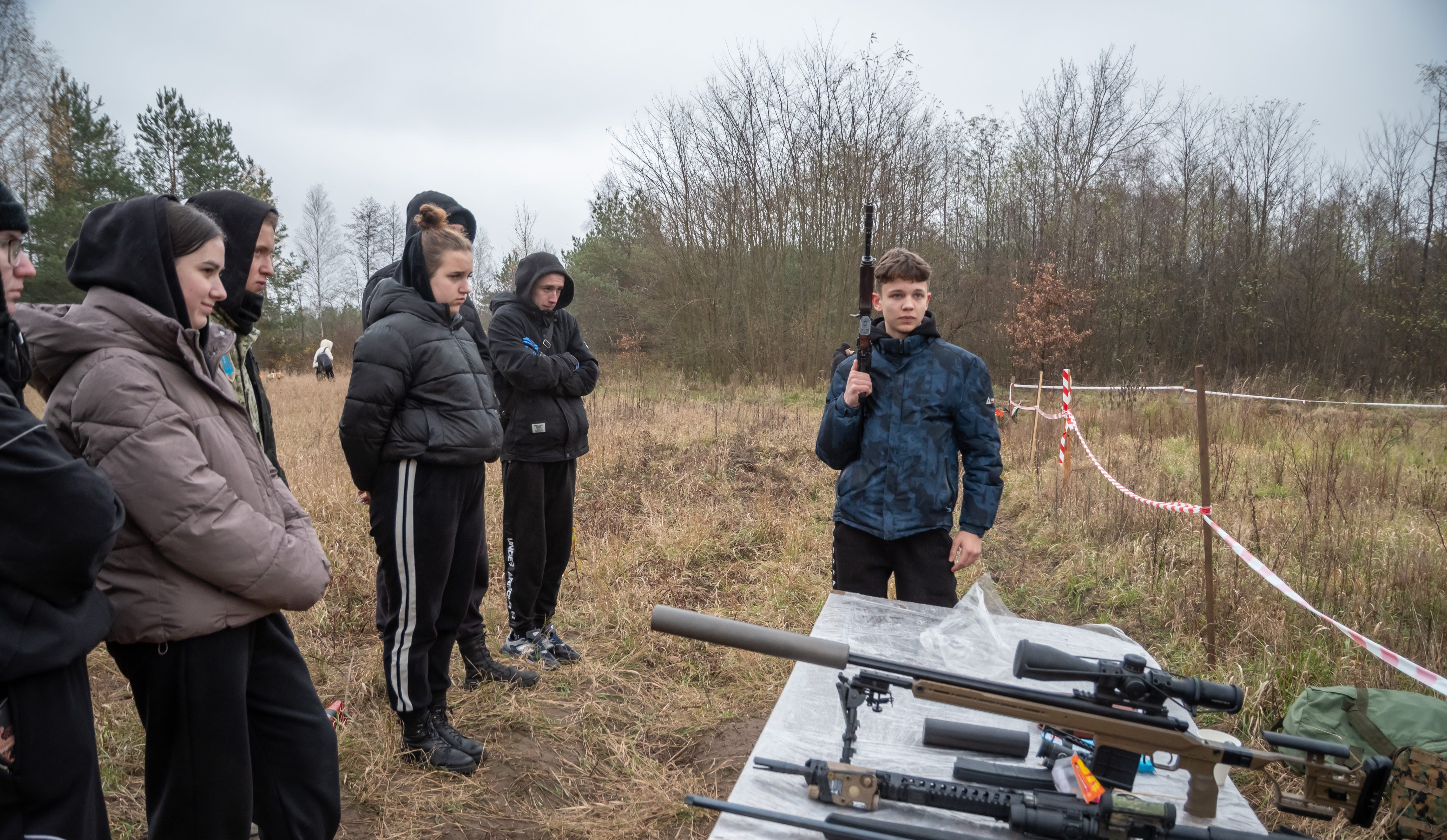
I believe that, following our victory, mandatory military training should be instituted for both men and women. Here in Kyiv, the daughter of a well-known millionaire goes out at night and shoots down drones. In schools, students are now being taught how to administer first aid, how to apply a tourniquet, how to handle a firearm. I want to sign up for that kind of training. We have to be realistic and prepared: we can never be fully assured that Russia won’t come marching in again or launch another attack.
That’s why I can’t really say right now that there’s a prevailing sense of victory here. People understand that we are making headway, that we are advancing—but we also understand the immense human cost. We know how many young men have died and how many children will never see their parents again. It is truly heartbreaking. But that is simply our reality right now.
Kateryna Kibarova is a Ukrainian economist and resident of Bucha.
Translated from the Russian by Julia Sushytska and Alisa Slaughter. This transcript has been lightly edited for concision and clarity.
About the Translators: Julia Sushytska was born in L’viv and is a Resident Associate Professor in Comparative Studies in Literature and Culture at Occidental College. Alisa Slaughter is Professor of Creative Writing at the University of Redlands. They co-edited and translated a selection of lectures by Merab Mamardashvili, A Spy for an Unknown Country (ibidem-Verlag, Stuttgart, 2020) and Both Sides Face East: Durable Words, a collection of poems, essays, and stories in nine languages that began as a response to the invasion of Ukraine, but stakes a wider claim on behalf of human value and integrity (Academic Studies Press, May 2025).
Follow Persuasion on X, Instagram, LinkedIn, and YouTube to keep up with our latest articles, podcasts, and events, as well as updates from excellent writers across our network.
And, to receive pieces like this in your inbox and support our work, subscribe below:
I don’t know how it’s possible to read this without having your heart break and simultaneously feeling immense admiration for the courage and solidarity of the Ukrainian people. They are under attack and have been for more than four years, yet even amidst this they provide wedding dresses and catering, so that couples who find love (or maybe love finds them) can celebrate that. Our country’s shame in failing to help them is a mark that will remain for many years. We owe them reparations.
All due to one Russian MF son of a bitch!