

As a Twin, I'm Offended by Cloning
Why Tom Brady will never get his dog back.

Cloning is back, baby—and with it, our fascination. No longer carrying a thrilling frisson of disaster, it slowly appears to be becoming part of the domestic everyday. With last month’s announcement that his dog Junie is a clone of his late pit bull mix Lua, former NFL quarterback Tom Brady has joined Barbra Streisand and Paris Hilton among others in the celebrity trend of cloning beloved—and sadly deceased—pets. Brady explains that Colossal Biosciences, a company in which he is also an investor, “gave my family a second chance with a clone of our beloved dog.”
This is a booming business: the announcement came at a time when Colossal announced it has acquired Viagen Pets & Equine, a company claiming to have cloned the most animals in the world. While Colossal positions itself as a noble de-extinction project, Viagen appeals purely to emotion, with its glossy website advertising “the science of keeping love alive.”
Across the world, cloning pets is becoming ever more popular, with a price tag of $50,000 for a cat or a dog, increasing to $85,000 for a horse. Viagen describes itself as helping you “continue life’s journey with the companion who changed everything,” apparently forgetting that the one certainty in anyone’s life journey is death. “When love leaves a mark that deep,” it continues, “you deserve a way to hold on.”
These reassurances that cloning simply perpetuates the bond shared between owner and the original pet seem to be working. Although Viagen does not reveal how many animals they have cloned so far, it is certainly in the hundreds, and increasing each year.
The appeal is obvious. Pets are firmly part of many people’s families, and indeed are often given more attention and adoration than inconveniently distant or elderly relatives. Dogs in particular demand a daily routine, with walks and regular mealtimes in addition to vet bills and trips to the grooming salon, providing constant reminders of their loss. My Maltese, Maude, is only four and already I’m dreading the day I come home to find her toys and clothes but no little dog waiting for me. Who wouldn’t want their precious companion back, especially in cute puppy form?
Yet I’m cynical of the promise of pet cloning. It’s simply not true that clones are, in any meaningful sense, the same as the original.
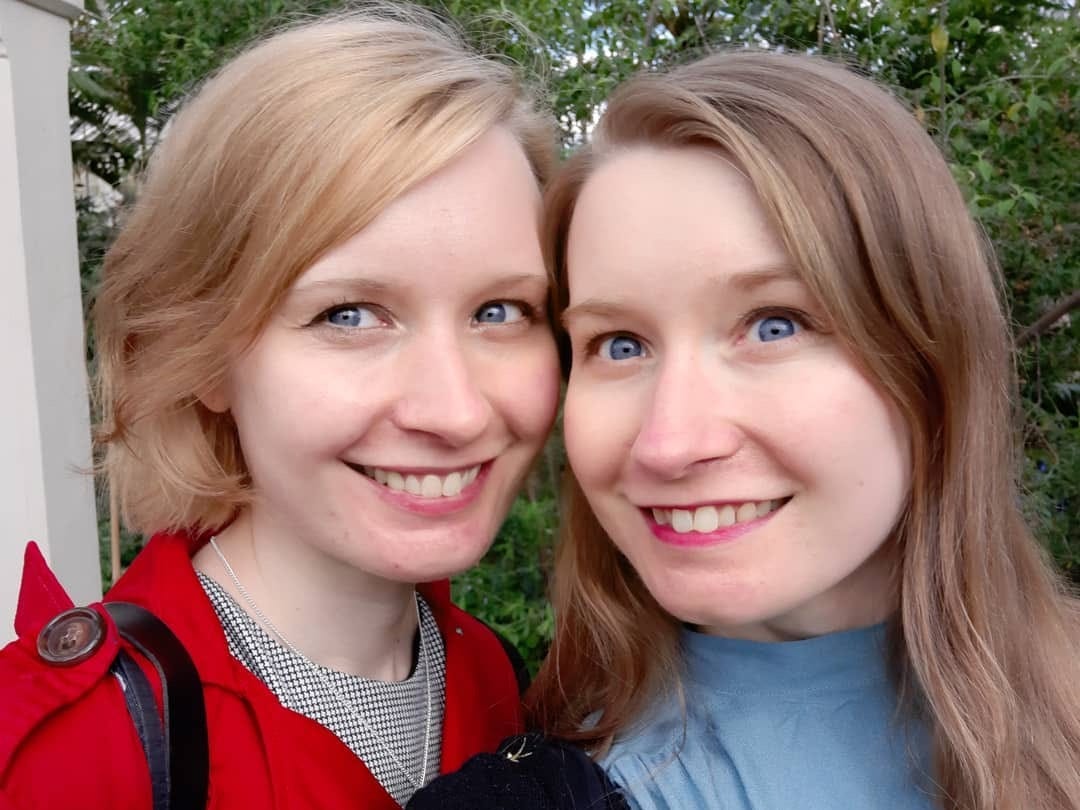
I’m an identical twin—a natural clone. Identical twins are even more similar to each other than a clone is to its DNA donor, because they often share the same upbringing and environment. Yet, as I know first-hand, that doesn’t mean our personalities are the same. If you were planning a party that I couldn’t make and so invited my sister instead, thinking she’d bring the same joie de vivre and bubbly demeanor that I do, you’d be very disappointed when she turned up and sat in the corner as a wry observer—one who, for that matter, is 4cm shorter than the twin you wanted.
Twins are often celebrated as being mirrors of each other’s lives. Stories like the Jim twins of Ohio—who were separated at birth, met at 39, and discovered their lives resembled each other to a spooky degree, including both having first wives named Linda and second wives named Betty—set the tone for how we think about twins. “We even use the same slang,” said Jim Lewis when the brothers were reunited. “A lot of times, I’ll start to say something, and he’ll finish it!”
Thomas J. Bouchard Jr., director of the Minnesota Study of Twins Reared Apart Project, was certainly impressed by the Jims: “When you start to compound the coincidences, they become highly unlikely very quickly. In fact, I’m flabbergasted by some of the similarities.” The study found that “on multiple measures of personality and temperament, occupational and leisure-time interests, and social attitudes, monozygotic twins reared apart are about as similar as are monozygotic twins reared together.”

But this narrative conveniently glosses over a number of things. Linda and Betty were common names at the time, and one of the Jims had married a third wife while the other was still on his second. The idyllic view of “two halves of a whole” has been challenged on a more fundamental level, too. Researchers have argued that because the Minnesota Study of Twins Reared Apart relied on volunteers, it was more likely to attract twins with greater similarity. The study also didn’t publish raw data or full case histories, making it harder to examine the extent of the similarities. A further complication with twin studies is that, while researchers have assumed that identical twins and fraternal twins have the same upbringing, this is not necessarily the case. Identical twins spend so much time together that it is unclear which attributes might be genetic and which environmental or social.
What’s more, epigenetics—the study of how environmental factors influence the way genes are expressed—explains why it’s wrong to expect twins to be truly identical. As individuals in their own right, each twin will necessarily have different experiences, and make different choices about their lifestyles. They will face different stresses, each of which could impact how their genes work, despite having the same genetic makeup. One study found that 35% of identical twin pairs had significant differences in their epigenetic profile—particularly when the twins were older, which suggests that these differences increase over time. This may explain why identical twins tend to have different outcomes in life, contracting different diseases, marrying at different times, and even why they can have different tolerances to pain.
In other words, our DNA, including epigenetics, clearly influences us in many ways; at the same time, we are more than just our genes. Throughout history, philosophers and scientists have debated if nature or nurture is more significant—it seems the answer is that both have an impact.
I’ve always been outgoing while my sister has been more reserved, but it is impossible to untangle to what extent this is genetic and to what extent it’s a result of growing up together, adapting to the other’s strengths and weaknesses. Since a young age we have wanted to be seen as people in our own right instead of two halves of one whole. While there is a cultural expectation that twins are best friends fused together throughout their lives, deidentification with one’s twin seems to be a natural part of becoming an adult. For identical twins, it is a tremendous insult to be told you’re exactly the same as each other—and to be positioned as a replacement for a deceased companion, no matter how adored, would be even worse. Rather, to be respected as an individual is a much-prized gift.
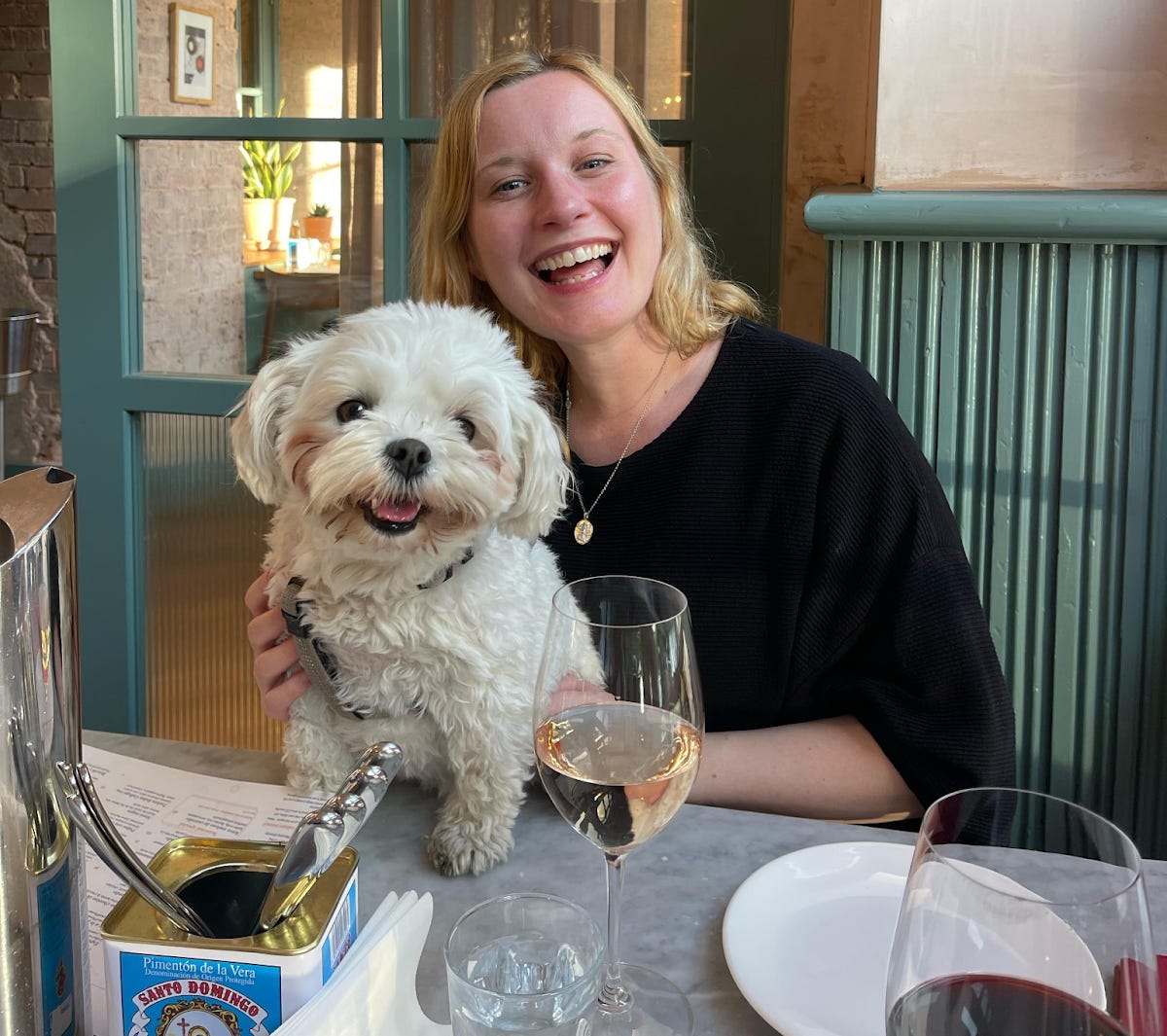
The same respect should be given to cloned pets—to be appreciated for their own personality and habits, not compared with an increasingly distant forerunner. Companies such as Colossal and Viagen promise that the past can be brought back; that a copy is enough to continue the bond with the much-loved original; that death isn’t an end. But to create a new dog and declare it will resolve the owner’s grief does not bring the pet back or undo its loss. An owner will eventually see the tiny differences add up, and the pet will feel it isn’t good enough without understanding why. Like Fitzgerald’s Gatsby fighting to change the past, pretending that a replacement is the same is futile.
Genetics can be copied, but experiences can’t be—the clone won’t have the same likes or fears of the original, and the owner will be forced to create new memories with them instead of reliving old ones. Would my dog still be Maude if she didn’t recognize the word “brunch,” know all the names of both her friends and mine, or take the Tube with the studied indifference of a daily commuter? While similar experiences would be shared with the new dog, their reaction would depend on their own personality and associations. How could they be the same?
For the sake of both owner and pet, we should accept the finality of death. We feel deep love for those we care about in part because of our fragility; to love anyone is to acknowledge that there will one day be a goodbye. Any new life—whether a clone, twin, or dog—should be loved for its own self.
Leonora Barclay is Head of Podcasts at Persuasion.
Follow Persuasion on X, Instagram, LinkedIn, and YouTube to keep up with our latest articles, podcasts, and events, as well as updates from excellent writers across our network.
And, to receive pieces like this in your inbox and support our work, subscribe below:
All right, I understand what you mean and there are several good points as for example, that experiences cannot be copied and pasted. So what is your final conclusion? Are you in favor of legal cloning or do you want a prohibition of it?