

Brits May Soon Say Goodbye to an Anonymous Internet
Why the UK’s proposed social media ban for under 16s would impact everyone, not just children.

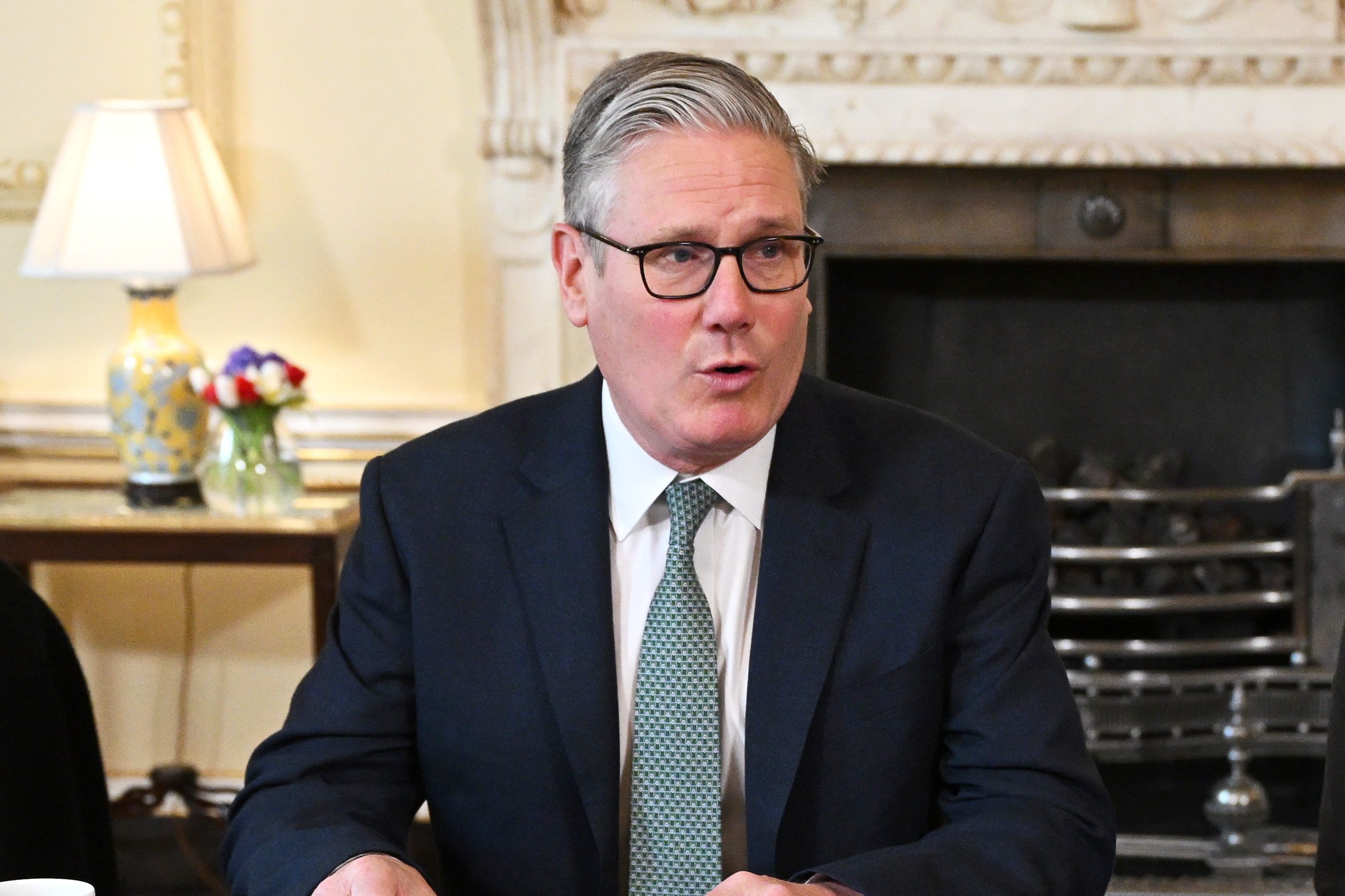
Last week, the United Kingdom unveiled a new policy it claims will protect children on social media platforms like TikTok, YouTube, Facebook, and X. The exact rules governing the ban will be announced before its implementation next year, but we know it will mandate age verification to restrict access to social media platforms for children under the age of 16. The policy will also affect older teens—16- and 17-year-olds will face a curfew preventing them from accessing social media overnight, while younger teens will be unable to access live streaming.
The proposed law is part of a wider trend. Last year, Australia passed a landmark social media ban for under 16s, which was lauded for setting the tone globally for other countries to follow. The campaign to keep kids off social media has also hit Europe, Asia, and the United States.
Supporters of such bans argue that they are necessary to protect children from the harms of social media. Governments often claim noble reasons when putting limits on citizens’ ability to speak freely and anonymously, and nothing sounds more noble than “protect the children.” “This is a choice about whose side we’re on: families across the country, or a status quo that isn’t working,” Prime Minister Keir Starmer said of the new policy.
But there are many reasons to oppose social media bans. First, supporters assume these bans do what they’re supposed to. But Australia’s ban emphatically isn’t doing what it promised. The government’s own research found that among parents with kids on social media before last December, about 7 in 10 said their child still had a Facebook, Instagram, Snapchat, or TikTok account. Starmer admits the Australian model hasn’t delivered. He has stated that the UK will “learn the lessons from Australia’s experience” and “make it far harder for children to bypass safeguards.” That’s why Starmer is calling his version “Australia-plus.” Soon, the UK government will release “different options for effective forms of age assurance for proving whether someone is over 16.”
But there’s a problem: these “under-16” policies will blunt all UK citizens’ ability to speak freely and anonymously online. All users, whether they’re 15 years old or 55, will need to prove their age in order to post on social media. This raises significant privacy concerns, not just for users’ ages, but for their identities. The process of age verification will cut away vital firewalls around users’ anonymity. As the rush to ban children from social media hits a global fever pitch, it’s well past time we abandon the faulty claim that only children will feel its effects.
In passing a ban, the UK will join a wave of countries pushing against anonymity. Earlier this year, German Chancellor Friedrich Merz said he wants “to see real names on the internet.” The Turkish government meanwhile announced its plan to end online anonymity. If you’re reading this piece in a nation without age-gating proposals or an associated threat to anonymity, be warned: It’s only a matter of time.

One problem facing advocates of internet restrictions is the availability of virtual private networks (VPNs), which reroute traffic and allow users to access banned content or sites from behind firewalls or blocks. The UK government is well aware of the challenge VPNs may pose to its under-16 ban, and Technology Secretary Liz Kendall announced this week that the government “will make further statements in July about VPNs.” Children’s Minister Josh MacAlister has said there are “options there about whether we could age-gate VPN use, which would be really welcome.”
But attacking VPN use is a hallmark of authoritarian internet censorship. In deeply censored societies, VPNs are often the only way people can access vital information about current events, history, and information about their health and safety. Speech and privacy advocates should watch closely the lengths to which UK officials are willing to go in enforcing their under-16 ban, especially if it involves restricting access to VPNs.
Parents and policymakers around the world have raised reasonable concerns about the role social media use plays in young peoples’ lives and development. The internet is a revolutionary technology that is always evolving, and we are still in the process of understanding its implications for kids and broader society.
But the answer is not blanket censorship. Parents across the board may have different ideas about how they want to manage their own children’s internet use and their exposure to online speech. And it’s deeply troubling that few policy makers have discussed how their “child safety” rules burden adults. Put simply, many unsettled questions and serious objections to social media bans have been cast aside in the rush to enforce a near-uniform policy approach on a mass scale.
It’s not particularly surprising that the UK is once again treading censorial ground. In recent years, Britain has banned controversial speakers from entering the country, targeted blasphemy, investigated and arrested people for peaceful protest, and rolled out messy regulations targeting so-called “harmful” online content. It has been shockingly comfortable with targeting social media users, with thousands annually facing police action for posts perceived as offensive or harmful. And that’s just a sample of the growing power the UK is asserting to define what its citizens can see or say—and the tools the government has at its disposal to enforce that power.
The truth is that we don’t need to pit our speech rights against youth safety. We can work to help parents individually make the right choices for their families. There are ways to empower parents to navigate their kids’ use of the internet while respecting that children have their own ability to speak and seek information, and protecting the rights of the entire population against burdensome and invasive limitations on their expressive rights.
If Britain doesn’t learn this lesson fast, it will find itself sleepwalking into an unfree internet.
Sarah Mclaughlin is Senior Scholar of Global Expression at the Foundation for Individual Rights and Expression and author of Authoritarians in the Academy: How the Internationalization of Higher Education and Borderless Censorship Threaten Free Speech.
Follow Persuasion on X, Instagram, LinkedIn, and YouTube to keep up with our latest articles, podcasts, and events, as well as updates from excellent writers across our network.
And, to receive pieces like this in your inbox and support our work, subscribe below:
 | A guest post by
|
The government social media bans for those under 16 probably sweep too far. And yet I can't help but be sympathetic with them. I think it would do liberals and free speech advocates good to be more open to emerging concerns regarding children and less doctrinaire and hyperbolic when it comes to minimal burdens on adults.
What do I mean? Take age verification, including for VPNs. This does not strike me as a big deal. I'm sure the law could easily preserve privacy and anonymity. I imagine that you would get a token from a third-party site that could then tell every other site that you are of age without disclosing any other identifying information about you. I'm sure this would be as seamless in practice as Google remembering your passwords. Given how much information all of us routinely hand over to companies seeking to profit by our eyeballs, this little burden, to make sure you're of age before, say, letting you watch violent pornography that would probably fail the obscenity test if it were ever enforced, seems trivial.
Yes, repressive regimes use VPN restrictions, but that doesn't render any VPN restriction repressive. Repressive regimes also use police. It doesn't follow that we should abolish the police. VPN restrictions on *children* seem fine.
The concerns are twofold: kids' immediate, easy access to a truly shocking and revolting cesspool with no practical restrictions, and social media architecture that, even as to relatively benign content, gobbles up kids' brains as they scroll through short videos, addict-like, seeking that next hit, making them stupider by the hour. I'm sure there's a good measure of hyperbolic panic in this side of it as well, but I'm increasingly convinced that the experiment we're running on kids right now, not in the name of free speech but of corporate profits, is a real worry.
I read with interest the phrase, "We can work to help parents individually make the right choices for their families," but was left wondering how. So I guess I'll ask: How? How can we effectively and realistically address these two concerns?
Cars without seat belts are dangerous so the government mandated seat belts. An unregulated Internet is also dangerous because "free speech" can be weaponized. Depending on parents to police their children's on-line consumption and/or abuse of social media is a fairy tale. Unrestricted free speech legally delivered Hitler to the Chancellery.