

Be Excellent, Not Efficient
What I told this year's graduating class.

This essay is based on a commencement address given at Denison University on May 16, 2026.
Let’s travel through time.
Put on your bell bottoms, stare dreamily at that lava lamp, turn up the volume on Paul Simon’s “Mrs. Robinson,” and imagine you are graduating from college in the mid-1960s. It is a revolutionary era that had different contours but presented similar questions to the ones you face today: how might you make your way, your mark, and your fortune in a time of global conflict, political upheaval, and technological transformation?
In Mike Nichols’ film The Graduate, the main character, Ben, is cornered by middle-aged men in suits at cocktail parties and told “there’s a great future in plastics.”
They could just as easily have lectured him about processed foods. This was the era of TV Dinners, instant mashed potatoes, and frozen fish sticks. The future of American cuisine seemed destined to come out of a package. Ambitious college graduates were no doubt told to think up new products that could be prepared more quickly than Spaghetti-O’s, or find new preservatives that would make those items last longer, or devise new marketing campaigns that would sell more cans to more people. The wave was cresting right in front of you; all you had to do was ride it.
Alice Waters loved to eat. She had come of age in the 1960s eating meals out of the freezer, all the while nurturing a vague notion that there had to be a better way to engage in one of life’s most fundamental activities: sharing food with family and friends.
Alice was a student of the liberal arts. In fact, she majored in French cultural studies. It might not be the most direct route to Wall Street, but it did mean she studied abroad in Paris.
France transformed Alice Waters, particularly the difference in how people approached meals. Processed foods were not the norm in Paris. People went to the market to find the freshest produce available, sometimes multiple times a day. They were happy to pay extra for the good bread. Most importantly, they savored their meals slowly, lingering for hours at a time with family and friends.
One day, Alice went to a restaurant in Brittany and ordered fish for lunch. Her waiter took the order, and showed Alice a trout that had been freshly caught in the stream that ran alongside the restaurant. Then he cooked it with vegetables that had been picked from the garden.
The experience opened Alice’s eyes to new possibilities. At that time in the United States there were virtually no grocery stores, no markets, no restaurants that supported a slow food way of life. So Alice Waters built them. She opened a restaurant called Chez Panisse, which served fresh food in a comfortable environment that encouraged conversation.

Chez Panisse was the nation’s first farm-to-table restaurant. It has a claim to be the most influential American eating establishment of the past 60 years. A whole galaxy of famous chefs got their start in its kitchen. When you see terms like “organic” or “wholesome” or “fresh” associated with your food, rather than “quick” or “convenient”; when you read the name of the farm your meat or vegetables come from—that’s the universe that Alice Waters and Chez Panisse built.
Let me point out three things we can learn from that story.
First, you are not obligated to ride the wave that presents itself as inevitable. This is not a comment against Instagram, or instant mashed potatoes, or artificial intelligence. It is a comment about embracing human judgment. Your judgment. The judgment that gets cultivated by a liberal arts education of constant reading, thinking, discussing, opining, revising. It’s the judgment that can look at a rising tide—whether it’s processed food or gambling apps—and say “I think that wave is more likely to destroy cities than lift boats.” Or simply, “No thanks, I don’t want to live that way.”
You may decide that it is just fine for a robot to drive you from point A to point B. Or to do your taxes. But you want a sentient being to share your meals with, and to lay their head on the pillow next to you at night. It’s the judgment that recognizes you don’t want to spend the second half of your life apologizing for what you did during the first half. Just remember: you get to decide what matters, and you get to decide how to organize your life around it. Thich Nhat Hanh tells the story of a rider on a horse galloping madly across a field. When someone says, “Hey, where are you going so fast?” the rider responds, “I don’t know: ask the horse.”
You don’t want to be that guy.
Second, connect the social change you want to see with the life you want to live. Alice Waters wasn’t motivated by her anger at a system. She was inspired by her love for a form of life: namely, how we eat and talk together. The great Jesuit philosopher John Courtney Murray had a word for that: civilization. Turns out the simple things can be quite profound. David Brooks calls this the “Some people find a better way to live, and other people follow,” approach to social change. It has been the north star of my own life. The reason that I started an interfaith organization was because I think religion is principally about being a better person, and I need to be a better person. So being around religion is good for me.
Third, focus on the excellence that is the fruit of hard work. Be skeptical of people who help you make excuses or encourage a sense of entitlement. Whenever you are faced with the choice between doing more things in a mediocre way, and doing fewer things in an excellent way, choose excellence. When Alice Waters returned from France, her instinct was not to convince fast food places to put better pickles in their burgers. It was to start a single restaurant that mastered a particular cuisine. There is no substitute for being good at what you do.
In Islam, there is a word for this: ihsan, or sacred excellence. It’s the highest spiritual state that one can achieve. If you achieve excellence, if you are good at what you do, impact will follow. Brian Eno once said about the Velvet Underground that they weren’t influential because they sold millions of albums. They were influential because the handful of people who bought their albums were so inspired that they all started their own bands.
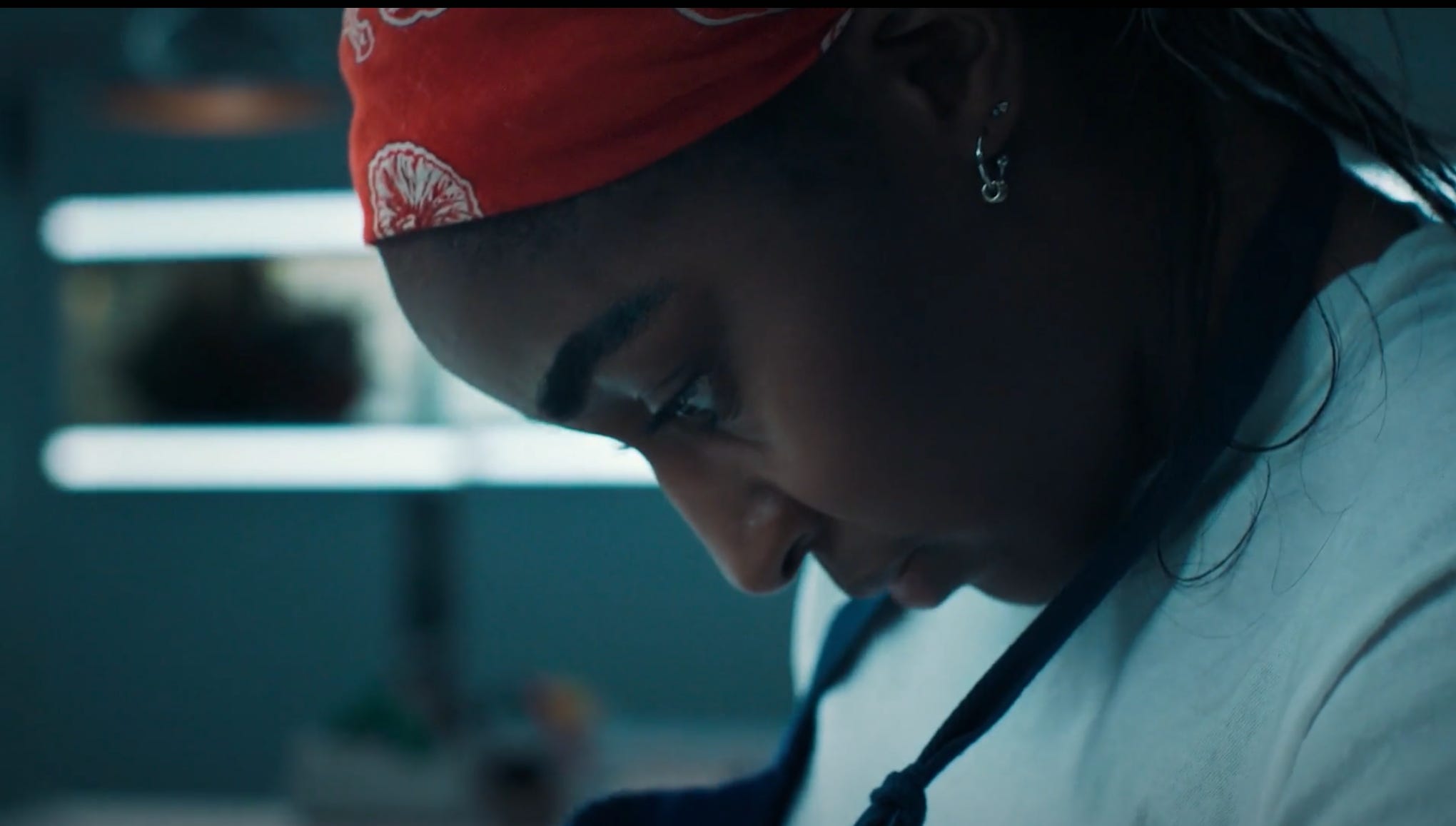
Excellence finds its ultimate destiny in the service of others. My favorite example of this is, well, about food. In the penultimate episode of season two of “The Bear,” Sydney, the sous chef of a fine-dining restaurant, notices that her friend Natalie is near collapse from exhaustion. She offers to make her breakfast. The camera does a closeup on every exquisite detail of the process: the way the eggs are cracked and whisked, the way the pan is buttered, the manner in which the cheese is spread evenly right down the middle, the chopping of the chives, the mixing of juice, the smile when the food is delivered to an exhausted and grateful recipient. And then the eyes lighting up as the first bite is taken.
“That was the best part of my day,” Syd tells the chef-owner of the restaurant, Carmy. Carmy nods knowingly. They have aspirations that their restaurant will win a Michelin star. But the original motivation was never about the honors or the recognition. It was about a commitment to the craft of cooking, and the joy of taking care of others. It was about the profound sense of satisfaction you feel when making a perfect omelet, and an honest living from your craft, and a gift that brings joy to others.
I don’t tell you stories about Alice Waters or the Velvet Underground or “The Bear” because I’m a cook or a musician. In fact, I’m the last person you want making you an omelet or singing you a song.

I tell you these stories because when I watch chefs or musicians or any human being do their work with ihsan—sacred excellence—and direct it towards the elevation of other human beings, it inspires me to improve at my craft, to do my work with ihsan, to be as useful as I can to the people around me.
Humans inspiring other humans to elevate. Maybe the robots can do that, but I don’t think so. And even if they could, I’m not sure I’d want them to. There is something very human about making our own food, and our own music, and our own inspiration. This is the essence of our condition. It is what we were made for. It is what makes us precious to one another.
It makes me think of the wisdom of the Roman philosopher Seneca. I will leave you with his words: “While we live, while we are among human beings, let us cultivate our humanity.”
Eboo Patel, a contributing writer at Persuasion, is the founder of Interfaith America and the author of We Need to Build: Field Notes For Diverse Democracy. He served as an advisor on faith to President Barack Obama.
Follow Persuasion on X, Instagram, LinkedIn, and YouTube to keep up with our latest articles, podcasts, and events, as well as updates from excellent writers across our network.
And, to receive pieces like this in your inbox and support our work, subscribe below:
 | A guest post by
|
Great piece.
Somewhere along the way we have failed to educate people about the climb. I interview college graduates that expect to enter the job at a high rank making professional level wages. They cannot seem to understand that their education was only a help for them to get the interview, but that there are current employees with four+ more years of work experience that are more valuable to the company than they would be when hired. And that they would need to climb the ladder of demonstrated skills development to earn higher wages and promotions.
I explain to people all the time that making top income requires mastery of marketable skills. And that mastery generally takes about 10,000 of practice. I said working full time practicing means it will take about five years. But most high-paid professions require more time than that because there is competition. Only the dedicated and hard-working people get to the high-compensation mastery level, but it rarely happens right out of school.
Then I hand them a trophy for their participation.
It always helps to know where you are before you try to figure out how you're going to get where you are going. Now that I know where we currently are as a 250 year old nation, I'm trying to take us all to a better long-term future to help America's future history evolve in a better way for our descendants at EthicalGovtNow.org. Concern about the past and present is OK, but it's the future we can and must deal with. Join me in my movement. Only $12 a year. A lot less than a fine wine costs these days. I need your support. Thank you.