

Hope and Fear in Tehran
A letter from an Iranian.

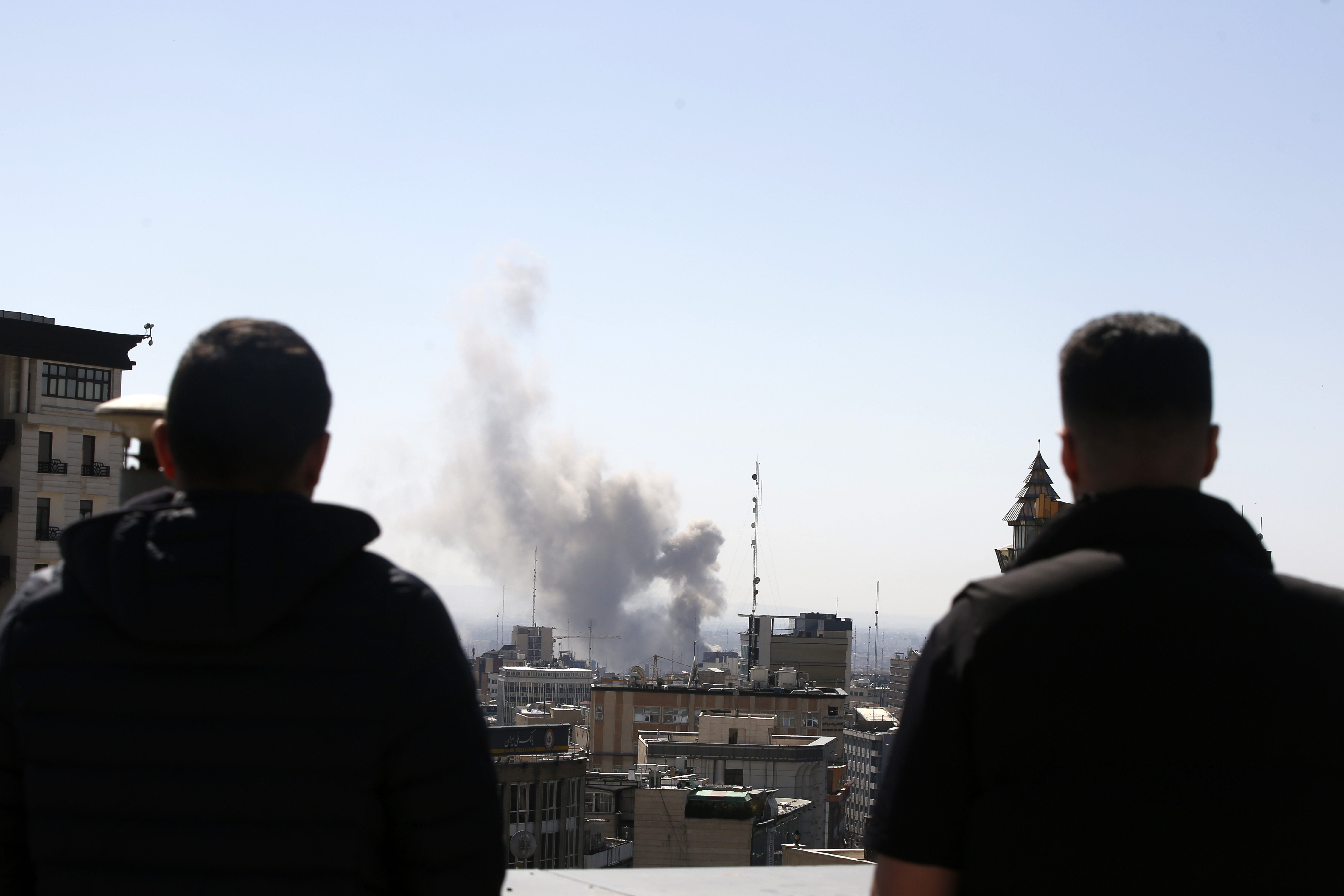
Two days ago, I had a very short conversation with my sister in Iran. The internet kept dropping because of government interference. I asked how they were doing. She replied, “We’re waiting to be attacked.”
Yesterday, we woke up to the news that the United States and Israel have launched an attack on Iran—a war that has felt inevitable for so long that its arrival is both shocking and unsurprising.
American and allied forces targeted missile sites and air defenses. The attacks extended to port areas and energy hubs. There was a devastating strike on a girls’ elementary school in Minab, reportedly resulting in over 100 civilian casualties.
Even in wars described as strategic, children die first.
In many cities, including Tehran, explosions were heard near major government and military sites, including parts of the Supreme Leader’s compound. News followed that Ayatollah Khamenei himself was dead. I can’t lie—when I saw satellite images of his compound in ruins and heard the reports of his assassination, it felt surreal. When I lived in Iran, I passed that heavily guarded building many times on the way to my grandmother’s house. I would not dare look up at the armed guards, irrationally afraid they might recognize my hatred.

For many Iranians inside the country—and for those condemned to exile—this is a cathartic moment decades in the making.
Videos are pouring out of Iran—people celebrating, dancing in the streets. “This is the dance of justice,” my cousin wrote to me.
Some of the footage is reminiscent of the U.S. invasion of Iraq in 2003 and the moment Saddam Hussein was found hiding in a hole. For those living under authoritarian rule, that image of Saddam—messy and disoriented, far removed from the carefully groomed image he had projected for decades as Iraq’s strongman—suggested something radical: dictators can fall. I remember people handing out candy on the way to school, celebrating the end of Saddam’s brutal regime. We know how that story ended.
This is where Iranians find themselves: relieved that the Islamic Republic’s machinery of repression is being struck; mourning the thousands killed by the regime in its crackdown in January; mourning, too, the civilians (including children) killed in the U.S.-Israeli bombardment. Relief and grief coexist. Celebration and terror sit side by side.
The celebrations are not about loving bombs—they are about the collapse of a man and a system that made everyday life feel like a war long before this one began.
For more than 20 years, many Iranians have lived in a state of suspended expectation: “It’s coming. Help is coming. War is coming.” That anticipation becomes part of your identity. It shapes how people emigrate, protest, save money, raise children. We learned to live under the shadow of an anticipated explosion—where fear and hope converge.
Whether the average American is aware of it or not, the United States and the Islamic Republic have been locked in a soft war since the 1979 hostage crisis. But for Iranians inside the country, the war has never been abstract or diplomatic. It has been intimate and daily—one side armed with guns, prisons, and militias; the other side resisting with bare hands, sticks, and stones.
In the last few decades, the people of Iran have taken to the streets over and over again and shown—to themselves and to the world—that they are willing to fight for their freedom. What they have asked for are conditions that make survival and agency possible: the ability to organize without arrest, to protest without disappearance, to speak without being executed. And they have repeatedly asked the international community, particularly the United States, for support.

In the summer of 2009, millions of Iranians poured into the streets after a stolen election. I remember the sound of people calling “Allahu Akbar” from rooftops at night—not as a religious act, but as a defiant signal, a way of saying, We are still here, and we need help. I watched the government hunt those people down. Neda Agha-Soltan, a student in Tehran, was shot dead on a street I knew. I remember the specific quality of the silence that settled afterward—the silence of people who had called for help and been left alone.
The Obama administration chose restraint, guided by an understandable fear of interference. But what was framed as moral caution felt, to many of us, like moral abandonment.
For many, “help” is defined through respect for sovereignty and moral restraint—shaped by the desire not to repeat historical mistakes. These fears are not imaginary. They are grounded in real harms. Foreign interventions have left devastating scars, and skepticism toward them is justified. History shows that intervention rarely builds democracies.
But it has, at times, stopped slaughter.
Now President Trump has acted. Whether this action will be deemed a success is a question history will answer. War rearranges political timelines. It can weaken regimes, but it can also prolong leaders’ survival.
“War is a blessing,” Khamenei’s predecessor, Ayatollah Khomeini, declared in the 1980s during the Iran-Iraq War—a war that might have ended sooner but instead stretched on, costing hundreds of thousands of lives and consolidating the Islamic Republic’s grip on power. My father’s generation fought in that war. Some never came home. Others came home changed in ways they couldn’t name. I grew up around the wreckage of it—the missing uncles, the men who flinched at loud sounds. War unifies a country. It strengthens ideology. It exposes internal enemies. It deepens loyalty through fear. The Islamic Republic survived that war. It emerged from it with its grip tightened around the throats of the Iranian people.
Authoritarian systems have survived—and even solidified—under external attack.
Most Iranians, inside Iran and in the diaspora, are celebrating this historic moment. For the post-Revolution generation, which has been raised on the expectation of foreign rescue, the death of Ali Khamenei feels like light breaking through darkness.
But this rescue, arriving in the form of missiles, does not seem to have come with a plan for the day after. There are many reasons to hope, but we must also ask the most uncomfortable questions: What if freedom is not the immediate outcome? What if the regime survives? What if repression deepens? What if the space for change narrows instead of expanding?
These are the questions swirling in my mind as I hold my newborn child in my arms. I think of the mothers who will never hold theirs again.
History will debate strategy. The mothers will count graves.
Mitra Vand is an Iranian-American writer from Tehran. Her work examines authoritarianism, exile, and the emotional consequences of political violence. She writes under a pseudonym.
Follow Persuasion on X, Instagram, LinkedIn, and YouTube to keep up with our latest articles, podcasts, and events, as well as updates from excellent writers across our network.
And, to receive pieces like this in your inbox and support our work, subscribe below:
 | A guest post by
|
Thanks for this report and the expressions of the human side of conflict: mother, babe etc. It is interesting that the Americans have not actually declared War on Iran. But they most likely don't want to or have to. However bombs and military steel take no notice of those impediments to total war. This will be a conflict under the heading of "A Blockade" which have been used throughout history as a military strategy to prevent an enemy from receiving supplies, or in this case exporting supplies as well, thereby weakening their ability to fight. In this case the export of oil will further cripple the finances of Iran. There are land routes for oil to be exported from Iran and the American navy is powerful to police the sea routes and the Strait of Hormuz, the strategic chokepoint for seaborne oil that Iran has long used as a geopolitical bargaining chip, with Tehran repeatedly threatening to close it during times of crisis. But can America block the land routes? There will be no "boots on the ground" from the Americans and the success or failure of this venture will depend on how American diplomacy can hold their friends and repel their enemies until the fog of war clears and there is "regime change" in Iran. What the next regime to rise will be is the burning question and will require billions and billions of Western dollars to achieve. Israel will be happy at these events and fearful of what comes regime comes next. Trump and his administration will get little recognition in the mainstream media, and no doubt the NEWS outlets headed by CNN will begin their usual attack of the POTUS and his strong and necessary action America has taken to begin the dismantling of the Iranian Satan that has stood astride the middle east like a dreadful colossus, a monster that their regime has become with it's avowed mission to annihilate Israel and finance terrorism, death and destruction through its multiple portals aka Hamas, Hezbollah. the al-Quds Brigades, al-Qaeda, Boko Haram and the list goes on, all financed partially or wholly by Iran.
I hope that the people of Iran can be gthe real winners in this long struggle. I wish our war effort so far has been to prevent Iran from getting nuclear weapons but if they keep attacking other countries at random maybe our war department can fight a real war that might bring true regime change….