

Surely Liberals Can Agree That Plagiarism Is Bad
Institutions need to uphold standards. No exceptions.

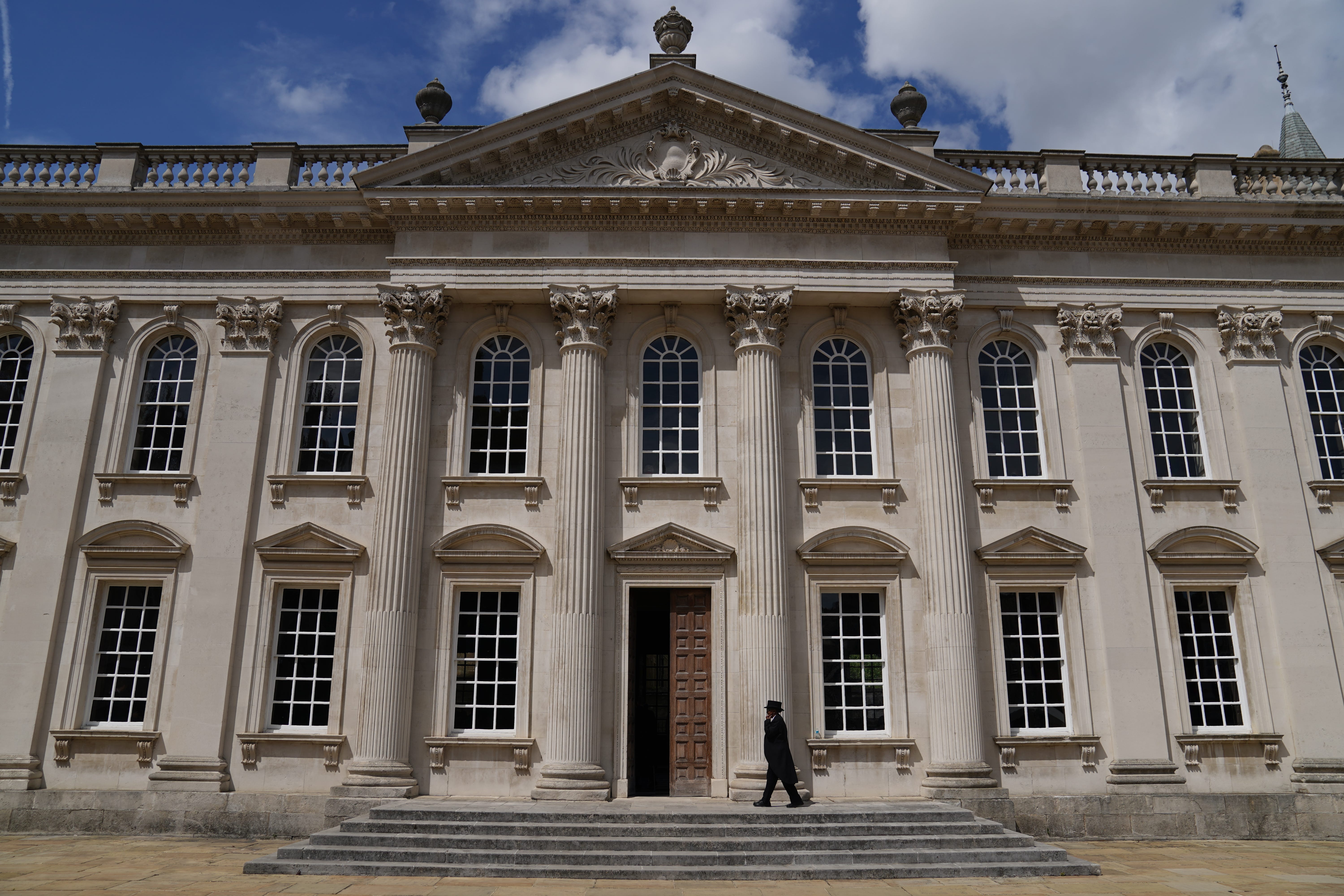
This is a nasty story.
In 2023, Jason Arday made international news for becoming, at age 37, the youngest black professor in the history of Cambridge University. It wasn’t just that, though. Arday had a really remarkable background. Raised on a council estate in south London, Arday was, in his account, diagnosed at age three with autism and global development delay and didn’t speak until he was 11. At that point, something “clicked,” as he has put it, but he wouldn’t read or write until he was 18.
Then, Arday really applied himself. By age 30, he obtained a Ph.D. in Educational Studies from Liverpool John Moores University, and, according to his official biography, worked at Roehampton, Durham, and Glasgow before being appointed to a highly prestigious professorship at Cambridge. In his spare time, Arday was an ultra long-distance runner, in 2010 completing 30 marathons in 35 days and over two decades raising £5.5 million for charity.
It’s a beautiful story—Arday himself for the documentary “Great Big Story” said of his life, “Wouldn’t it be the most ridiculous story ever told?”—and it’s about to be commemorated in a memoir that Simon & Schuster UK is releasing later this month.
The only problem is that large portions of it may not be true.
In 2023, only months after his appointment at Cambridge, a pair of academics, Dave Harris and Martyn Hammersley, raised concerns to Cambridge, to Liverpool John Moores, and to different journals Arday had published in about the academic integrity of Arday’s work. Two of the journals issued corrections. Cambridge replied that the issues preceded Arday’s hiring and therefore were not within Cambridge’s “remit” to investigate. Liverpool John Moores, for its part, has issued a statement that the university in 2025 conducted a “confidential procedure” in response to the allegations and that “Professor Arday’s PhD still stands.”
In 2025, the Times Higher Education spiked an article about the allegations against Arday after Arday enlisted the defamation law firm Carter-Ruck to send a letter to the publication. But last month, Nathan Cofnas, a former Fellow at Cambridge, published a post on Substack that blew the Arday story wide open. Using the plagiarism detector Copyleaks, Cofnas found over 30 cases of “substantial overlap” in Arday’s Ph.D. dissertation with the previously-published dissertation of Paula Zwozdiak-Myers, many of them long chunks of verbatim copying, as well as verbatim copying from other sources. Cofnas went through ten other papers of Arday’s, taken from Arday’s own list of “principal and recent publications,” and found significant issues, including plagiarism, in at least four of them. Additional malfeasance included virtually identical quotes attributed to different sources in different papers, which strongly implies that at least some of the quotes from supposed participants in his studies were confabulated.
Meanwhile, Cofnas raised difficult questions about aspects of Arday’s personal story. He noted that running 30 marathons in 35 days would place Arday in the ultra-marathon elite—this without having left any ostensible mark in the running community. “If Arday [did that], I’ll eat my yarmulke,” said Cofnas by telephone. The claim to have raised £5.5 million for charity has already been walked back by Arday, who in a recent interview said the fundraising was done in conjunction with collectives. And Cofnas found that Arday’s two GCSE qualifications—in physical education and textiles—were unobtainable without passing written tests, a detail that challenges the timeline given by Arday that he could not read or write until he was 18. Cofnas also suggests that Arday’s account of his speech development is “medically improbable.”
Cofnas is far from a neutral party in this case. He was fired by Cambridge’s Emmanuel College in 2024 on the back of student protests against him for a Substack post in which he wrote that in a color-blind meritocracy “blacks would disappear from almost all high-profile positions outside of sports and entertainment.” Harris, the academic who first raised questions about Arday’s scholarship, was embroiled in a controversy of his own in which he had his emeritus title at Plymouth Marjon University stripped for a time after he critiqued critical race theory.

The fact that his accusers are controversial in their own right may help to explain why so many academics have reflexively defended Arday. In an interview with The Times of London, Arday this week said, “There has been, since I arrived at Cambridge, a very well orchestrated and co-ordinated campaign to unseat me from my position. The motive is racially motivated. I think there’s a reason why it’s me, and I do think that reason is aligned to ableism and racism.” In 2025, when the allegations against Arday were beginning to surface, the Cambridge professors Simon Baron-Cohen and Ricardo Sabates circulated an open letter under the heading “URGENT PLEASE SIGN ANTI-RACISM LETTER FOR JASON ARDAY.” The Good Law Project, an activist organization, orchestrated a solidarity letter last week that has been signed by 14,000 people decrying the “sustained and malicious attacks on the academic integrity of Dr. Jason Arday,” which the letter attributed to “an attempt to undermine Black people who hold positions of influence.” And Cambridge University has wholeheartedly taken Arday’s side. A university spokesperson said, “Professor Arday has been the victim of a vile campaign to undermine his credibility, which must stop.”
So—as you can see—it’s an uncomfortable story landing right on the faultlines of the culture wars. On one side is institutional procedure alongside an institutional culture hyper-sensitive to accusations against what the Good Law Project calls “a working class Black man.” On the other side is the argument that standards must be maintained—and maintained by academic and journalistic vigilantes if the institutions are unwilling to uphold their own meritocratic principles.
And of course the real issue isn’t exactly Arday. It’s the presumption that the politically progressive culture ascendant at Cambridge and in higher education in general has long ago deviated from real meritocracy. By phone, Cofnas was clear on that point. He said, “This is a story about DEI and the corruption that is required to sustain the system of DEI—of elevating people based on identity characteristics rather than merit.”
So what do we do in a case like this, where everybody pretty much sees what they are already predisposed to see? Well, first of all, we look at the source material—and in this case it’s pretty unequivocal. For instance, Arday’s line on page 17 of his 2015 dissertation—“Student teachers are unique individuals and differ in their personal biographies and prior experiences, disposition to enquiry, cognitive and perceptive abilities, communication, interpersonal skills, adaptability, values, and belief systems”—is a perfect match to page 1 of Zwozdiak-Myers’ 2009 dissertation. According to Cofnas, the pattern is repeated dozens of times, while The Telegraph for its part found “more than 100 passages that are identical or nearly identical” to Zwozdiak-Myers’ thesis. There is, as Harris put it, “no other plausible explanation” than plagiarism for the overlaps.
Then, in the week following Cofnas’ Substack post, subsequent reporting found additional patterns of fabulism by Arday. In an open letter to a government minister last year, Arday said he was the victim of innumerable threats and attacks since he took up his Cambridge position. In an interview with The Guardian this week, Arday clarified that he was referring to, among other incidents, a “severed pig’s head” that had been sent to his parents’ London home. That assertion triggered a macabre scavenger hunt, with Guardian journalists visiting the butcher shop that Arday claimed had sold the pig to the assailant. But the butcher said that there had been no police investigation into the incident, as Arday had asserted. For their part, London’s Metropolitan Police said that the details Arday gave of a police investigation into the incident were “categorically” inaccurate.
Arday further claimed that a masked man had accosted him twice at his Cambridge faculty building and threatened him with a knife the second time. But as The Guardian noted, no intruder appeared on CCTV on either occasion, and Arday did not inform colleagues or interrupt his working day after the alleged knife incident.
Meanwhile, a recently-surfaced video interview with Arday appears to show him claiming that he starred in the acclaimed documentary “Seven Up”—a mathematical impossibility unless Arday was actually born in 1956. And just today Glasgow University has denied Arday’s claim that he held a visiting professorship there.
Given all that—the all-but-indisputable evidence of plagiarism, in addition to the patterns of fanciful statements by Arday—the case for his defense collapses. “I think it’s plagiarism and it’s obvious,” one academic told The Guardian under condition of anonymity. “There is no question that there is extensive plagiarism,” David Sanders, an independent researcher who reviewed Arday’s case last year for Times Higher Education, said to Retraction Watch.

Arday, for his part, did not, in a wide-ranging interview he gave to The Times of London last week, directly challenge the primary allegation of plagiarism and academic misconduct. He said, “I am accountable for the mistakes I’ve made. I hold myself accountable and other people should hold me accountable.” Instead, he took another line of defense, contending, “We’re talking about academia here. I didn’t murder somebody. I think the cruelty that I’ve experienced and the positioning of me as this kind of liar and fantasist is totally unacceptable.”
If it’s fair to say that the preponderance of evidence at this point speaks to serious academic misconduct on Arday’s part, the next question—picking up on Arday’s lead—is to ask ourselves what the stakes are here and what the story is really about. Arday is right of course that one academic with a shaky relationship to the truth is not, by itself, a huge deal. But, unfortunately for Arday’s defense, it is a story with more reach than he admits and it really does indict the institutions backing him.
For one thing, there is the issue of how Arday and his supporters have tried to defend him. There has been very little of the accountability Arday has called for—and there has been no willingness to look at the very obvious evidence of academic misconduct. The overriding tendency has been to shoot the messenger and to go after the academics, particularly Harris and Cofnas, who called attention to the issues in Arday’s work. According to The Guardian, Arday attempted to lodge a police complaint against Harris. Earlier this year, he dedicated a talk at the British Sociological Association to the “playbook” employed by conservative activists to target black professors. “There isn’t any room to sit there and watch your fellows suffer for no reason. It’s abhorrent, it’s a disgrace and, quite frankly, evil,” Arday said.
Apart from the often vitriolic counter-attack against Arday’s accusers, there has been a tendency to dodge the issue and shield Arday through arguments related to his neurodivergence. “1 in 4 autistic people have planned or attempted suicide. That’s why I’m very concerned about the impact of the media coverage on Professor Jason Arday who is autistic,” Baron-Cohen, the director of Cambridge’s autism research center, wrote on X last week. In his Times interview, Arday seemed to pass the buck on the plagiarism in his dissertation, contending that, in The Times’ paraphrase, he had “received inadequate supervision and support” particularly given his autism and learning disabilities.
That was the general approach taken as well by Cambridge in its communication with Martyn Hammersley in 2023 in which the university affirmed its “full support” for Arday. Hilary Cremin, the head of the Faculty of Education, wrote to Hammersley, “During our meeting Prof Arday spoke movingly about his ongoing experiences of direct and indirect racism, and the conditions that he was living in whilst the 2018 article was being prepared (in 2016). At this time he was early career and living away from home whilst dealing with significant health issues.”
If Arday’s defense is not sustainable on the grounds of academic integrity, this plea for the court’s mercy is hard to credit as well. Arday is not an obscure academic. His hiring at Cambridge was reported on by CBS, ABC, the BBC, The Guardian, and The Times of London. He appeared in a documentary that has had 500,000 views on YouTube. He has received four honorary doctorates and for his fundraising achievements was selected as an Olympic torchbearer in 2012. The notion that Arday would be screened from repercussions for academic misconduct given his neurodivergence or medical history directly challenges notions of meritocracy that are at the core of the academic system.
The defense of Arday on grounds of institutional procedure is weak as well. This is the crux, for instance, of the Good Law Project’s Letter of Solidarity. It argues that “Investigations have found no evidence whatsoever of wrongdoing.” But a closer inspection reveals obvious lapses in the investigations of the academic entities. Cremin, speaking for Cambridge, seemed to admit errors in Arday’s work, writing that Arday “wanted to take the [2018] article down from the journal online platform in order to address concerns and re-upload it.” But in the same breath she absolved Arday of misconduct on the dubious grounds that he “spoke movingly” of personal challenges. Social Sciences, one of the two publications that issued corrections to Arday’s papers, wrote benignly that Arday “inadvertently omitted overlap between the two publications in prior sections” and then noted, as if in passing, that Arday had “clarified citation sources” in eleven different sections. As Cofnas more cuttingly observed, “The note appears to acknowledge that Arday’s entire paper is a work of plagiarism.”

The strongest remaining defense of Arday is that he was singled out. The sense is that plagiarism may be widely prevalent in academia—whole generations of still-employed academics wrote their dissertations and papers in eras before plagiarism-detecting software was available. As New York University’s Ivan Oransky told Inside Higher Ed, plagiarism is “clearly more common than anyone would like to think.” Think that way and the argument can be made that plagiarism-detection is a bit like setting up a speed trap in a zone where speeding used to be commonplace—and that activists’ focus on black academics is a form of discrimination.
But that argument has obvious limitations. Academia is either meritocratic or it isn’t. It either takes its rules seriously or it doesn’t. While the 2023 plagiarism hit led by right-wing activist Christopher Rufo against Harvard University president Claudine Gay could be construed as a borderline case, Arday’s situation is very different. The dozens of clear plagiarism cases in his dissertation are far over the line and make it more than evident not only that Arday never should have been allowed to pass into academia on the basis of his submitted work, but that there are serious flaws with a system that didn’t catch Arday until now and likely never would have if not for the outside vigilantes. That systemic failure is actually one of the many prongs of Arday’s ever-shifting defense, with Arday telling The Times of London that he received “only one formal supervision” through the entirety of his Ph.D. studies.
Some defenses damn more than they exculpate. Cofnas’ target was always the system rather than a single academic, and it’s inarguable at this stage that—whatever Cofnas’ other flaws may be—he hit a bullseye here. If the Cambridge administration continues to defend Arday or to wish away the very clear evidence of academic malfeasance, then their embarrassment at the hands of academic vigilantes will be well-deserved. Unfortunately for the institution, that seems to be the direction that Cambridge is continuing to move in—choosing to view the whole episode as a culture war issue as opposed to applying common-sense academic standards.
Alternatively, the academy can treat an event like this as a wake-up call—a moment to realize that they have strayed too far from their core mission and that there really is no substitute for meritocracy. But to do that requires a degree of self-awareness and humility that higher education seems to have entirely lost.
Sam Kahn is staff editor at Persuasion, writes the Substack Castalia, and is editor-in-chief of The Republic of Letters.
Follow Persuasion on X, Instagram, LinkedIn, and YouTube to keep up with our latest articles, podcasts, and events, as well as updates from excellent writers across our network.
And, to receive pieces like this in your inbox and support our work, subscribe below:
Another great piece, Sam -- but please be a little more cautious in a sentence like your last one, where you write that higher ed has "entirely" lost its self-awareness and humility. Here in the States, at least, there are plenty of small colleges--like the tiny, 700-student university where I teach--where academics still take their responsibilities seriously without making everything an ideological battleground. But we too get swept up in the outrage against higher ed. Cambridge and Harvard are not going out of business. But institutions like mine do, paying the price for the sins of others.