

Populism Is Part of Our Political Fabric Now
And both sides need to adjust.

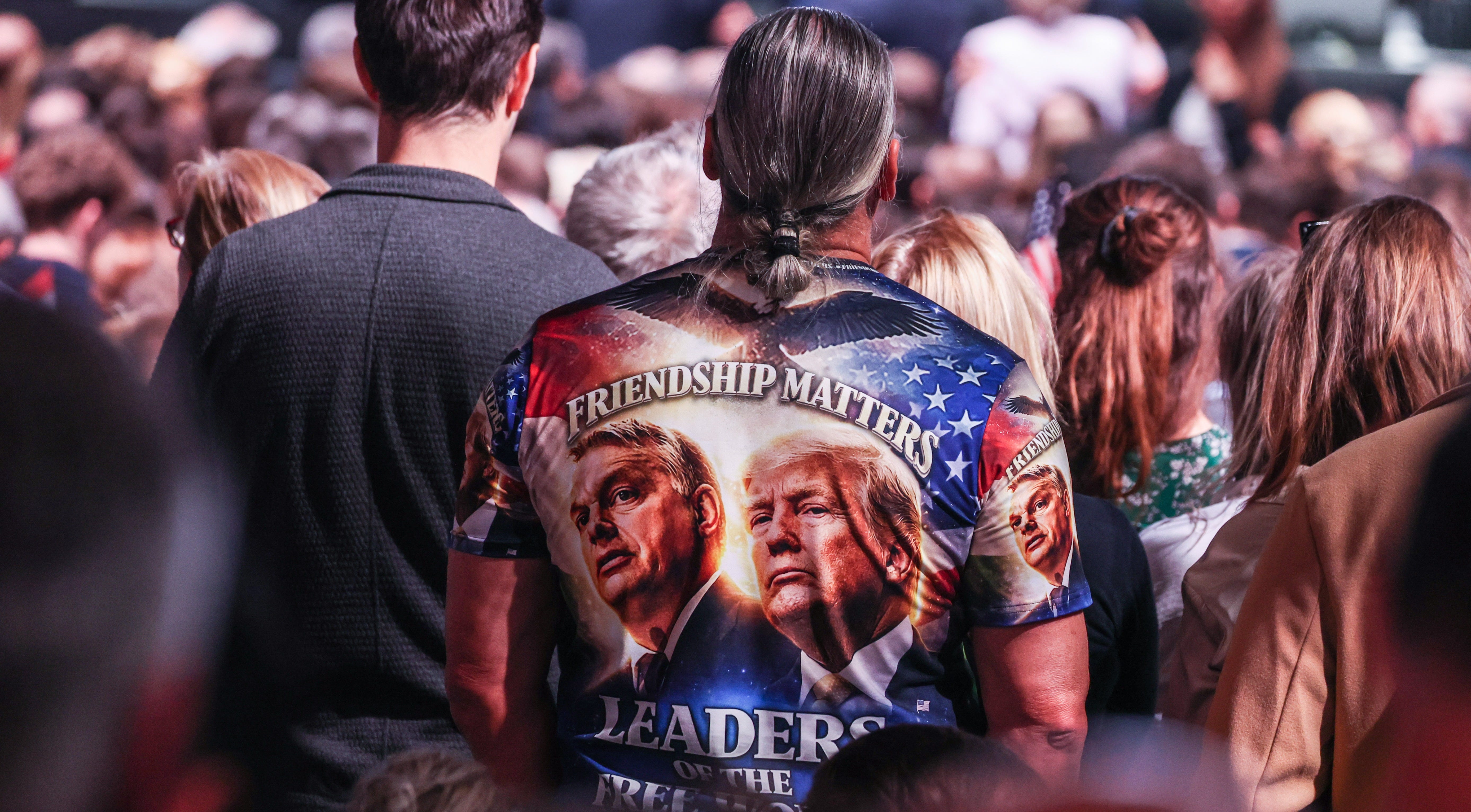
Liberals across the democratic world received a much-needed confidence boost this past weekend when Viktor Orbán’s Fidesz party suffered a sweeping electoral defeat after 16 long years in power in Hungary. Where once Orbán appeared unbeatable (as much because of his popularity as his numerous efforts to rig the electoral system against any and all challengers), both he and his allies around the world suddenly look not only beatable but severely weakened.
Might liberals be on the cusp of a decisive victory in their decade-plus-long battle with the populist right?
The answer, I believe, is no—though this shouldn’t be demoralizing. Both sides of the divide are prone to viewing political conflict in zero-sum existential terms: Either the populist-nationalist right is on the verge of a final victory that will issue in a “regime change” that vanquishes liberalism once and for all. Or else liberals are approaching their own decisive triumph that will drive a stake through the heart of the populist-nationalist right for good.
Neither outlook is correct. The truth is that since the mid-2010s, the democratic world has been living in a populist era in which incumbents and establishment institutions face intense gales of popular discontent. When liberals inhabit those offices and institutions, they become vulnerable to populist politicians and movements, who often succeed in winning power; but when populists prevail and begin governing, they become vulnerable to precisely the same dynamic, with liberals now placed in the unlikely role of leading an insurgency against the powers-that-be.
Which means we now reside in a world in which centrist liberals and right-populists are the primary forces vying for power, oscillating between ruling and standing in opposition. If this is, in fact, our new normal, then both sides would be wise to stop acting like the next election will deliver a knock-out blow to one faction or the other.
Patterns of Mutual Suspicion and Recrimination
We’ve been here before. Right-populist parties and politicians have won power across the democratic world—in Turkey, India, Hungary, Poland, Italy, Austria, the Netherlands, Finland, Sweden, Brazil, Argentina, Japan, Chile, and of course the United States. They’ve also risen to within striking distance of power in the United Kingdom, France, and Germany.
But of course, many of these parties and politicians have also been voted out of office—most recently in Hungary. In the United States, the country’s leading right-populist, Donald Trump, has even been returned to power after a prior win and loss.
That certainly sounds like the normal oscillation of parties in a democratic system. Yet things are complicated by the distinctive character of right-populist politics. Such parties and politicians often deploy a rhetoric of existential threat aimed at liberal (center-left and center-right) parties, politicians, and allied leaders of corporations, universities, and NGOs, whom they accuse imposing a unified progressive ideology favoring open borders, free trade, cultural liberalism, and liberal internationalism.

Right-populists point to this sweeping, multifront agenda to back up their claim that liberals constitute an anti-democratic ruling establishment—or “regime”—that must be toppled and replaced. When populists depose this regime at the ballot box, they govern in a way that seeks to lock in their own hold on power, while corruptly enriching themselves in office.
Orbán’s Fidesz party did this in numerous ways. It expanded and packed Hungary’s Constitutional Court with ideological allies. It forced out career civil servants and replaced them with loyalists. It sharply gerrymandered parliamentary districts and changed the electoral system to enhance the number of legislative seats captured by whichever party won a plurality of votes in an election. (This was designed to entrench Fidesz, but, ironically, opposition leader Péter Magyar’s newly formed Tisza party won by a wide-enough margin in last Sunday’s vote to benefit from it.)
Fidesz also shut down independent media outlets, strictly regulated political advertising to disadvantage opposition parties, and restricted those same parties from appearing on state-run media platforms.
The result was a textbook example of what political scientists call “competitive authoritarianism.” Elections were free (opposition parties were not outlawed, and Orbán quickly accepted his loss and conceded the election) but far from fair.
Liberals understandably respond to such systematic unfairness by describing the right-populists the same way the right-populists once described them: as an anti-democratic force seeking to thwart the will of the people. Liberals argue that populist assaults on the rule of law require coordinated acts of liberal “resistance.” Magyar enacted such resistance by following the example set by Poland’s Donald Tusk when he defeated the right-populist Law and Justice party in 2023. Magyar bypassed state media entirely to campaign tirelessly in small rural towns and villages, eagerly listening to grassroots discontent. He didn’t allow himself to be baited into fighting cultural issues, and refused to denounce a 2025 law banning LGBTQ+ Pride events that was supported by many of those rural voters.
Democracy is Compatible with High-Stakes Politics
The strange thing about the pattern of mutual suspicion and recrimination between liberals and right-populists is that there’s nothing intrinsic to right-populist policy commitments that necessitates rigging a country’s electoral system to benefit one party over another. In fact, Orbán was defeated by a center-right candidate who agreed with Fidesz’s substantive positions on most issues, while primarily criticizing Orbán for corruption and electoral manipulation. In most areas, Magyar looks likely to continue enacting Orbán’s agenda, only without the authoritarian aspirations.
Right-populists have a point when they claim that liberals have too often treated immigration restrictions, protectionist trade policies, and socially conservative viewpoints as fundamentally illegitimate and incompatible with democracy. But liberals also have a point when they accuse right-populists of attempting to insulate themselves from public opinion and electoral checks on their power.
The best thing for our buckling political systems would be for both sides to recognize that normal, democratic political contestation no longer pits left against right—at least not as these terms used to be understood. Instead, it pits liberals against right-populists. One faction of voters wants a more open society while another wants one that’s more closed. Neither is illegitimate; neither is fated to win or lose. Each must compete for votes and then allow itself to be held accountable for the policies it pursues and enacts. Each will win some and lose some, and then be permitted and encouraged to come back and vie for power in the next election, and in the one after that.
For this to happen, right-populists need to convince liberals that they won’t attempt to rig the next election as soon as they gain power. They can retain most of their substantive policy commitments without eroding fundamental democratic institutions, like Orbán did and Trump is attempting to do. Liberals, meanwhile, need to avoid the tendency to frame right-populist policy commitments as inherently illegitimate, and accept that both sides will need to challenge their opponents’ ideas in the court of public opinion.
Of course, the liberal/right-populist axis appears to involve much higher stakes—rooted in questions of collective identity (Who are we?)—than contests focusing on tax levels and regulatory policies. The temptation is to treat them as too weighty to be decided in the democratic arena.
But as Viktor Orbán has just discovered, short of imposing a thoroughgoing authoritarian system with no democratic accountability at all, there really is no alternative to giving voters a way to make their voices heard, fairly as well as freely. After all, the very things Orbán did to insulate himself from democratic accountability assured his eventual defeat.
That’s a lesson everyone competing for power in our politically troubled era would do well to learn and remember.
Damon Linker writes the Substack newsletter “Notes from the Middleground.” He is a senior lecturer in the Department of Political Science at the University of Pennsylvania and a senior fellow in the Open Society Project at the Niskanen Center.
Follow Persuasion on X, Instagram, LinkedIn, and YouTube to keep up with our latest articles, podcasts, and events, as well as updates from excellent writers across our network.
And, to receive pieces like this in your inbox and support our work, subscribe below:
 | A guest post by
|
Why do Democrats always insist, without evidence, that they're the party of "centrism?" Even when they push deeply unpopular (often illiberal) positions on immigration, free speech, DEI, policing, women's spaces, masculinity, lockdowns, election security, abortion limits, and so on, they always pretend that they represent polite consensus and label the actual mainstream positions "fringe."
If centrists voters compare you against "right-populists" and struggle to decide which is worse, maybe you should spend more time figuring out where the center actually is.
Speaking as a female Trump voter and former Democrat, I need to point to a contradiction at the heart of populism. I would identify as a "populist" - meaning power for the people rather than elites, the experts, the corporate overlords. Populism, like all successful big political movements means different things to different people. But there is also a big difference between the continenal European version and the American version
American populists have a strong libertarian bent, most of us want less government and smaller government. We are against mass immigration, and believe in borders, and proudly patriotic.
But they are against foreign interventions - against "internationalist" foreign policy ( in spite of Trumps betrayal of this value.
So its unfair to paint populists as aggressive, pro war "nationalists". ( what is the opposite of a nationalist? - an internationalist?). It is more useful to see populists as an anti-elite movement - and that logically suggests they favor more individual rights, less government bossiness.
Linker uses the term "liberals". But the "liberals" in terms of center left and center right have hardly stood up for liberty and freedom. Whether it was insane covid regulations, vaccine mandates, DEI purity tests, or censoring criticism of immigration or Ukraine, one can hardly claim that the "liberals" are liberal.