

Fracking Killed Khamenei
That’s only a slight exaggeration.

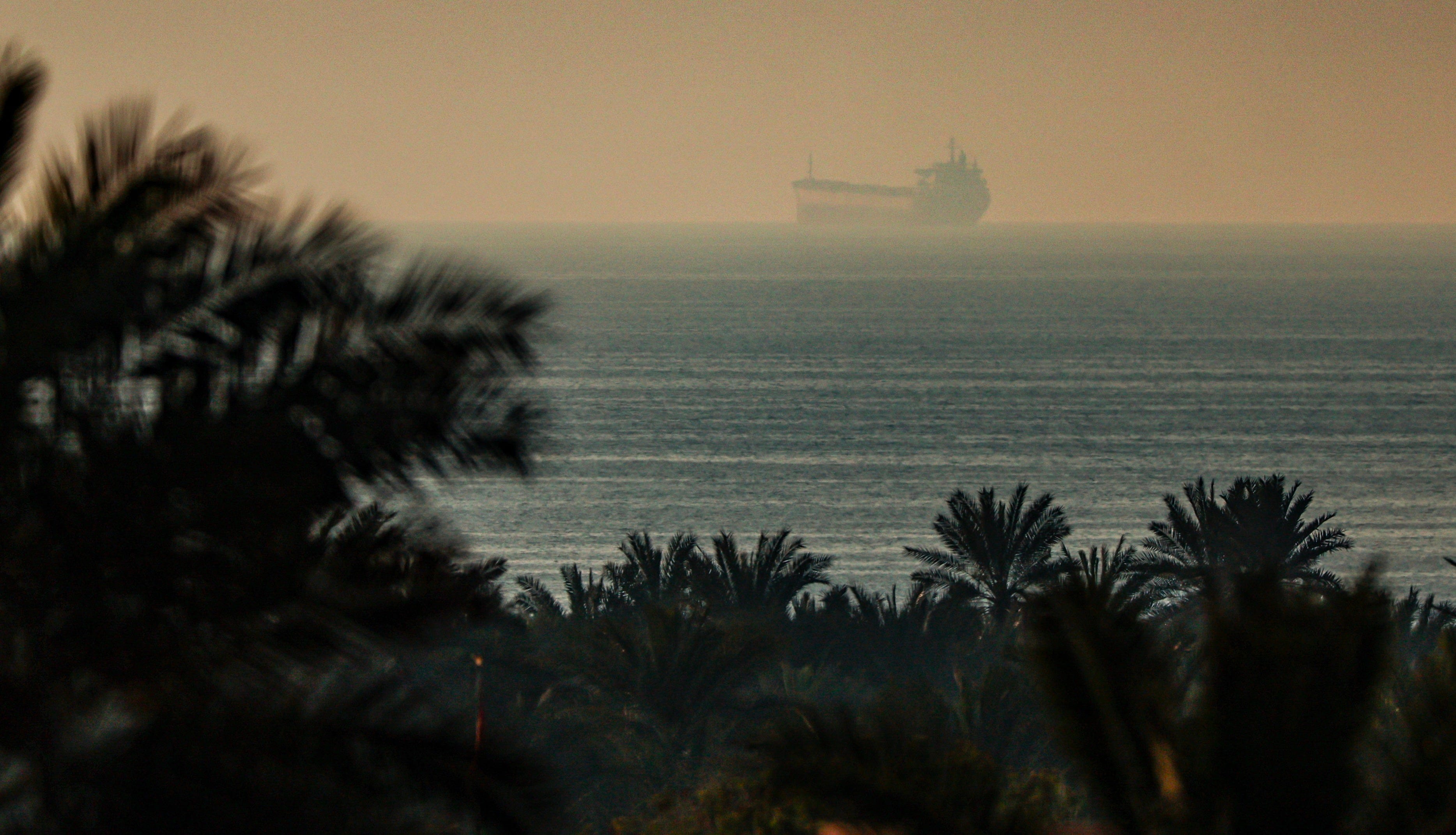
American military planners in the Pentagon have been wargaming scenarios for attacking Iran more or less non-stop since 1979. One major reason president after president stopped short of launching an attack was the frightening realization that the Islamic Republic could always choose to shut down the Strait of Hormuz—that narrow waterway through which roughly a quarter of the world’s oil and a fifth of its liquefied natural gas (LNG) flows every day. Iran could also hit the oil platforms and gas liquefaction facilities of the neighboring Gulf states. It could, in other words, turn off a frightening proportion of the global energy spigot, setting off an energy shock with implications nobody could quite predict.
American strategists cared a lot about the way Iran destabilizes the Middle East. But they cared about energy security, too. Which is one reason why every president from Jimmy Carter on took one look at the war option presented by the Pentagon and said, “yeah, no.”
So what changed? It’s tempting to think the answer is “the man at the top,” and, sure, that’s clearly an important part of the story. But it’s not just about personalities. The strategic weight of Hormuz in the American calculus changed too, because a bunch of geology nerds working for a handful of U.S. energy firms figured out a way to inject water into shale formations at high enough pressure to dislodge the hydrocarbons embedded in the rock.
In a shockingly short period, between 2003 and 2015, horizontal drilling and hydraulic fracturing—fracking, to you and me—came to dominate American energy production.
The shale revolution had geopolitical implications that have become dramatically visible this week. Little by little, fracking loosened the grip the Strait of Hormuz had on American strategy.
Shale gas, in particular, changed what energy means to the American economy. In 2024, natural gas reached an all-time high of 36% of U.S. primary energy consumption, nearly matching petroleum at 38%. It’s a dramatic shift from a decade earlier, when gas accounted for about a quarter of primary energy and oil for 40%. Fracking turned natural gas, which used to be an afterthought, into an energy source as important as oil.
Natural gas doesn’t trade globally the way oil does. It’s regional, locked into pipeline networks and long-term LNG contracts, which means price shocks from foreign wars don’t pass through to American pocketbooks with anything like the speed of oil prices. When oil prices spike, you feel it at the pump immediately and acutely, all around the world. When prices for gas spike in the Middle East, American prices barely budge.
When the United States and Israel began their strikes on February 28, killing Iran’s Supreme Leader Ayatollah Ali Khamenei and dozens of senior military officials, they were acting on the understanding that the resulting energy shock would be asymmetric. Americans would take a hit, yes. But the rest of the world would take a beating.
China alone accounts for 37.7% of total energy flows through the Hormuz Strait, more than any other country by a wide margin. India is the second-largest destination at 14.7%, followed by South Korea at 12% and Japan at 10.9%. The United States accounts for just 2.5% of those flows.
Looking at LNG specifically, China, India, and South Korea were the top destinations for LNG moving through the Strait of Hormuz in 2024.
All of these countries (and many more who import from the Gulf states, like Bangladesh and Thailand) will watch their energy costs soar. Their currencies will come under pressure. Their central banks will have to make ugly choices about whether to defend the currency or maintain foreign reserves. Voters will not like it. Governments will have to weigh taking on more debt to handle the disruption.
The United States? Not so much. America produces enough natural gas of its own, and is now the world’s largest LNG exporter. Prices will still rise—drivers will grumble when they go to fill up—but on a macro level the more expensive energy gets, the better for America.
This, I suspect, is one reason why the Trump administration was willing to go to war. A more normal administration would’ve counted a global energy shock as a bad thing because it destabilizes its allies and even its enemies. The United States’ whole role was supposed to be looking after global stability.
As far as the current bunch sees it, that’s globalist nonsense. The logic is brutally simple: if everyone takes a hit, but America takes a smaller hit than its competitors, America wins. For Trump, weakening competitors is the whole game.
Of course, the competitor the United States is worried about isn’t Bangladesh or Thailand, it’s China. So is this war going to cripple China? Not as much as you may think, because they saw this coming years ago.
For decades, Chinese planners have been obsessed with the kind of scenario we’re seeing play out. The Strait of Hormuz looks just as narrow on their maps as it does on America’s. But unlike the United States, they weren’t going to be able to frack their way to energy independence.
Instead, China went for the resource it’s not short on: coal. As of July 2025, there were 1,195 coal-fired power plants operating in China, as many as in the whole rest of the world combined. China is building new ones at an accelerating pace. Joe Biden’s Climate Envoy, John Kerry, drove himself to distraction trying to explain to Chinese state planners that this made a mockery out of their CO₂ reduction plans. They didn’t listen.

Instead, China built hundreds of coal-fired power plants: a sprawling backup system for a day when the oil and gas couldn’t be counted on. Just before the start of the war, they were running only around 50% of the time. In competition with cheap solar and wind, a large share of coal plants were operating at a loss.
But this was intentional: think of those hundreds of often-idle plants as a strategic energy reserve. They were preparing for the day when Qatar can’t deliver LNG because of a war, and Russia can’t be trusted because of geopolitics, and the Americans are too far away to care.
Well, that day has come.
As LNG prices skyrocket and availability collapses, China will activate its insurance policy. It will turn on those coal plants.
But coal is much dirtier than LNG. An additional billion tonnes of coal consumption translates to something on the order of two gigatonnes of additional CO₂ for the year. To give you a sense of magnitude, the United States now emits in the order of 4.7 gigatonnes each year. It’s a lot.
Which is why the war in Iran is, among many other things, a disaster for the climate.
It’s funny how things work out. As the shale revolution took shape, we heard a lot about how it would enable America to shift from highly polluting coal to less polluting natural gas for electricity generation. We heard nothing about how that progress might be entirely undone if shale also made America more willing to confront Iran, and in doing so, pushed China to restart its coal plants en masse.
This war became possible—it became thinkable—because the United States no longer has to live with the consequences of energy disruption the way the rest of the world does. The Strait of Hormuz was always Iran’s biggest deterrent, but deterrence requires that the other side cares about the damage you can inflict. Once the United States became energy independent, it started caring a lot less.
The first-order effects of war are easy to see: they go boom on your screen. It’s the second- and third-order effects that get you. If the Iran war ends up accelerating climate change and entrenching China’s coal strategy, we may end up remembering it for reasons that are on nobody’s radar this week.
Quico Toro is a contributing editor at Persuasion, the founder of Caracas Chronicles, Director of Climate Repair at the Anthropocene Institute, and writes the Substack One Percent Brighter. He lives in Tokyo.
Follow Persuasion on X, Instagram, LinkedIn, and YouTube to keep up with our latest articles, podcasts, and events, as well as updates from excellent writers across our network.
And, to receive pieces like this in your inbox and support our work, subscribe below:
Fascinating--I appreciate your perspective and with my limited but somewhat informed knowledge, tend to agree.
As long as we're talking about cumulative effects, do you suppose there's any relationship to the meeting trump had before the election with oil and gas executives--imploring them to fund his campaign--and the war he has started with Iran?
Interesting and persuasive argument. But I think you exaggerate the impact of the war on climate. This is an acute phenomenon, not a century-spanning process.