

The Epstein Files and Elite Moral Collapse
When America's ruling class operates without shame, the consequences extend far beyond individual crimes.

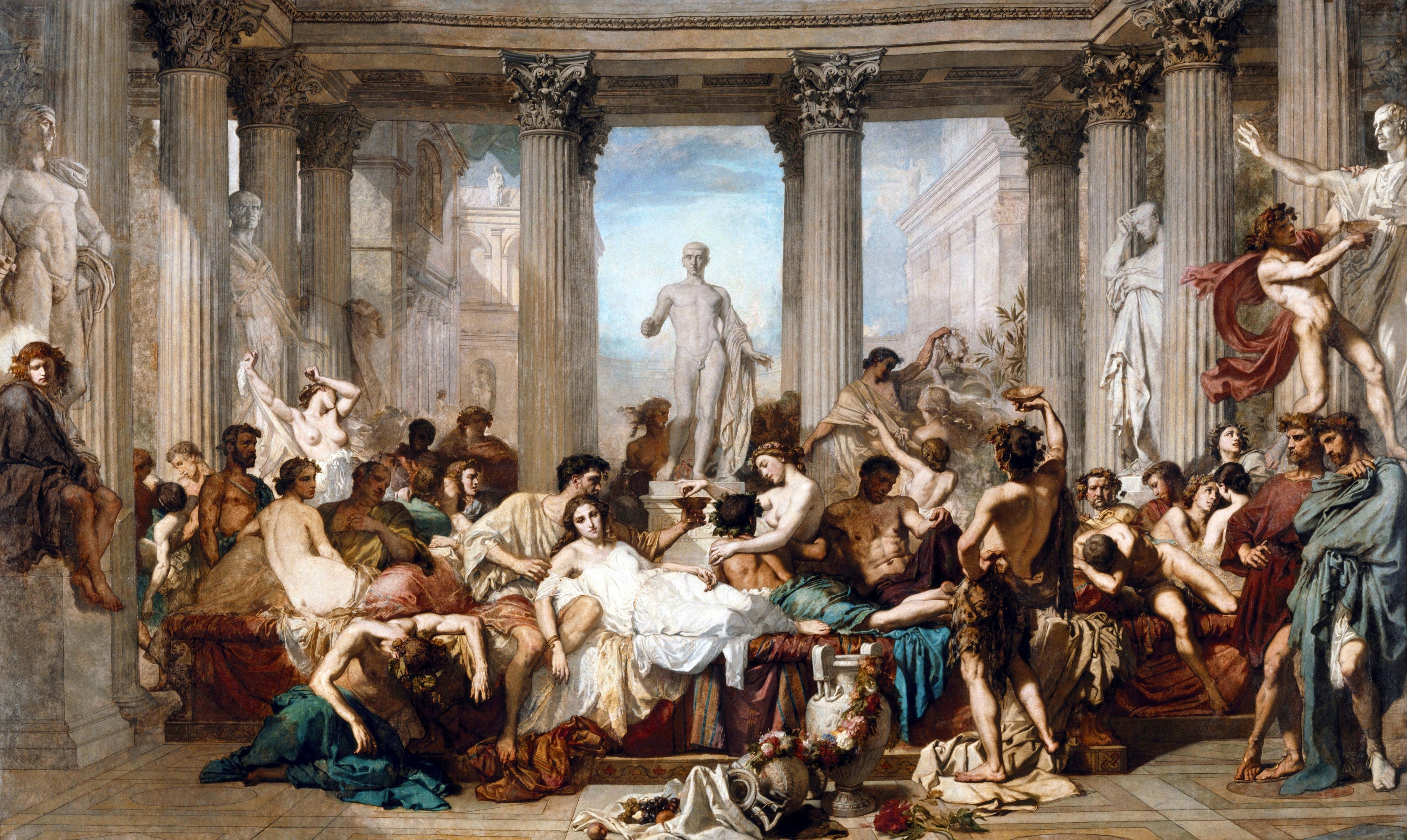
It is perhaps not an accident that an island figures prominently in the horrifically appalling Epstein scandal. The scandal, which now implicates a wide swathe of America’s elite, brings together one fantasy of modernity and one of its most atrocious moral horrors.
Islands have often been the places where modernity has staged its worst delusions. In the 18th century imagination, islands were, symbolically speaking, spaces where one could safely escape all moral norms and sexual prohibitions; they promised unlimited indulgence, but one that did not imperil mainstream society, precisely because they were exceptional and offshore. The image of the exceptional relaxation of norms—i.e. “offshoring”—applies to financial crimes, too. It is a form of evasion that does not imperil the system as a whole. To offshore crime, sexual violence, indulgence and financial perfidy is threatening but also reassuring. After all, it is offshore.
This was, of course, always a delusion. Financial offshoring is not a peripheral matter; it magnifies the crimes of the financial center. Similarly, elite actors apparently thought they could carry out their worst desires without contaminating the center. What those who came into Jeffrey Epstein’s orbit were enacting was not a fantasy of freedom, a revolt against prohibitions or norms. What they were enacting was an aspect of the horrific logic of modernity: An extraordinary pornification of the imagination, sexual exploitation and commodification of bodies, and total abjection in the pursuit of power. And it is an elite that seems to combine violent impunity with emotional immaturity.

There are so many angles to the Epstein files. Have all the files been released? Will the victims’ rights be protected? Given that both Democrats and Republicans are implicated, who stands to benefit? The files provide a sobering x-ray of some of America’s elites: immature, full of impunity, corrupt, venal, venial, and venereal all at once. They also provide a sobering view of global politics: There are no grand purposes, not even a political economy. Instead, what we get is a world run by huckstering middlemen, vulnerable personalities, fragile egos. They’re the perfect embodiment of Oswald Spengler’s figures of moral decline: clever, skeptical, but licentious and morally exhausted.
What decisions are such immature and fragile men capable of? The puzzle is how Epstein managed to put himself at the center of so much geopolitics; the fact that so many global powers felt they had to go through him is remarkable. He comes across as both a figure of great evil and an agony aunt for the powerful, including powerful countries.
The consequences will play out over time. Who knows what skeletons will tumble out? But, as always, the response is revealing. There was initial reluctance to confront the matter in both political parties, and it has taken years—and legislation introduced by Thomas Massie and Ro Khanna—to get the release of the files moving. Yet there is still, arguably, a shroud of silence. Yes, there is gossip and chatter, but it is almost a way of not confronting the central question: How could a society produce an elite of this kind? Imagine if this kind of story had broken about the ruling class of any other country. Every colonial trope of debauchery or orientalism would have shaped the coverage.
But the response is revealing in three deeper ways. First, though there is partisan bickering, there is still a kind of attempt to exceptionalize the behavior of this ruling class. Like earlier colonial and island imaginaries, it functions as a bounded zone in which elite actors can suspend norms without contaminating the moral order of the center.
Second, there is a pathology of modern political life, where power is not legitimized or justified through virtue, but through opacity, brazenness, legalese, propaganda, and procedural shenanigans. So much energy will go into legalese when the horrors are in plain sight.
Third, there is a shadow that haunts modernity—the way in which we make sense of vice in public space. The only great historians who let us grasp this moment are the Romans: Tacitus, Sallust, and Livy. They located sexual decadence and violence at the very center of power, treating excess as a sign, and, in some cases, a cause of political decline. We moderns, of course, are supposedly more sophisticated. We distinguish between public and private. For us, corruption is not about virtue; it is a matter of institutional containment. In The Machiavellian Moment, the historian and theorist of the politics of virtue, J.G.A. Pocock, noted a paradox at the heart of modernity. Unlike the Romans, we do not think decadence, especially sexual decadence, tells us much about the decay of societies. Usually, the causes are structural—economic or political. Yet, Pocock argued, the republican category of virtue survives. It may not have explanatory force, but we cannot entirely abandon the language of virtue, or the sneaking suspicion that, even if sexual decadence is not causal of other issues, it is revealing.
There are, of course, outstanding issues in the Epstein files that need to be addressed—people who committed crimes in legal terms, people who engaged in morally reprehensible behavior, and people who themselves are not individually guilty but who condoned what was happening. The Epstein files are not about individual guilt or innocence; they are about the nature of collective power. And when, within that collectivity, elites abused sexual, financial, legal, political, and even intellectual power without shame and with impunity, one has to wonder whether the Roman historians were onto something: They envisioned empires collapsing when elites could no longer restrain themselves in any aspect of their lives. An elite so needy, greedy, and now so vulnerable can hardly be trusted to exercise good judgment.
The dilemma, as the Romans knew, is this: An elite of this kind has no authority left. Even in power, it is fearful; who knows what violence it enacts to cover its own tracks? On the other hand, if the elite gets away with it, the road is open to moral nihilism, a point we are dangerously close to reaching.
Pratap Bhanu Mehta is a Senior Fellow at the Centre for Policy Research and a Visiting Professor at Princeton University.
A version of this article was originally published at Indian Express.
Follow Persuasion on X, Instagram, LinkedIn, and YouTube to keep up with our latest articles, podcasts, and events, as well as updates from excellent writers across our network.
And, to receive pieces like this in your inbox and support our work, subscribe below:
 | A guest post by
|
I'm...somewhat puzzled and a bit frustrated by this essay; some of that is because I'm a bit puzzled and frustrated by the Epstein files phenomenon in the first place, and some of it because I'm not sure what the essay is trying to persuade me of. It contains no specifics, but rather a sort of polemic about modern society and its corrupt decadence as show by Epstein or the Epstein files.
The corrupt decadence of the situation is treated as if it's obvious, as if we know exactly who did what to whom, and what those within are guilty of, rather that a large constellation of the wealthy and powerful revolving around each other like satellites. Didn't we already know this pre-Epstein? There don't appear to be a lot of legal issues brought to light in the files (though I'm sure we'll find some in there -- it's millions of pages of private email communications -- I sort of doubt they will be of the type of licentious decadence this essay imagines). We've already seen how it suggests the corruption and venality of such specimens as Trump and the Clintons, but didn't we already know they were corrupt and venal?
I'd like to point out a different sort of decadence that the Epstein case implies: that of the American people as a whole. We demand the release of the files. These are government-collected information in pursuit of justice against a man who was convicted and is dead. The only people these could matter to are the ones still living who are in those files, and this amounts to a government release of private information with no warrant or due process. The fact that the public froths for this information to be released without due process of law is part of the decadence we should fear.
Liberalism is the heart of the documents that founded this country, and that liberalism reveals itself in the restraint of exercise of power, of the subjugation of power to process and legal legitimation that protects the rights and freedoms of us all. There is nothing of process and restraint in the hue and cry to out the "guilty" among our elites. Instead, we have a decadent public who elects the venal, corrupt, and authoritarian Trump. We have a decadent public, both halves of whom wish to coerce the country into their moral framework, on both sides of the coin, through varying uses of power. Where is the defense of pluralism? The demand for protections of individuals from the overreach of the mob?
What should concern us is far less the fact that the most wealthy and powerful among us have a higher percentage of venal, corrupt people and acts. It's that we as a society are more interested in coercing everyone into our moral politics, and in making moral politics the center of everything, than we are in respecting due process, restraint of power that are hallmarks of liberal governance. We seem disgusted by our powerful governors, but we keep electing venal power-mongers to public offices because we value our tribal moralities more than good basic character and respect for liberal principles.
The Epstein files is not a symptom of elite corruption. Well, it is, but not new elite corruption. Nothing we haven't known exists since forever. It's a symptom of a public looking for villains to blame, for excuses to attack their enemies, to exercise power without the moral restraint implied by liberalism. it's a symptom of our own moral decay.
Pratap, it would have been cool to see some commentary on like specific things or stats or something. I feel like you could have released this essay before the uploads, but I'm sure sinking your teeth into what's there could have been really fruitful.