

How To Understand Nativism
Global abundance triggers a backlash.

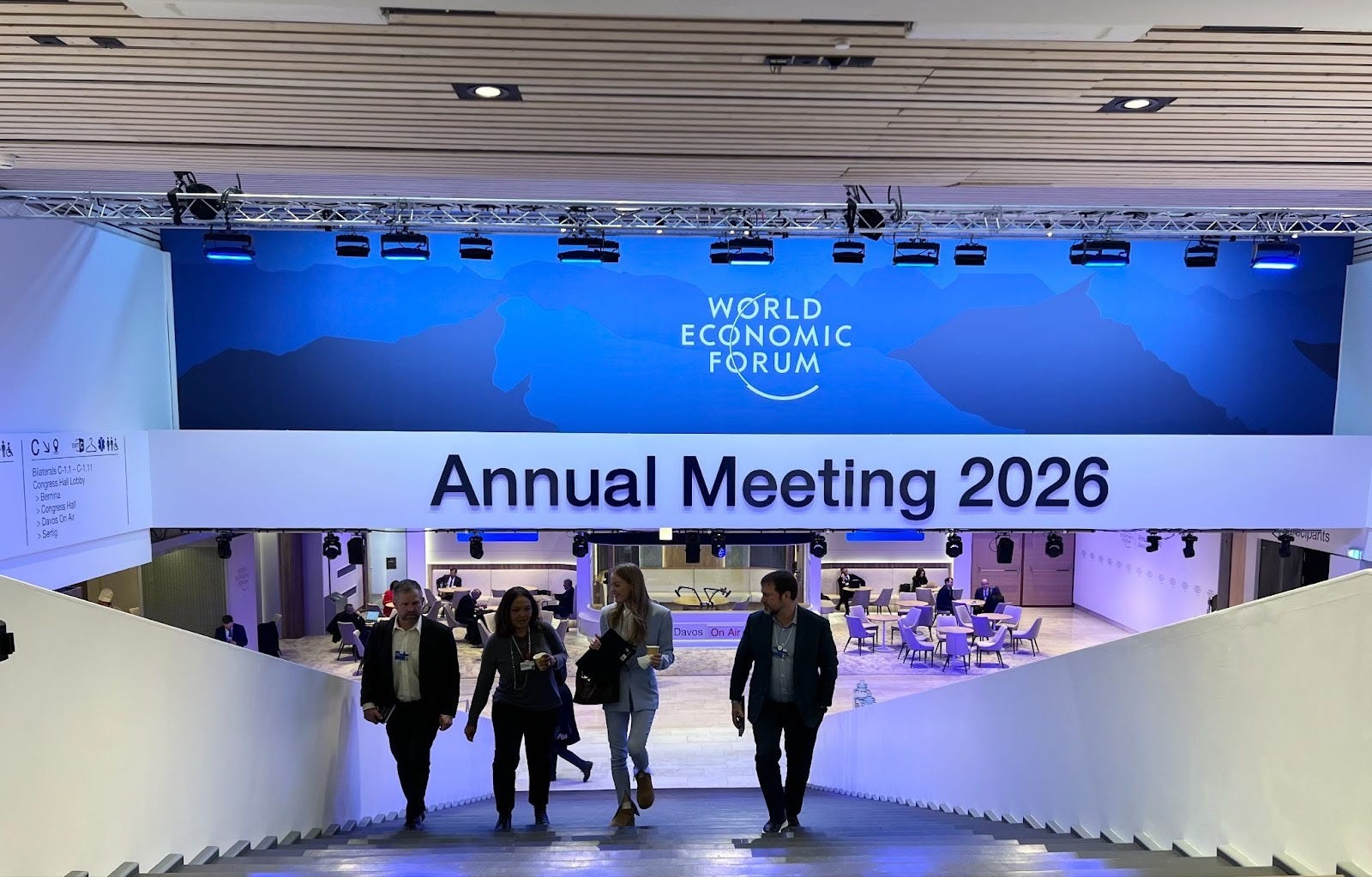
In the beginning was scarcity, and scarcity was real, and survival was a way of life. Then, somewhere along the way, abundance happened.
And after abundance—or because of it—came stagnation.
And that paradox besetting everyone’s life had to produce a reaction sooner or later. And now we’re in the midst of the reaction.
Abundance
Economist Tyler Cowen recently posted an interesting call for research proposals. His team is offering $25,000 to investigate how human minds navigate abundance.
Here is how the call described it:
By nearly every measure—life expectancy, wealth, freedom, technology—humanity has never been better off. As material hardships disappear, new psychological challenges emerge: decision fatigue from unlimited choice, more complex forms of social organization making new cognitive and emotional demands, crises of meaning without survival struggles.
Cowen’s team frames this as a research initiative “to understand the psychological tradeoffs of cultural, economic, and technological progress to ensure that mass abundance and freedom translate into mass flourishing.”
A large, resource-rich nation can already produce almost everything it needs—or acquire what it doesn’t. It has things in abundance: assets, infrastructure, weapons, medicines, universities, people.
Scarcity is no longer the problem. Abundance is a new kind of problem—a psychological one. And, paradoxically, that abundance goes hand-in-hand with stagnation.
Stagnation
We can turn again to Cowen, who has thought through these dynamics very deeply. Almost fifteen years ago, Cowen published The Great Stagnation. His core claim was simple: humanity had already discovered what was easy. The low-hanging fruit of innovation had been picked. What remained was harder, slower, and less transformative.
Economist Eli Dourado tracks the Great Stagnation in chart form and claims that the downturn started somewhere around 1973. Had pre-1973 productivity trends continued, the average U.S. income would be two times higher today than it currently is. What’s happening is that stagnation occurs within abundance, like a soft cushion within a hard-spring couch. The abundance—and the expectation of abundance—becomes the structure of the society. But stagnation is the air that we actually breathe—we never quite match the expectations of unfolding abundance that we all have; and, because of the underlying economic issues that Cowen identifies, we’re likely never to do so.
Indicators of abundance are still there. The stock market rises, creating the impression of progress. But many of those gains are offset by inflation, government debt, currency debasement, or simple speculation. Unemployment is low, yet it’s less than clear that many of those jobs generate true productivity as opposed to window-dressing. Speaking at Churchill College, Cambridge, in 2024, Cowen posed a telling question:
The story of the next twenty to thirty years will be—what’s it like to have an economy that’s maybe two-thirds stagnant?
If that’s our trajectory, stagnation may not be a phase. It may be the condition.
Internationalism and Stagnation
When material needs are met, additional inflows—of either more things or more people—no longer feel like enrichment. They feel like imported complexity.
Free trade, loose borders, and generous visa regimes amplify the psychological problems of abundance. They make people more aware of the stagnation within their own economies.
Thinking in these terms may help us to make sense of the surprising shift to nativism worldwide. The most recent session of Davos seemed to make official something that has been clear for some time. Donald Trump as expected made his case for tariffs. But even Canadian Prime Minister Mark Carney, in a much-praised speech, acknowledged: “The rules based order is fading.” Abundance, in terms of international trade, has not led to improvements in life domestically. In so many countries, the perception is of stagnation—whatever elites’ metrics may say to the contrary. That reaction is to be expected. Abundance—and internationalism—are, at a fundamental level, bewildering. Inwardness now makes a certain kind of sense.
Why More No Longer Feels Better
Feeling American is already difficult as it is. America tends to be treated not as an origin, but as a waypoint. A place you go to make money. Not a place to belong. Not a place to be born, to be happy, to grow old, or to die. Many outsiders—and even some naturalized citizens—relate to America this way: transactional rather than existential.
I arrived in America as a refugee from Bosnia, and for a long time I viewed it the same way. Like an orange—to be squeezed for as much juice as possible, for as long as possible. That image only disappeared when I had children, and they entered their teenage years firmly and exclusively American.
If America is only an economic destination—more like a very large Dubai than a shared homeland—then identity becomes provisional. And when identity is provisional, it’s hard to build shared meaning. It’s hard to build community.
Neighborhoods fragment. People cluster into bubbles. Shared reference points thin out. It becomes harder to feel American, to feel English, to feel Swedish—not in a legal sense, but in a lived one.

That’s where nativism kicks in. When belonging feels thin and provisional—when the current seems to be moving towards a bewildering internationalism—people reach for permanence. To make Americanness more substantive, nativists arrange their thinking around land owned, graves tended, ancestors who lived and died American. People seek rootedness because there is abundance and they don’t have to seek survival anymore. It’s an attempt, a clumsy one, to turn a place of opportunity back into a place of inheritance.
None of this makes the nativist tendency towards exclusion morally right—but it may help explain why liberal arguments that ignore culture now fall flat.
The narrative becomes not: we have so much abundance, let’s share it with the world (which was the pro-immigrant argument in the United States and Europe for a long time). It becomes: we are stagnating, we need to rebuild domestically, not let in more outsiders even if they may help GDP by some metric somewhere.
Maybe Culture Now Matters More Than Ideas
I’m writing this from the Balkans. The other day I saw an advertisement for a local city taxi. “School is done and you’re still at work? Don’t worry—we’ll take care of your kids like they’re our own.” The video shows an eight-year-old calling a cab, getting in with a few friends, and riding home alone.
That kind of implied deeper trust is possible in small societies where people look familiar, where everybody knows everybody either directly or by proximity.
An eight-year-old getting into a cab alone anywhere in America feels unthinkable. It’s too big. It’s too unfamiliar.
Maybe loose immigration policies enrich the idea of America—the familiar claim that we are a nation of immigrants—but they dilute the culture that holds people together. There’s a corporate adage, popularized by McKinsey: culture eats strategy for breakfast. Maybe culture eats ideas for breakfast too. Maybe, in an age of abundance and stagnation, culture matters more than ideas.
Perhaps They Didn’t Intend To—But This Is What Was Defended in Davos
If stagnation hasn’t reversed itself despite decades of importing smart people from around the world, a question naturally emerges: what, exactly, is the argument for importing more?
What was defended in Davos—most directly by Trump, and implicitly acknowledged even by Carney—isn’t racial purity. Or economies. Or markets. It’s familiarity. Legibility. A shared grammar of everyday life. A psychology. A longing for belonging. Culture. Pride. Super Bowls and barbecues. Sharing the same holiday. Volunteering at the same church. Small things—but small things are where culture lives.
What once seemed like an inevitable push toward ever-deeper globalization now meets resistance. If the shift feels dramatic, it may be because the psychological tension has been building quietly for years—abundance at scale paired with the lived experience of stagnation.
How these forces ultimately reshape politics remains to be seen. The dividing line may no longer run neatly between parties, but between competing instincts about motion and order—between mobility and rootedness, dynamism and cohesion. That tension is now the constant hum beneath so much of public life.
Sarah Majdov is a computer engineer and former enterprise architect who spent years in what she calls the “Goldilocks position” of corporate life—high enough to glimpse strategy, low enough to see how it actually plays out. She writes about stagnation, power, and the limits of modern dynamism. She is the author of Fatamorgana.
Follow Persuasion on X, Instagram, LinkedIn, and YouTube to keep up with our latest articles, podcasts, and events, as well as updates from excellent writers across our network.
And, to receive pieces like this in your inbox and support our work, subscribe below:
 | A guest post by
|
Great article. I appreciate that its not the typical article I would expect from a left leaning substack. I appreciate that it stretches our thinking beyond the usual pro immigration or anti immigration tropes. It's funny that everyone loves "community" - and especially progressives. But they often dismiss the aspects of community that are derived from shared culture and shared history.
Fear of "the other" has always been present in every society. In some cases the other was quite local: Athens vs Sparta; Hatfields and McCoys; etc. With each rise in the speed of transportation and communication, the contact between any given group of people with any other group of people grows, and that naturally creates new fears. Overcoming those fears proceeds two steps forward and one step backward. We are in the one step backward phase at the moment. But the speed of communication, transport and increasing contact will not abate. The arc of history is toward accommodation and cooperation, despite history, as it is taught, focusing on wars and economic catastrophes. Cowan and Gordon are correct, the low hanging fruit was gathered roughly between 1900 and 1973. But don't sell short the progress since 1973. It continues. Having been born in 1939, I can see in my lifetime how progress continues. And we need that progress because there still are too many people who do have such abundance--especially in their own minds. The glass is half full; not half empty.