

There’s An AI Bubble. For Real.
Here’s what the numbers—and a little bit of history—tell us.

It’s a great party. But as the music gets louder, the lights dimmer, and the drinks stronger, you already know how it ends: a miserable day in bed nursing an epic hangover. So why not one more margarita before calling that Uber?
Welcome to the AI Bubble. All the warning signs are there, and the aftermath is equally predictable. But with your portfolio brushing the stratosphere, why not spike it with a little margin? You may think your ETF is diversified, but with more than half of the S&P 500’s gains for 2025 coming from the so-called “Magnificent Seven” AI-exposed stocks, you’ve already doubled down on one massive bet—that the new wave of Generative AI will soon drive exponential earnings growth far into the future.
Unfortunately, the history of technological advances suggests a more cautious approach. Unforeseen innovations and financial bubbles go together like thunder and lightning. Sudden breakthroughs attract the attention of entrepreneurs, and investors soon follow. What’s it going to be worth, and how quickly? When no one knows, valuations soar as speculators—afraid of missing out on the next big thing—pile in at any price.
But the path to unlocking real value is never as smooth as it may appear at first. As futurist Paul Saffo once cautioned, “Never mistake a clear view for a short distance.” From railroads to electric lights, recorded music, automobiles, airplanes, radio, TV, and even the Internet, it often takes years—if not decades—for use cases to become clear and markets to develop, as consumers and businesses learn how to adjust their activities to take advantage of the new technology. Penicillin was discovered in 1928, but, despite its obvious life-saving potential, it wasn’t available by prescription to the general public until 1946, after methods for mass production and purification were finally developed. A recent study by McKinsey found that 80% of companies with pilot Generative AI projects report no meaningful contributions to their bottom lines so far, while other studies have reported wildly varying results.

In true bubble fashion, the race today is not to build useful products, but to attract the attention of investors, largely by beating competitors at specialized benchmarks only vaguely related to real-world scenarios. To put this in perspective, imagine that the only thing early car companies cared about was whose vehicles could circuit a race track the fastest. That wouldn’t help you get to work on time, any more than a program that can earn a gold medal score at the math Olympiad (Google’s Gemini) is going to help you get your taxes done.
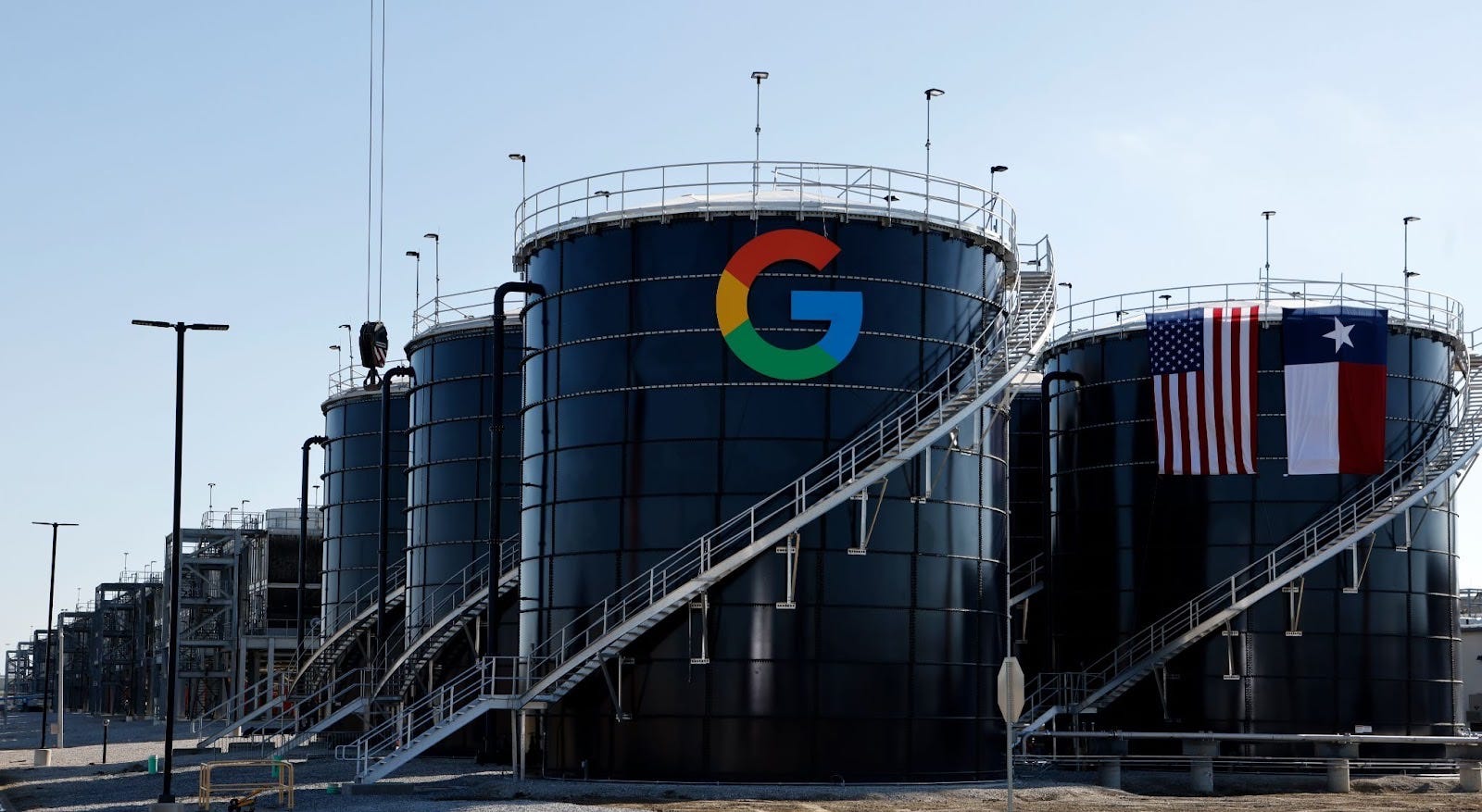
What could possibly go wrong? Consider the mad rush to build supersized datacenters in remote locations to train and run large-scale Generative AI models, known as “foundation models.” Jensen Huang, CEO of graphics processing unit (GPU) chip maker Nvidia, projected on a recent earnings call that datacenter spending could exceed $1 trillion per year within the next few years. Luckily for him, one third to one half of this capital expense will be GPUs. But sober analysts don’t see reasonable prospects that all this investment will pay back in a relevant time frame. Advanced semiconductors have a typical shelf life of about three years, after which they are practically worthless. As Harris Kupperman, Chief Investment Officer of Praetorian Capital bluntly put it, “There just isn’t enough revenue and there never can be enough revenue.”
What’s driving the apparently insatiable demanad for AI chips? CB Insights tracks more than 1,300 AI startups with valuations of over $100 million, including 498 AI “unicorns”—companies with valuations of $1 billion or more. Many are training their own proprietary large-scale foundation AI models that consume enormous amounts of resources, fueling a bidding war for computing power, or “compute.” These models are the operating systems of the future—they will be the substrate on which practical AI applications will run. But how many foundation models does the world really need? History suggests two or three at most.
In 1930, there were 44 American car manufacturing companies. By 1935, fewer than a dozen remained, and 90% of the sales were made by General Motors, Ford, and Chrysler. At the height of the Internet boom, there were dozens of browser and search engines companies, including AltaVista, Lycos, Excite, InfoSeek, and Ask Jeeves. Google now accounts for over 90% of web search traffic, with Microsoft’s Bing taking the next 4%. Today, just two smartphone operating systems—Google’s Android and Apple’s IOS—account for virtually the entire market. (The next biggest is Samsung, at 0.2%.)
Investors of a certain age will remember when sky’s-the-limit projections of future Internet traffic fueled a furious build-out of network capacity. When that demand failed to materialize on schedule, several multi-billion-dollar companies imploded spectacularly. Do the names Global Crossing, WorldCom, 360networks, Exodus, and NorthPoint ring a bell? They were only the tip of the iceberg, dragging down Lucent, Nortel, Corning, Ciena, and Cisco with them. And that was just the infrastructure companies—a side show to the parade of failed Internet “startups” like Pets.com, Webvan, and eToys. Think AI companies like OpenAI and Anthropic—sporting multi-hundred-billion dollar private-market valuations—can’t possibly fail? Ask the founders of AOL, Netscape and Yahoo!, to name just a few.
But that’s only half the story. What’s yet to play out is that the real value in Generative AI can be delivered for a small fraction of today’s cost. Specialized systems for specific applications and industries—such as healthcare, education, manufacturing, entertainment, advertising, law, financial services and software engineering—will be able to run on your own laptop or phone, without the need to reach out to “the cloud.” Apple gets this, as evidenced by its recently-announced M5 chip for AI applications. The system that interprets your CAT scan won’t also need to generate pictures of cats. Your self-driving car won’t also need to make plane reservations.
The mantra of today’s U.S.-based Generative AI companies is that what matters is scale—and that’s why enormous piles of capital are required to buy computing power. But Nvidia may be only one software engineering advance away from seeing this business model gutted.
If necessity is the mother of invention, the West has inadvertently set up the Chinese to win the AI race. Deprived of the opportunity to purchase precious Nvidia GPU chips, Chinese companies have been forced to develop their own alternatives, such as Huawei’s Ascend series. While these chips currently don’t match the performance of their U.S. counterparts, there’s a simple, practical solution: use more of them to train AI models. Huawei’s CloudMatrix architecture connects about five times as many chips to achieve a level of performance equivalent to the best Nvidia processors.
Chinese AI software engineers have stepped in to fill the gap, by focusing on increasing efficiency without sacrificing performance. The famous DeepSeek wake-up call—when, in January of this year, a relatively unknown Chinese company demonstrated that its product was comparable in baseline performance to the major U.S. chatbots for a small fraction of the training and running costs—is the vanguard of faster, cheaper, more powerful systems. This was not a fluke. Since then several other Chinese companies, including Baidu, Alibaba, Tencent, Zhipu AI, and ByteDance have released world-class generative AI products with similar economics.
But the biggest advantage these Chinese companies may have is the cost and availability of electricity. A kilowatt of electricity costs about eight cents in China, compared to an average of eighteen cents in the United States. And China has already built out more than twice the generating capacity it currently uses, leaving the United States scrambling to catch up.
Revanchist and regressive economic policies are going to make things even worse. We can prohibit the sale of Chinese products and services in the United States, but the rest of the world—whose GDP is three times the size of America’s—knows better. If comparable products are available at far lower prices, which country’s wares are likely to be more successful? China is poised to own this emerging market, as it does clean energy technologies, batteries, cars, telecommunications equipment, and numerous other industries.
Why listen to me? Not only is this not my first bubble, it’s not even my first AI bubble. I was dead center of a now-forgotten boom in AI during the mid-1980s. Investor interest in so-called “expert systems”—early rule-based programs that failed to live up to their promise—drove a wave of investment in AI startups, many of which went public before crashing and burning. That wave was even based on the same mistaken assumption—that to “do AI,” you needed an expensive, specialized computer called a “Lisp machine.” That bubble burst in part due to the realization that the emerging wave of personal computers could do the same job at a fraction of the cost.
All this said, this time is different, in the sense that Generative AI is a major technological advance that will improve the way we live and work—as the Internet has. So what is it good for, and how much value will it create? It’s too early to definitively answer these questions, which alone should give rational investors pause. But at least so far, the evidence suggests three primary sources of value.
First, personal productivity. OpenAI, which created ChatGPT, has an annualized revenue run rate of about $20 billion. But at least so far, 75% of that revenue is coming from consumers purchasing monthly subscriptions, as opposed to corporate customers using the technology to expand their products and services. Anyone who tries this technology can plainly see that it’s great for writing documents, drafting presentations, reducing the effort of doing your own research, making pictures, and composing bespoke poetry and songs. The value of these benefits is so diffuse that economists have difficulty measuring it. How much do word processors and spreadsheets contribute to the economy? As Nobel laureate Robert Solow sagely observed, “You can see the computer age everywhere but in the productivity statistics.”
Second, the distribution of expertise. Generative AI systems, despite their flaws, are great consultants on just about any topic, from diagnosing medical issues to planning a vacation, offering love advice, or explaining how to fix a broken toaster. Even the currently available products hold the promise of transforming medicine, education, and many other fields of specialization.
Third, an unrecognized benefit of Generative AI systems is that they can serve as universal interfaces—between people and machines (as in software engineering), between machines and machines (as in factory robots), and, importantly, between computers and computers (as in “agentic AI”). Tremendous value is siloed within our vast hodge-podge of special-purpose programs and databases; Generative AI offers the means to unlock this treasure trove.
But the salient question for investors is not what value the new technology will create, but who will pay for it, and how much? J.P Morgan estimates that $650 billion in additional annual revenue will be required just to deliver a 10% return on the currently announced AI investments. Achieving that would require users to spend more than three times as much on Generative AI systems as they currently spend on personal computer software from companies like Microsoft. Is that plausible? No—particularly given the prospect of heavy competition driving down prices in the future.
More likely, the benefits and revenue from AI will not play out on a scale and time frame sufficient to justify the current levels of investment. With respect to just the datacenter buildout, we may be creating a new man-made ecological disaster: miles of idle computer servers rusting away in buildings too expensive to cool, leaching toxic substances into the soil of remote deserts, with no one left in sight to hold accountable.
But why should you care if a bunch of deep-pocketed investors lose their shirts? Because that’s not the only downside of the AI bubble. Harvard economist Jason Furman calculates that excluding hardware and software investment, U.S. GDP grew at an anemic 0.1% annual rate in the first half of this year. The frenzy around AI provides cover for policymakers to adopt regressive or self-defeating economic policies that don’t improve the underlying health of the economy. When so much money is concentrated in questionable investments, less is available for more productive uses. And, when the unwinding begins, it will spread to many industries that took rosy projections too seriously, including energy utilities, construction companies, building material suppliers, and others.
So when will the bubble burst? Conventional wisdom says you never know. But it’s really not that uncertain. Almost by definition, investors part with their money when they expect to get it back at a profit in the future. In a well-managed economy, this occurs when value is created, increasing the future price of an asset. But that’s not the only way to profit. As long as there’s a reasonable expectation that someone will take a stake off your hands at a higher price, the game continues. The Internet bubble burst not when investors realized returns were a long way off, but when investment banks could no longer peddle risky companies to so-called retail investors—mom and pops looking to build their retirement nest eggs.

The bad news is that this process—taking AI companies public—has barely begun, and the not-so-novel twist the financial industry is now exploring is how to package up the infrastructure investments as debt in opaque bundles of so-called Special Purpose Vehicles. The plan is to market these to less-sophisticated investors poorly equipped to understand that these assets—special-purpose buildings and computers—depreciate rapidly. We may be heading for a duet combining the “greatest hits” of the 2000 dot-com bubble and the 2008 housing crisis.
During the dot-com bubble, annual private investment in Internet companies and infrastructure peaked at around $32 billion, and public investment (people buying Internet stocks) was around $260 billion. Most of that was lost in the crash of 2000, and it took the stock market about 12 years to fully recover. Today’s AI-related private spending is estimated to be about six times as high.
In short, no one has ever made money betting that the cost of computing and bandwidth would go up, or that people and companies would adopt new technologies en masse overnight. And no amount of tequila today will make the coming deflation easier to stomach.
Jerry Kaplan teaches Social and Economic Impact of Artificial Intelligence at Stanford University. His latest book, Generative Artificial Intelligence: What Everyone Needs to Know, was published by Oxford University Press in 2024.
Follow Persuasion on X, Instagram, LinkedIn, and YouTube to keep up with our latest articles, podcasts, and events, as well as updates from excellent writers across our network.
And, to receive pieces like this in your inbox and support our work, subscribe below:
 | A guest post by
|
Difficult to call the top with any mania. It is especially more difficult now because many of the private AI companies would have been public already in the 1990s and their financials would have been available for scrutiny. Further, some of the mania has been diverted to Crypto assets, unavailable in the 1990s. I’ve been investing for so long I remember the 1973-4 bear market and the 1966-1982 dead money in equities with high inflation time period. I’ll quote Yogi: It’s difficult to make predictions, especially about the future. Stay diversified my friends.
Some analysts say that the structure of the debt to build data centers is such that the big tech companies such as Meta are ultimately on the hook via lease obligations. If that is true, then is it possible that when the music stops, they, not the public or insurance companies etc. that bought the securitized debt, will be the losers--and their finances will be severely damaged?