

Ukraine Is Now An Arms Superpower
The country has made itself too important to abandon.

This article is brought to you by American Purpose, the magazine and community founded by Francis Fukuyama in 2020, which is proudly part of the Persuasion family.
When the first few months of the full-scale war in Ukraine passed and it became clear the conflict would last years rather than months, a popular subject in political commentary in Ukraine was the need to adopt the Israeli model of steel porcupine—a small state that defends itself by building vast defensive and offensive military capability, making any attack too expensive in money and human lives—maybe with a nuclear bomb or two down the line.
At the time, it seemed impossible—it takes too long and costs too much. But Kyiv has created its own steel porcupine.
A Strategic Decision
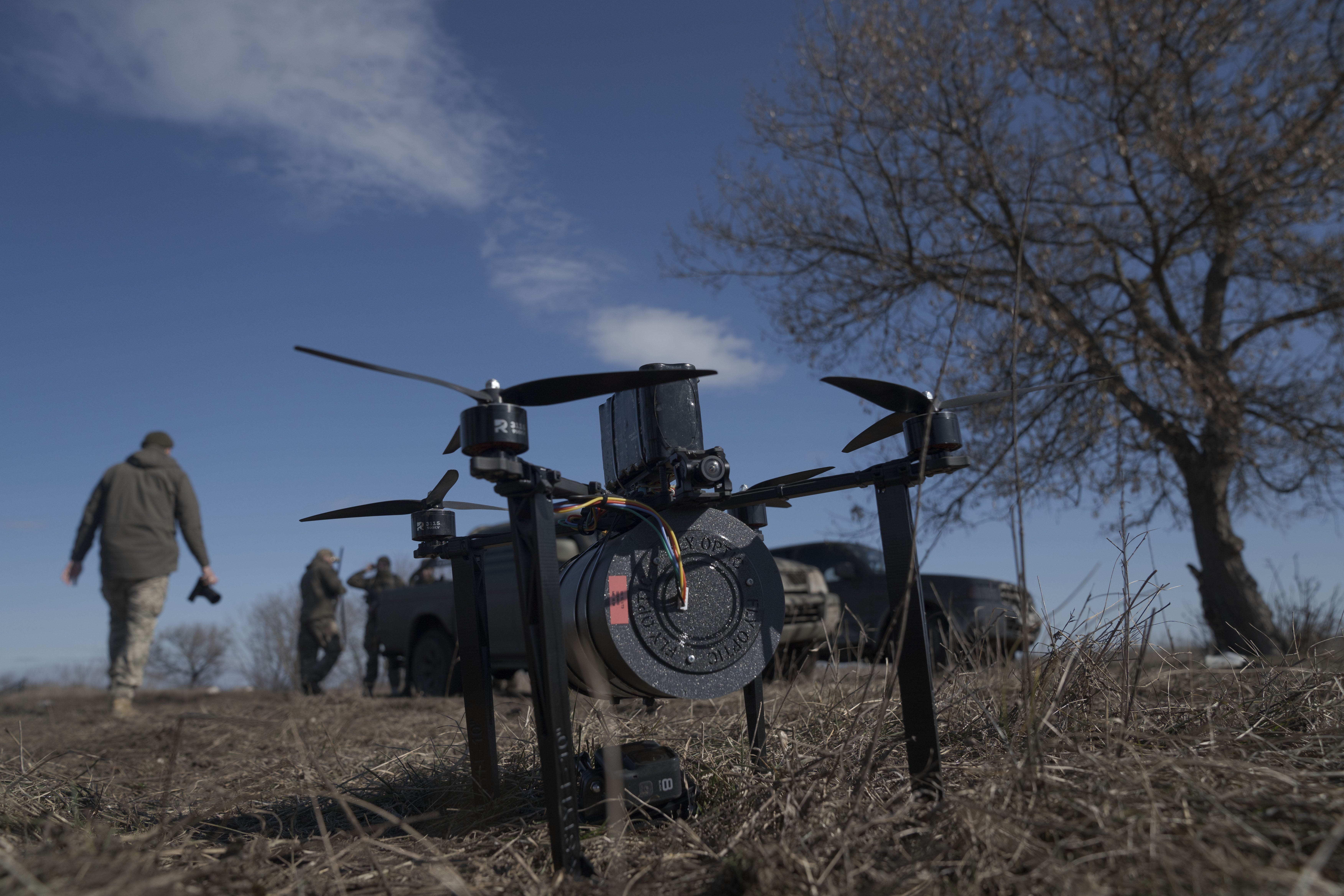
Four years down the line, instead of being a security recipient, Ukraine acts as a security donor, acquiring allies in unexpected corners of the world. Instead of closing down and becoming entirely self-reliant, Ukraine chose to open up and make other countries reliant on what it can offer—drone know-how in the Middle East and the U.S. bases there, a defensive wall between Europe and the threat from Russia, and any future benefits Europe will enjoy once the Ukrainian ballistic programme comes of age.
Instead of the traditional steel porcupine, Ukraine has developed an inverted form—it shoots quills not at its enemies but at its allies, injecting them with a protective layer of technology. Not many have noticed, however, that this ensures Ukraine receives not just protection from the allies to whom it now becomes more valuable, but also offers Ukraine a level of control unlike that of many other countries. Due to the nature of the arms business, Ukraine will have a say on who will or will not be allowed to use its technology, even when produced in joint ventures. Ukraine is advancing its defence deals very strategically, at exactly the right time and place for maximum effect. Considering how strategic its actions on the foreign affairs front have been, this seems to be a deliberate plan a long time in the making. If you already have a lot of responsibility, you might as well go and get yourself great power.
How Did We Get Here?
Without the war in Ukraine, drone warfare would still be in its infancy, military procurement would still consider tanks and infantry fighting vehicles a better investment than a drone wall, warships would still sail the Black Sea without a care in the world, and there would still be no defence against the full complement of U.S. and European missiles (Russians have since learned to counter HIMARS and developed responses to ATACMS as well). Estonia’s decision this month to suspend a €500 million infantry vehicle order and redirect the funds entirely to drones and air defence, citing lessons from Ukraine, shows how fast procurement thinking has shifted.

The powers that be decided not to right the wrong when Russia invaded Ukraine, and now large sections of their military technology are slowly turning obsolete. These same powers now have to adjust to the new world of warfare, and the only country that knows how it works is Ukraine.
Why Ukraine is Unique
Ukraine is uniquely positioned to throw a wide defensive tech net over its allies, and not just because it is the only active battlefield capable of testing and fine-tuning any weapon under the sun. Take Russia—it has similar access to battlefield conditions, and yet not many countries are queuing up to buy Russian-made modern drones. In fact, their most successful models are Iranian Shahed drones. Russia needed Iran to set up the production lines and train the operators—and this is the extent of their international drone programme.
Ukraine, in addition to being highly innovative and resourceful, also designed a procurement system almost entirely devoid of bureaucracy—arms developers work directly with military units, which means there is no lag between development and the front line. War is about the survival of the fittest—only the best military tech companies remain on the market. The decentralized drone development model bypasses the layer where traditional corruption lives—when a military unit orders directly from a developer, the middleman is removed entirely.
We also often forget that the Ukrainian military sector did not just appear out of nowhere—it was well established and indeed formed the basis for the Soviet arms industry.
Ukraine’s Yuzhnoye Design Bureau in Dnipro designed and built the SS-18 Satan—the most fearsome nuclear ICBM in the Soviet arsenal, capable of carrying ten independently targeted warheads across 10,000 kilometres while releasing decoys to defeat radar. After 1991, Ukrainian engineers continued maintaining the remaining Satans in Russian silos until 2014, when Kyiv stopped all cooperation. The stockpile is ageing without the maintenance that kept them viable, and nobody knows if they would fly or explode if launched. Russia has been attempting to replace the Satan with its own design, the RS-28 Sarmat, for the past 20 years—and despite having a working Ukrainian-designed model at their disposal, has achieved exactly one successful test launch out of six attempts, one of which destroyed the test silo entirely. Ukraine built it. Russia cannot even replicate it.
How the Arms Trade Actually Works
International arms deals are controlled first by national interests and only after that by financial considerations.
Since defence is a matter of national security, defence companies cannot just sign agreements with other companies or states—they need permission from their government. The same applies to the purchasing side: the country that owns the underlying technology, not the company producing military goods, decides which other country can purchase the specific equipment, even if it is manufactured elsewhere and another party foots the bill.
The U.S. International Traffic in Arms Regulations (ITAR) ensures only specific defence articles reach very specific markets. Those markets require authorization from the State Department, not merely a commercial agreement, to sell or even gift them to a third party. This is a foreign policy instrument as much as a trade one.
Almost the entire European defence industry is criss-crossed with U.S. technology and requires re-export licences as a result. In practice, the United States decides who can and who cannot buy weapons that contain its technology, regardless of where those weapons are manufactured or who paid for them. There are countries with their fingers in several defence pies, but none more so than the United States.
When former Warsaw Pact members began transferring their Soviet-era weapons to Ukraine at the start of the full-scale invasion, Russia objected on the grounds that the original re-export licences had belonged to the Soviet Union. The problem was resolved on the basis that Ukraine, as a Soviet successor state, held the same standing as Russia over equipment that had once been part of the shared arsenal.
The system in place is essential to Ukraine’s ability to sell weapons. Every country that signs a weapons manufacturing or sales contract with Ukraine must guarantee that the technology will not end up in Russian hands, or the hands of any Russian-affiliated state, under any circumstances. That means there is a long list of countries banned from acquiring Ukrainian weapons.
Ukraine is, in effect, building its own version of ITAR. The same architecture that keeps its technology out of Russian hands also gives Kyiv a say in who gets to defend themselves with it. Every cooperation agreement embeds Ukrainian technology into another country’s defence architecture, and every embedded system requires a Ukrainian licence to transfer further. The United States spent decades getting to that position. Ukraine is acquiring significant leverage over international arms markets in a few short years. Kyiv is too smart not to realize what they are building.
Re-export Licence as Diplomacy
Ukrainian weapons systems are not just a financial mechanism and an alliance-building exercise. They offer Kyiv foreign policy instruments very few countries have. By being an undisputed leader in the battlefield drone ecosystem, Ukraine as a monopolist of sorts can send geopolitical signals through its defence cooperation agreements.
The ten-year defence cooperation agreements signed in the Middle East send a pointed message to Washington from both sides: Ukraine indicating it has serious leverage, and Middle Eastern countries demonstrating that the United States is not the only player in the area. Ukraine also now has leverage in other areas—it can make sure its new partners do not accept Russian ships laden with stolen Ukrainian grain, unlike Israel, which has accepted several shipments.
Zelenskyy’s meeting with President Ilham Aliyev in Gabala on April 25, his first visit to Azerbaijan since the full-scale invasion began, was held just 100 kilometres from Russia’s border. The six defence cooperation agreements signed there send an unmistakable message to Putin: Russia’s influence in the South Caucasus is finally over, while Kyiv’s has just begun.
A good example of what successful arms deals look like for Ukraine is its cooperation with Turkey. Ukraine supplies the engines that power Turkey’s most advanced combat drones—Baykar’s Akıncı and Kızılelma were developed with Ukrainian-made Ivchenko-Progress engines, earning the Kızılelma the nickname “a Turkish bird with a Ukrainian heart.” Turkey, in turn, supplies Ukraine with Bayraktar drones and Ada-class corvettes currently under construction for the Ukrainian navy, and is building a Baykar manufacturing plant outside Kyiv. It is therefore not surprising that Turkey used its considerable influence over the UN-recognized Libyan government to allow Ukraine to establish a military presence on the Libyan coast, from which Ukrainian naval drones have since hunted Russian shadow fleet vessels in the Mediterranean.
A different kind of example is Switzerland, which in 2022 refused re-export permissions for Swiss-made Gepard ammunition Germany was trying to send to Ukraine, blocked Denmark from transferring Swiss-made Piranha III armored vehicles, and blocked Spain from re-exporting two Swiss-made anti-aircraft guns. The Netherlands responded by stopping all Swiss arms purchases. The policy cost Switzerland its reputation as a reliable defence partner across Europe at precisely the moment Europe began the largest rearmament programme in its history.
Not Bad For a Country With No Cards
While an obvious take-away from the arms deals Kyiv is currently signing is that it has emerged as a global security provider, the real outcome is the permission architecture Ukraine is embedding into the global arms industry as we speak, and the power that architecture affords on the global scene. Ukraine is increasingly holding the strings to a global defence network that will operate without Washington’s permission.
This also acts as the other side of security guarantees for Ukraine. The lamentable demise of the rules-based order and the loss of the United States as the global sheriff means no written guarantees will work. There is almost no scenario in which Ukraine would trust them. Ukraine can rely on its own military, and now it will also be able to rely on its defence industry being too valuable for allies to walk away from. By becoming indispensable to the global security landscape, Ukraine can spread its influence far wider than anything Russia can achieve.
While Israel turned itself inwards and made itself hard to kill, Ukraine turned outward and made itself too important to abandon. In the process, it is acquiring a lot of control over global security. It did not ask for this task, and it still has hard times ahead. But it found a way to protect itself by protecting others.
Ines Burrell is a geopolitical analyst and political risk consultant based in the UK. Born in the Baltics, with a degree in International Relations from the University of Exeter, she writes and gives live commentary on European security and Russia.
Follow Persuasion on X, Instagram, LinkedIn, and YouTube to keep up with our latest articles, podcasts, and events, as well as updates from excellent writers across our network.
And, to receive pieces like this in your inbox and support our work, subscribe below:
 | A guest post by
|
"Ukraine has developed an inverted form—it shoots quills not at its enemies but at its allies, injecting them with a protective layer of technology"
I love the overall story here, but this particular line has got to be one of the awkward and unhelpful metaphors I have ever read.