

Yes, I Will Be Watching Every Minute of FIFA’s $11 Billion Heist
An addict’s love letter to an abomination.

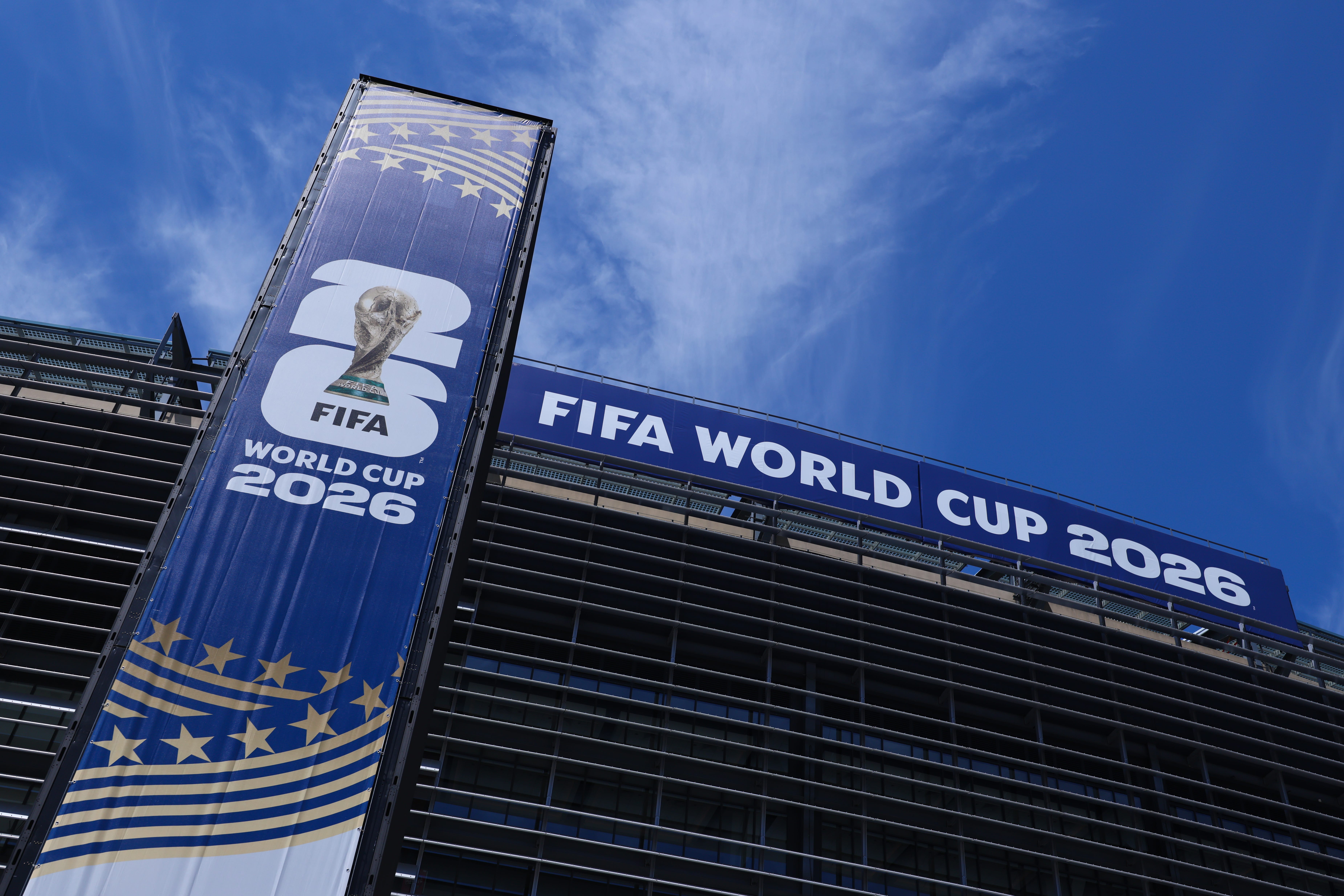
What if your favorite thing in the world was in the hands of a ghoul?
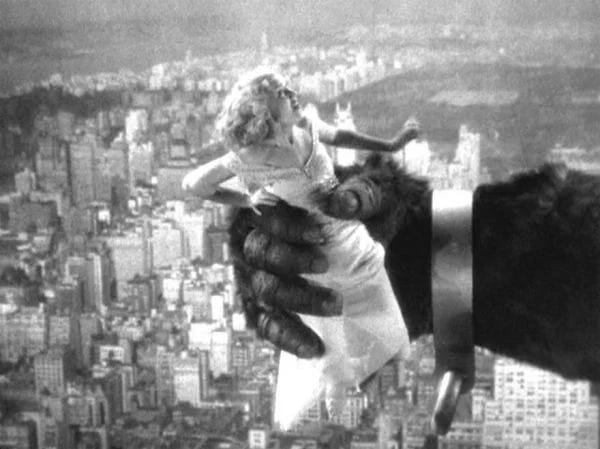
Like the damsel in King Kong’s hand, the FIFA World Cup is a thing of rare beauty in the grip of a monster.
The tournament is disfigured by its prefix: FIFA, football’s cartoonishly evil world governing body, a cartel of such rapacious vice its perfidy almost—but never quite—obscures the luminescent glory of el mundial.
World Cups are how I keep track of the past. To me, it’s not 1982, it’s that summer when Paolo Rossi shanked the glorious Brazil of Tele Santana. It’s not 1986, it’s when Maradona scored both of the most iconic goals in history on the same afternoon in Mexico City. 1994 is Roberto Baggio missing that penalty. 2002 is turning up at raucous anti-Chavez protests in Caracas bleary eyed after staying up all night to watch the games in Korea and Japan. 2006 isn’t the year I moved in with my wife, it’s the year I saw her cry when Zidane got that red card in the final. 2010 isn’t the year my father died, it’s the summer he got to witness Spanish tiki taka glory just a couple of months before he left us. 2014 is changing my six-month old’s diaper while Germany humiliated Brazil in the background. 2018 rhymes with Mbappé. 2022 is practically spelled M-E-S-S-I.
Every four years, the World Cup plants a flag in my life, transforming the boring middle-aged fart I’ve become back into the awestruck eight-year-old with a heart broken at the hands of Paolo Rossi.
And yet. And yet and yet… those four letters. Right there, in the tournament’s name.
FIFA.
La Fédération Internationale de Football Association. A monstrous parasite, leaving just enough cash in football to keep the host organism alive.
Growing up also meant coming to recognize that the dazzling spectacle on the screen doesn’t arrive there on its own. That it’s put there by men, bad men, rapacious, greedy men, men without scruples who exploit our childish passion ruthlessly every four years.
FIFA has been a byword for bribery for as long as anybody can remember. Under Sepp Blatter, its rapacious head from 1998 to 2016, FIFA exploited world football the way Mobutu exploited Zaire: a pervasive empire of graft, a dance of money-stuffed envelopes buying up smaller countries’ Football Federation officials in the service of Blatter’s aggrandisement. This went on for decades: a constant, years’ long drip-drip-drip of bought tournaments, corrupted officials, and barely disguised slush funds that would have been enough to turn anyone’s stomach.
By 2015, Blatter’s kleptocratic antics had become brazen enough to attract the attention of the U.S. Justice Department, which indicted a coterie of fourteen FIFA officials and marketing executives on racketeering, wire fraud, and money laundering charges connected to the payment of some $150 million in bribes and kickbacks. This steaming pile of shit got swept out of sight only last month, after a slew of convictions, when the Trump Justice Department inevitably asked a judge to dismiss the remaining cases, saying the case “doesn’t fit with the administration’s priorities.”
Stories of FIFA skullduggery in the Blatter era reliably took a turn to the surreal. Take Chuck Blazer, the bearded, 300-pound General Secretary of the Confederation of North, Central America and Caribbean Association Football (painfully acronymed CONCACAF) who lived in an $18,000-a-month apartment in Trump Tower and rented a second one, at $6,000 a month, for his cats. CONCACAF paid the rent on both. Blazer eventually became an FBI informant, walked through Manhattan wearing a wire stitched into a keychain, pled guilty to tax evasion, racketeering and money laundering, and died of cancer in 2017 before he could be sentenced.
The corruption then had a cartoonish, slightly unreal flavor. Even the ghoulish underground-skyscraper Blatter built as a headquarters in Zurich seemed just that little bit too on-the-nose: FIFA’s HQ, a kind of upside down parody of the Bundestag, is literally buried two-thirds underground, betraying a monomaniacal determination to keep sunlight out, lest it inadvertently disinfect anything.
In 2016, after the Swiss police began asking difficult questions, leadership passed from Blatter to Gianni Infantino, a Swiss-Italian sports administrator who peddled himself as a bit of a reformer.
Under Infantino, the whole tenor of FIFA’s perfidy has changed. Cash stuffed envelopes are out, outrageously exploitative contracts are in. If Sepp Blatter was Mobutu Sese Seko, Gianni Infantino is Gordon Gekko: a fully amoral Wall Street shark determined to use the huge leverage that control of the world’s most popular event gives him to extract mindbendingly lopsided concessions from anyone he negotiates with.

Best known in America for his genius flourish in inventing a “FIFA Peace Prize” only to award it to Donald Trump a month later, Infantino has professionalized FIFA’s empire of extraction. Instead of brazen crimes that attract Justice Department attention, he pushes counterparts up against a wall, dangling World Cup glitter to pressure them to sign contracts that extract every last cent out of them.
The standard contract FIFA pushed on the poor North American cities guileless enough to do business with them this year are a case in point. Infantino demanded that no events of any kind be held at World Cup stadia for up to a year preceding the World Cup, or three months after. He demanded cities cancel all other sports and cultural events in the months before and after the World Cup.
A few had the presence of mind to bow out. My beloved Montreal, which had considered hosting a few matches, backed out when they realized it would mean not just paying for a whole new stadium but also cancelling its iconic Jazz Festival, as well as its Formula 1 Grand Prix.
That, of course, was the exception.
In Toronto, the city council was shown cost estimates of up to $45 million to host six games. The city agreed, and by now costs have ballooned to $380 million. Councillor Josh Matlow, who initially supported the bid, told Radio-Canada: “We gave them a blank cheque,” and called the contract “the worst agreement I’ve ever seen.” Toronto considered stanching the flow of red ink by charging residents $10 a head to enter their own FIFA fanfest, before an almighty backlash forced city hall into retreat. The cost to the Canadian taxpayer for Vancouver and Toronto hosting 13 matches is expected at around $1 billion.
The United States and Mexico have fared no better.
ProPublica has done the yeoman’s work on documenting the insane shakedown this World Cup has turned into. It reports host cities will receive zero share of game-day revenue—no ticket cut, no concessions, no merchandise, no parking, nothing. FIFA keeps it all. Cities have to provide security, transportation, fan festivals, training sites, and infrastructure upgrades, at costs that may range between $100 and $250 million per city.
FIFA, by the way, expects $11–$14 billion in revenue off the tournament.
Having calculated that FIFA can get away with anything, Infantino’s contracts make sure it gets away with everything. Each host city has agreed to declare a “Clean Zone”—a kind of anarchostalinist safe space for exploitation around each tournament venue, where only FIFA-sanctioned commercial activity is allowed. No outdoor advertising or new exterior signage will be permitted. The host city is contractually obliged “to refrain from enabling any ambush marketing and cooperate with FIFA’s Brand Protection Programme.” In the host city agreements, “any commercial rights (and the exploitation thereof) belong to FIFA”—and if any local law would normally assign those rights to the city, the contract pre-emptively reassigns them to FIFA.
Sordid shit. And it gets worse. FIFA insisted hosts exempt World Cup tickets from sales tax. The Institute on Taxation and Economic Policy estimates that Atlanta (and Georgia) are giving up around $25 million in tax revenue, Kansas City (and Missouri) at least $11 million, Miami (and Florida) around $7.4 million.
On top of that, the U.S. Treasury has granted the 48 national teams 501(c)(3) charitable organization status for tax purposes. Canada has granted equivalent withholding waivers. Mexico’s 2026 Federal Revenue Law granted FIFA and its corporate affiliates a comprehensive exemption from Mexican federal taxes. FIFA itself is a Swiss non-profit and pays no taxes on World Cup revenue under any circumstances. A tournament expected to clear $11-14 billion is being run, on the books of three sovereign treasuries, as a charity.
With that much money coming in, you’d think FIFA would pony up for its own tournament security, but no. Of course not. Uncle Sam is going to pick up the $625 million tab for tournament security in the United States. Kansas City hit up the feds for $80 million to pay for police overtime during the tournament. FIFA even shook down the feds for $2.1 million in federal counter-drone money.
For these services to World Football, Gianni Infantino will personally take home some $6 million this year, a third more than last year. FIFA also picks up the tab for his apartments in Switzerland and Paris, the school fees for one of his daughters, and the cost of the private Qatari-supplied jet he travels the world on. (FIFA has declined to clarify which Qatari supplies the jet.)
All of this weighs heavily on me as I contemplate Mexico’s kickoff against South Africa today. Because however much I despise FIFA, I’d be lying through my teeth if I told you I’m not desperate to watch. Football is exploding with talent right now. I’ve caught glimpses of what Lamine Yamal is able to do to defenders; it’s astonishing. He’s the most famous, but the list of not-even-old-enough-to-drink prodigies gearing up to debut is long: Mastantuono, Doué, Endrick, Cubarsí, and Kendry Páez have all put in credible auditions for the role of the next Mbappé. Who will it be?
But then, it’s not just the kids. The tournament’s stuffed with mature talent. England’s always-good, recently-great Harry Kane is just as exciting to watch as the teenagers are. Some past-their-prime (but still world-class) figures like Portugal’s five-time Ballon d’Or winner Cristiano Ronaldo and Egypt’s mega-charismatic Mo Salah must realize this is their last chance to write their names into legend. Even Lionel Messi, a God among men about to celebrate his 39th birthday, is still playing to his usual, insane standard.
Look, the administrative monster that kidnapped the beautiful game is still a ghoul, but the damsel in its grip has become, if anything, even more ravishing of late. Only a spectacle as compelling as the World Cup could withstand the torrent of slime FIFA keeps it immersed in.
And so, like every four years, I will watch the footie the way a socially conscious addict stuffs cocaine up his nose: in the full, nauseated knowledge that I’m bankrolling some of the very worst people in the world but genuinely unable to help myself.
I mean, Lamine Yamal is playing. I’m not made of stone.
Quico Toro is a contributing editor at Persuasion, the founder of Caracas Chronicles, Director of Climate Repair at the Anthropocene Institute, and writes the Substack One Percent Brighter. He lives in Tokyo.
Follow Persuasion on X, Instagram, LinkedIn, and YouTube to keep up with our latest articles, podcasts, and events, as well as updates from excellent writers across our network.
And, to receive pieces like this in your inbox and support our work, subscribe below:
boycott the cup one time, bring lawsuits just ONE time, FIFA will fall apart.
I will.
As someone who was a Yankee fan in the Steinbrenner era, I feel you.