

If “86” Is Illegal Speech, Nobody is Free
The latest indictment against Comey is as baseless as it is alarming.


During a rally in 1966, a recently drafted man, Robert Watts, reportedly told friends, “If they ever make me carry a rifle the first man I want to get in my sights is L.B.J.”
For this, a federal court convicted Watts of “knowingly and willfully threatening the President.” The Supreme Court would later overturn that ruling in Watts v. United States, noting that Watts’ comment simply constituted “political hyperbole” and was therefore protected by the First Amendment.
Now imagine if Watts had written his message out in seashells.
This is the absurd situation we find ourselves in this week, following the Trump administration’s second indictment of former FBI Director James Comey, this time for a social media post depicting shells on a beach spelling out “86 47.”
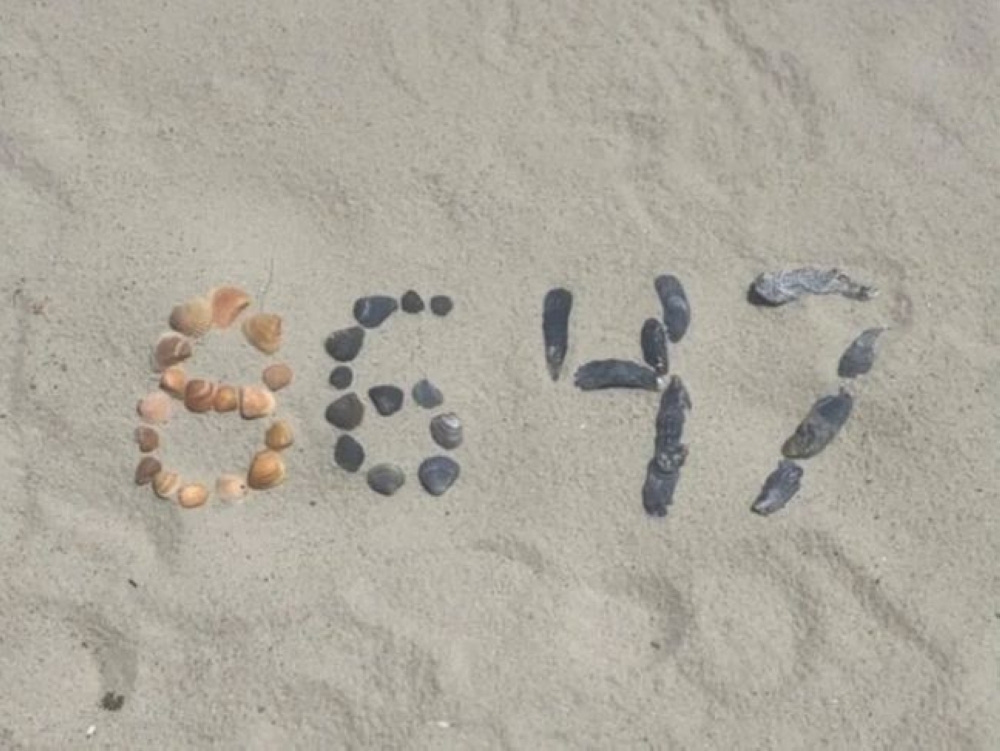
The administration alleges that, in posting the photograph, Comey “knowingly and willfully” made a threat to kill President Trump under the same statute used against Watts in 1966, along with another statute that prohibits transmitting threats through interstate communication. They also allege in their indictment that “a reasonable recipient” would interpret the post “as a serious expression of an intent to do harm” to the president.
But there’s nothing reasonable or serious about this prosecution.
For one thing, the term “86” has been around since the 1930s, commonly used in restaurants and other contexts to mean “get rid of,” “throw out,” or “refuse service to.” When combined with the number 47, referring to our current 47th president, the message becomes clear: Get rid of Trump.
To assume that “86” means “kill” or “assassinate” is, at best, uncharitable. There are obvious ways to “get rid of” a president without ending his life, like impeachment and removal from office. When the Chicago Sun-Times reported that NBA coach Jim Boylen was “eighty-sixed by the Bulls,” nobody thought it meant the Bulls’ front office had murdered him.
Even if they can somehow establish that “86” unambiguously means what they say it means, the prosecution still has their work cut out for them. Unless it can be proven that Comey himself seriously expressed an intent to kill the president, the phrase “86 47” would still be protected speech. The law is clear that merely wishing for someone’s death is and should be protected speech, as distasteful as it may be, absent more evidence proving intent to cause harm.
Comey isn’t even the first to use “86” in reference to presidents. In 2022, right-wing activist Jack Posobiec posted the same message (minus the seashells) referring to then-President Joe Biden. It’s a ubiquitous enough sentiment that Amazon has both “86 47” and “86 46” merchandise for sale. It’s absurd to argue that anyone who purchases or displays those products necessarily intends to threaten the president in question, as opposed to simply voicing opposition to him.
Even the timing of this indictment is comical. Comey’s “86 47” photograph was posted in May of 2025. It strains credulity to think Trump and his administration considered four digits written in seashells a threat against the president’s life, but failed to act on it for 11 months.

Simply put, this indictment lacks merit. Merely labeling disfavored speech a “threat” doesn’t magically make it so. To lose First Amendment protection, that expression must clear a very high bar—and for very good reason. 2003’s Virginia v. Black established that “true threats” are “those statements where the speaker means to communicate a serious expression of an intent to commit an act of unlawful violence to a particular individual or group of individuals.”
Twenty years later, Counterman v. Colorado made clear that the government must prove the speaker either intended the statement as a threat or “consciously disregarded a substantial risk that his communications would be viewed as threatening violence.” That’s the constitutional floor. In Comey’s case, however, the government must meet the higher standard—proving he subjectively intended to make a threat—because that is what the statutes he’s being charged under require.
Some have also suggested that Comey’s post incited violence. But the indictment doesn’t charge him with that, likely because even the Department of Justice recognizes how untenable such a claim would be. Incitement is another narrow First Amendment exception, limited to speech intended and likely to provoke imminent unlawful action. Not only is there no evidence Comey was urging anyone to assassinate Trump, but it’s impossible to argue with a straight face that a viewer of his seashell photo would have immediately set out to locate the president and attempt to kill him as a result.
The law is structured the way it is to address specific, concrete harms while giving the most possible breathing room for free expression—particularly when it comes to criticizing the government. As the Supreme Court noted in Watts’ case, “the language of the political arena … is often vituperative, abusive, and inexact.” Any attempts to punish such expression, the ruling continued, must be interpreted “against the background of a profound national commitment to the principle that debate on public issues should be uninhibited, robust, and wide-open, and that it may well include vehement, caustic, and sometimes unpleasantly sharp attacks on government and public officials.”
When considered in that context, a photograph of seashells on the beach becomes about as threatening to the president’s life as a salad.
Lowering the bar for what counts as true threats and incitement would hand the government a dangerous tool to crack down on dissent under the pretext of preventing violence. It’s not hard to characterize a wide range of political rhetoric as menacing or a potential contributor to future violence: calling Trump administration officials fascist, labeling abortion murder, declaring that “All Cops Are Bastards,” or claiming an election is rigged, for instance. Without the First Amendment’s narrow and exacting standards, it would be all too easy for administrations of either party to criminalize a vast swath of political expression.
The reality is that this indictment is a flimsy excuse to use government authority to punish the president’s political enemies—something this administration is quite fond of and has been thoroughly documented doing. This is all the more reason to vehemently oppose this indictment and the retaliatory actions of the administration.
If political retribution for speaking out becomes the norm in American politics, then everyone’s right to free speech could be eighty-sixed.
Angel Eduardo is senior writer and editor at The Foundation for Individual Rights and Expression.
Aaron Terr is Director of Public Advocacy at the Foundation for Individual Rights and Expression.
Follow Persuasion on X, Instagram, LinkedIn, and YouTube to keep up with our latest articles, podcasts, and events, as well as updates from excellent writers across our network.
And, to receive pieces like this in your inbox and support our work, subscribe below:
 | A guest post by
|
 | A guest post by
|
It's alarming that they obtained an indictment in the first place. We know the saying regarding the ham sandwich, but how could anyone even vote to indict on these facts? The charge will be dismissed, but this shouldn't even be an indictment to begin with. The aim is to vex and cause pain to Comey, and even though he is likely not worried, he still has to deal with this charge. I wonder how many Americans understand how deeply wrong this is.
where are the laws that can be used to disbar and impose severe penalty on the abuse of "vexatious lawsuits"? Besides, every one of the admin is close to severe abuse of violating the Constitution and lying - why are they not being impeached?