

A Theory About the Estrangement Crisis
Don’t helicopter parent your kids. It may cause them to make a dramatic break later in life.

We’re delighted to announce that our online BOOK CLUB is back! You can meet authors and ask questions about their work, as well as meeting other readers. Please join us on Tuesday, April 7 at 6pm ET, when our Head of Podcasts, Leonora Barclay, will interview Russell Muirhead and Nancy L. Rosenblum about their book Ungoverning: The Attack on the Administrative State and the Politics of Chaos. Register your interest here.
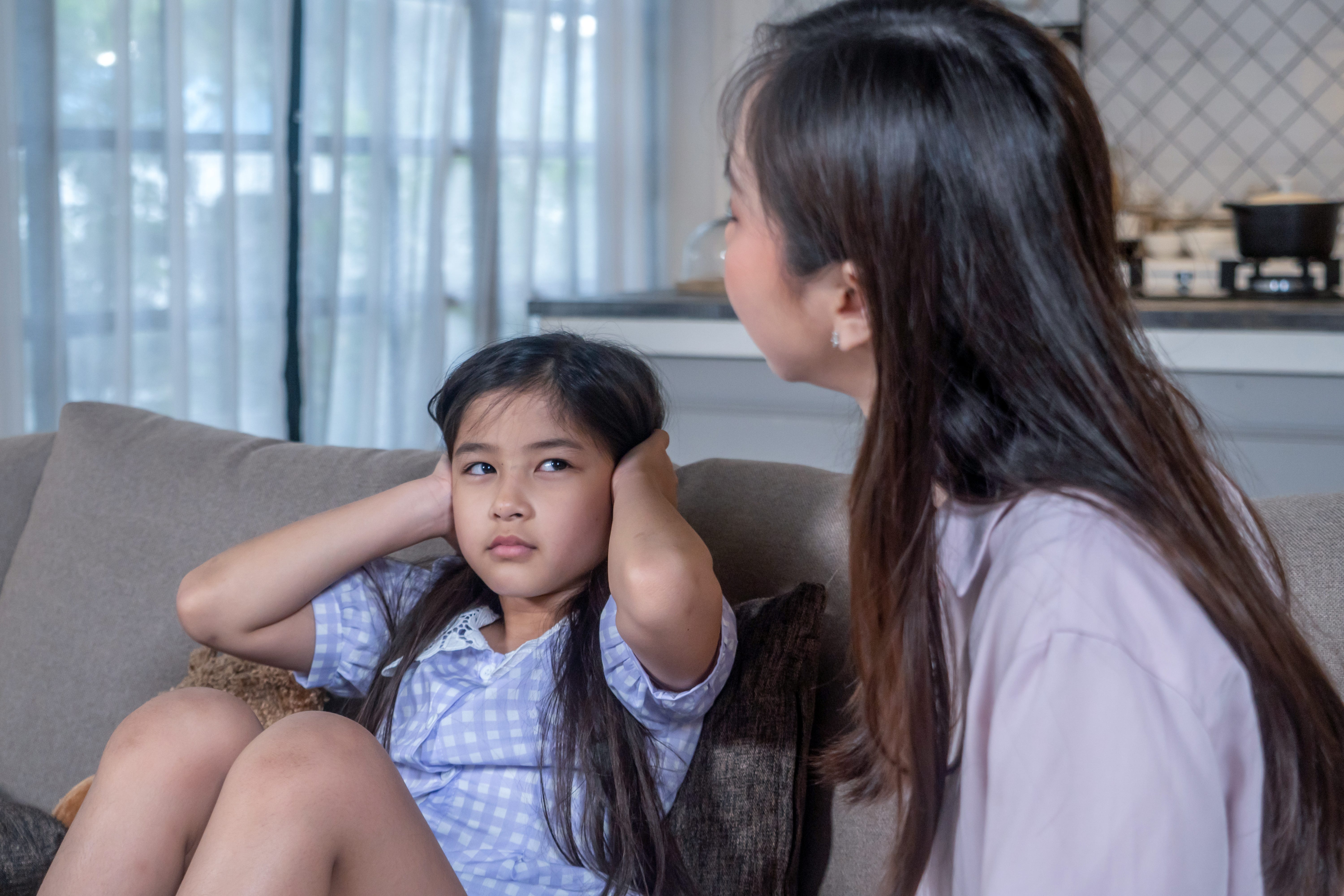
The American family is in crisis (again). One quarter of adult children are, or have been, estranged from a parent, while parents in some parts of the United States are more than twice as likely to have a bad relationship with their adult children as parents in other countries. The average age for offspring to choose estrangement is their early-to-mid-twenties—just at the point where, in previous generations, parents could relax and congratulate themselves on a job well done.
The reasons for estrangement can often seem… less than significant. A study by Time found that 1 in 5 people who estranged themselves from a close relative did so because of “political differences,” with those under 35 especially likely to cut off parents for this reason. One Ivy League grad reported cutting off a parent for being “needy,” while others give reasons including vague descriptions of “chronic invalidating dynamics.” It seems that, for some of those who choose to cut off their parents, the decision is not based on abuse or trauma, but on far more trivial things.
What explains this increased willingness to choose estrangement? The trend has coincided with a loneliness epidemic, and a culture that has become more individualistic, deprioritizing familial relationships while also feeling the sharpness of their absence. Advice to cut off your parents has become increasingly trivialized, the stuff of WikiHow guides or TikTok tutorials. Meanwhile, there are reports of therapists encouraging patients to see normal parental mistakes as toxic behaviors that they must sever themselves from.

This makes it tempting to assume that a mixture of cultural factors, peer pressure, and individualism are to blame for the rise in estrangement—and no doubt all of these play their part. But there’s another factor which arguably plays a big role: helicopter parenting.
Helicopter parenting refers to parents being intensely involved in the lives of their children beyond the point where such involvement is healthy (this is related to the phenomenon of “enmeshment,” where boundaries between family members are blurred or non-existent). Helicopter parenting involves parents not wanting their children to go out and do things for themselves, often because of a misplaced fear for their safety. And it is a particularly acute phenomenon in the United States. A recent study of American children aged 8-12 found that most aren’t allowed to be out in public without an adult. Fewer than half of 8- and 9-year-olds have even walked down a grocery store aisle alone.
Furthermore, this pressure is not limited to childhood. Going to college should be a time of self-discovery, learning your own limits, and taking responsibility for your life choices as well as your education. Yet the last few decades have seen an increase in parents checking in with their adult children’s college professors, rather than accepting their offspring as adults responsible for their own education. Helicopter parents are even visible in the workplace, with reports of parents becoming more involved in their grown children’s job hunt—or even attending their adult child’s job interviews.
All of this is a sharp contrast to the experience of children in the 1970s and 1980s, who remember roaming the streets with their friends without parental supervision. While I, growing up in the 1990s, had less freedom than my parents had, I still cherished daytrips with friends and the joyous thrill of disobedience on the (rare) occasions I lied to my parents about where I was.
Today, the first generation of children who grew up with ever-present parents—and whose locations were supervised by ever-present digital devices—are now entering adulthood, giving insights into the long-term psychological impacts of this parenting approach. And the results aren’t pretty. Overprotective parenting has been linked to increased rates of anxiety and depression, as well as a lack of essential life skills like emotional control. This is unsurprising: To grow up being told you’re not competent enough to handle activities like going to buy candy or heading to the mall with your friends will naturally impact your self-confidence. By always resolving children’s issues and smoothing out potential speed bumps for them, parents are decreasing children’s resilience, making it harder for them to cope when they are finally allowed independence. Lenore Skenazy, founder of the “free-range kids” movement, puts it starkly:
As children’s independence and free play time have gone down over the decades—not just since COVID, not just since phones, but since before that—childhood has become more supervised. And their anxiety and depression have gone up … When we worry about kids being so anxious and depressed, it’s because they have no idea how much they’re capable of doing.
But what’s all this got to do with estrangement?
Quite a lot. Young people need independence—graded according to their age—in order to develop their own identity. Adolescence in particular is a time to explore your own personal values, life goals, and sense of self. While parental support is of course important to teenagers, they also prioritize friendship, and research has shown that they handle stressful situations better when around peers.
The act of rebelling against parents is thus a normal feature of growing up. Teenagers see their rebellion as a way to assert themselves against their parents. Painful as it is to go through for everyone involved, teens are willful and annoying for evolutionary reasons. Pushing away their parents is a vital step for them to develop and see themselves as individuals.

But imagine growing up in an environment with constant parental coddling. You’ll naturally desire boundaries whilst also struggling to complete small tasks and imagine everyday life without an omnipresent adult. These conflicting emotions—of love and anxiousness—short circuit the normal balance of things, in which parental love is combined with a degree of independence that satisfies the child’s need to feel like they are rebelling. The result is that many teenagers feel too anxious or attached to develop a distinctive sense of self.
What then? Although there is a lack of research into this topic, anecdotal evidence—and common sense—suggest that adults who didn’t rebel as teenagers feel the urge to do so later in life. This trend may be enhanced by the fact that adults live like adolescents for longer than they used to. Eventually, the pressure will build to the point that the adult child feels that only a dramatic rejection can create the boundary they crave.
But of course, the consequences of an adult rebelling against their family are much bigger than for a teen. A teen usually lives in the family home, part of the family’s daily routine, and possibly receiving an allowance. They are directly motivated to quickly reconcile with their parents. An adult, by contrast, has no such motivation. Living away means no longer having daily in-person contact with close family members. The individual isn’t incentivized to put up with their family’s competing perspectives. Living separately also makes it easier to paint family members and their motivations in the worst possible light; living in close proximity, by contrast, often forces reconciliation. While you may hate your parents for a few hours, you also remember you still love them.
Finally, living with roommates or having a circle of friends to go out with means that family has a limited role in an adult’s social life. Having a separate life from your nuclear family is a key part of growing up, but it also means that the factors that push even an extremely rebellious teenager to reconcile with their parents are much weaker—making it easier for adult children to simply walk away.
Of course, some parents do need to be cut off. If a parent has been abusive, going no contact is a necessary step for both healing and building a happy life. It used to be acceptable to inflict physical punishment on children, or to ostracize them for being gay. Thankfully, society has moved on; these behaviors are rightly recognized as abusive, and justified grounds for cutting off parents.

But it is also clear that we have travelled too far in the opposite direction. And one of the reasons may very well be the coddling effects of helicopter parenting. Everyone at some point growing up feels the urge to demand that their autonomy be respected. By postponing autonomy until adulthood, the idea of cutting off parents in your twenties becomes both easier and more appealing.
Hopefully, as the harms of enmeshment and helicopter parenting are increasingly recognized, and movements such as “free range kids” become more mainstream, familial estrangement will decrease. It’s high time to remember that by supporting a child to forge their own independent path, you’re not only empowering your child—you’re also bringing your family closer.
Leonora Barclay is Head of Podcasts at Persuasion.
Follow Persuasion on X, Instagram, LinkedIn, and YouTube to keep up with our latest articles, podcasts, and events, as well as updates from excellent writers across our network.
And, to receive pieces like this in your inbox and support our work, subscribe below:
So kids are more depressed and anxious . . . can it be described, in line with this piece, as a parental culture that denies agency to children? I am tempted to put the word agency in all caps. We know a few things about happiness and well-being: two huge factors are (1) gratitude, and (2) agency. Does an individual feel as if they have at least some control of their own destiny? Like problems can be solved with persistence and resilience? I fear parents are taking this vital sense of agency away from children, and that contributes to depression and anxiety. As for estrangement, I thank the Gods and Goddesses that I do not have children.