


This article is brought to you by American Purpose, the magazine and community founded by Francis Fukuyama in 2020, which is proudly part of the Persuasion family.
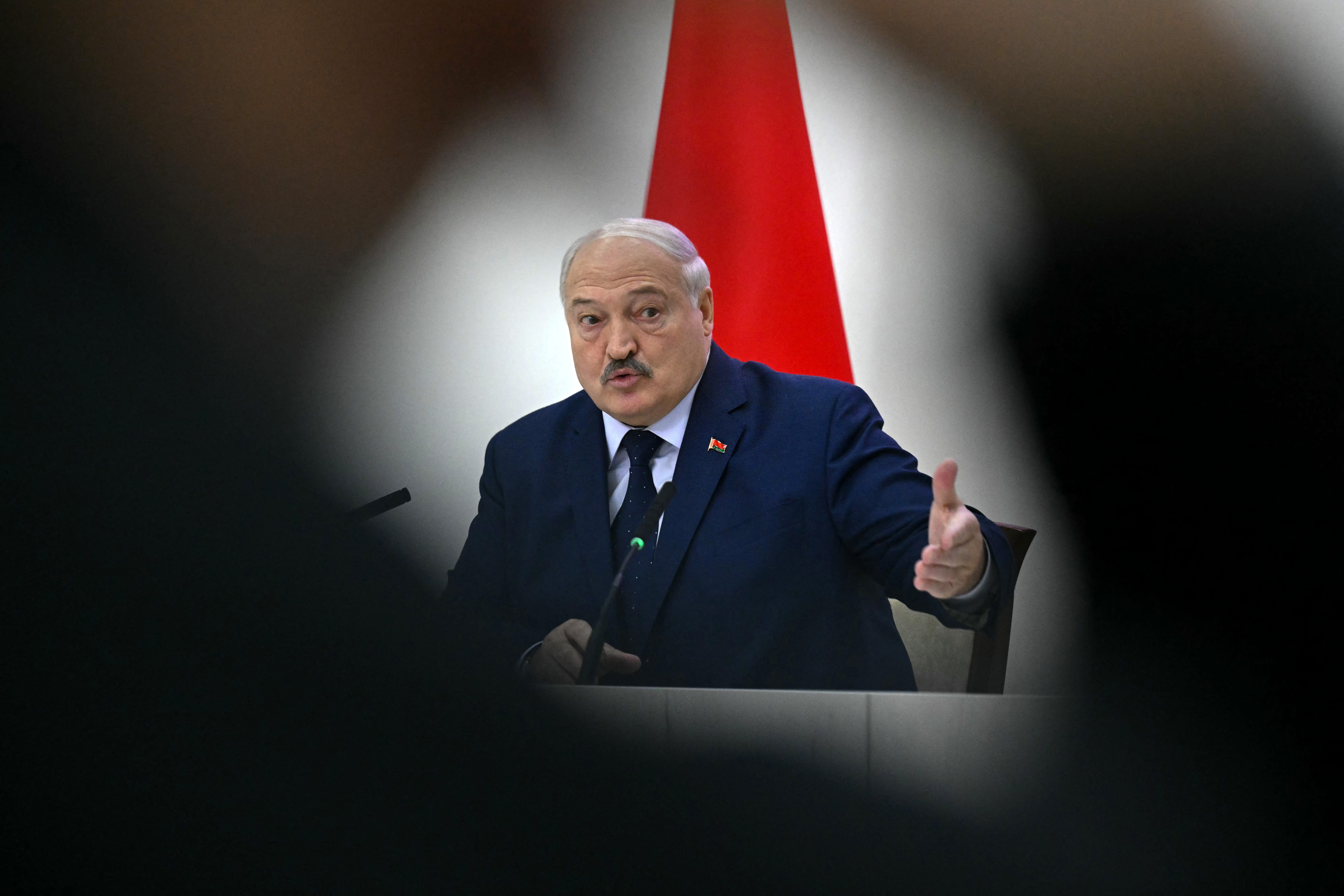
As the Ukrainian military continues destroying refineries across Russia, and Moscow responds by targeting random gas stations in eastern Ukraine, the war threatens to spill over into neighboring Belarus—the Kremlin’s only ally in Europe. Whether the conflict will eventually escalate depends on Belarusian President Alexander Lukashenko—an autocratic leader who has so far managed to keep his country out of direct involvement in the war in Ukraine.
When Ukrainian leader Volodymyr Zelenskyy issued an ultimatum to Lukashenko demanding that Minsk remove Russian signal relay equipment installed on communications towers in the regions bordering Ukraine, it was a clear indication that Kyiv—emboldened by the recent successful strikes on Russia’s key energy infrastructure—was ready to raise the stakes. On June 19, he gave the Belarusian president one week to comply.
“If he doesn’t remove the equipment, we will,” Zelenskyy stressed.
As an experienced politician, Lukashenko undoubtedly took Kyiv’s threats seriously. On June 24, Zelenskyy announced that Russian drone signal boosters in Belarus had been switched off, and that communications equipment that Ukraine said was helping support Russian drone strikes from Belarusian territory had stopped operating. The Belarusian leader seems to have backed down.
Previously, just days before Zelenskyy’s ultimatum, amid growing tensions between Ukraine and Belarus, Lukashenko publicly apologized to the Ukrainian leader for his harsh comments in the past. Zelenskyy, however, bluntly rejected the apology, stating “He can keep his ‘apology’ to himself.”
Instead, the Ukrainian president expected Minsk not only to remove Russian relay equipment from southern Belarus but also to stop supplying Russia with fuel. As a result of Ukrainian drone and missile strikes on Russian oil refineries, fuel shortages in the country have become the norm. Russia now relies on fuel supplies from two oil refineries in Belarus: the Naftan Oil Refinery in the north and the Mozyr Oil Refinery close to the Ukrainian border.
The Ukrainian military has already shown that it has the capacity to significantly damage major refineries, if not completely destroy them. To avoid such an outcome in Belarus, Lukashenko did not seem to have much choice but to make a concession to Ukraine and switch off Russian signal relay devices.
The problem for him is that, in the eyes of Russian hardliners, he has demonstrated serious weakness. On the other hand, by complying with Zelenskyy’s ultimatum, he avoided—at least for now—being directly involved in the war in Ukraine, something he has managed to stay out of since 2022.
Weeks before Russia launched its full-scale invasion in February 2022, Lukashenko said that, in the event of war, the Belarusian military would act “in the same way as the Russian army.” But that did not happen. Instead, he allowed Russia to use Belarusian territory to attack Kyiv, but refused to directly participate in any military operations against the neighboring state.
When it became clear that the Russian military lacked manpower to seize the Ukrainian capital, Moscow made a “goodwill gesture” and withdrew its forces not only from the suburbs of Kyiv, but also from the whole of northern Ukraine, as well as from Belarus. Although Russia maintains military bases there, it does not have nearly enough troops to launch a new offensive on Kyiv.
Under the current circumstances, it is Ukraine, with almost one million soldiers, that would be unlikely to face serious resistance from the Belarusian Armed Forces—estimated at around 60,000 personnel—if it decided to capture parts of Belarus. That, however, does not necessarily mean that Zelenskyy is willing to make such a move, even though the Ukrainian military undoubtedly has the capacity to do so.

In the eyes of parts of Belarusian society—namely those who support Lukashenko—a potential invasion would be interpreted as an act of aggression. It also remains unclear whether Kyiv’s Western allies would support such an operation, especially given that the Trump administration is reportedly seeking to improve relations with “Europe’s last dictator.”
On the other hand, Lukashenko, despite his history of threatening Ukraine and NATO with nuclear weapons, showed that he does not seem interested in supporting Moscow at any cost. On June 25, he openly told the Russian ambassador to Belarus that Minsk “has no intention of joining the hostilities against Ukraine.”
Lukashenko’s logic is simple: if Russia, after four and a half years of war, is unable to protect itself from Ukrainian drone and missile strikes, then where is the guarantee that it would protect Belarus in the event of conflict spillover? If Putin openly admitted that he wasted hypersonic Oreshnik missiles by firing on sheds in Ukraine in response to Kyiv’s strikes on Russia’s key energy infrastructure, what assurance is there that he would not use the same approach by “helping” Belarus?
Fully aware of the Kremlin’s unreliability, this time Lukashenko decided not to escalate. Although, at least for the time being, he might continue supplying fuel to Moscow, the Kremlin cannot count on Belarus’ military assistance in its war on Ukraine. This raises a key question: does Russia have any real allies?
According to Article 4 of the Russian-led Collective Security Treaty Organization, “an act of aggression (an armed attack that threatens security, stability, territorial integrity, and sovereignty) against one of the member states will be considered as a collective act of aggression on all member states of the CSTO.” Belarus is a member of the CSTO. But so are Kazakhstan, Kyrgyzstan, Tajikistan, and Armenia. Yet none of them has ever supported Moscow following Ukrainian attacks on Russian energy infrastructure.
The Kremlin is, therefore, on its own. It may count on North Korea’s limited assistance, but that is unlikely to have a decisive impact on the outcome of the war. At this stage of the conflict, it is Ukraine that has the initiative, even though Russia continues making small tactical gains in the Donbas at extremely high cost. Kyiv, on the other hand, seems focused on isolating Crimea and other occupied regions in southeastern Ukraine from Russian territory, potentially preparing for a large-scale offensive in the foreseeable future.
One thing is for sure: Zelenskyy’s ultimatum to Lukashenko was a clear demonstration of Kyiv’s military and political might. Just as the Ukrainian military is cutting off Crimea from Russia, Zelenskyy seems to have managed to isolate Belarus from Russia. Now that the Belarusian strongman has effectively backed down—aiming to save his own country—Kyiv is likely to increase strikes on Russia. Indeed, hard days lie ahead for Moscow.
Nikola Mikovic is a freelance journalist, researcher, and analyst based in Serbia.
Follow Persuasion on X, Instagram, LinkedIn, and YouTube to keep up with our latest articles, podcasts, and events, as well as updates from excellent writers across our network.
And, to receive pieces like this in your inbox and support our work, subscribe below:
 | A guest post by
|