

Chile’s Hard Right Isn’t as Trumpy as It Wants to Seem
How to keep a consensus while pretending to break it.

Yesterday, Quico went live on Substack debating our associate editor Sam Kahn on the question: Should you boycott AI? If you missed the debate, you can now watch it here!
Also: On behalf of the entire Persuasion team, we’d like to say THANK YOU to our new donors and new paid subscribers for responding to our call to action this past week. With your support, our capacity to deliver content like today’s piece grows—Persuasion’s future looks bright! If you’d like to join them, please upgrade your subscription today:
And if you’d like to add your name to our list of supporters and donors, follow this link.
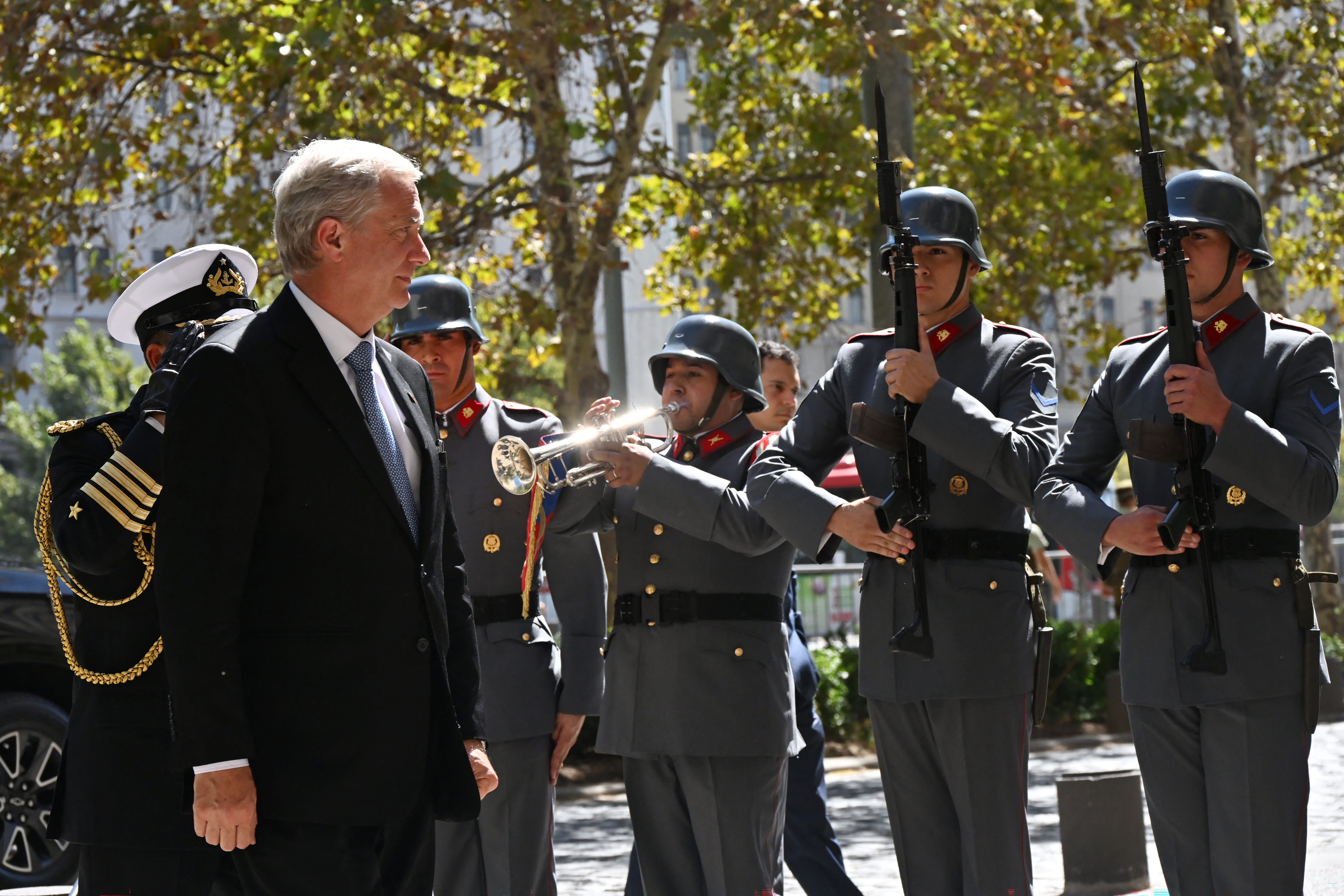
Last month, Chile inaugurated its most right-wing president since Pinochet. On the surface, there are reasons for alarm: President José Antonio Kast openly admires the 70s and 80s-era dictator. His father was a Nazi Party member. The international press is calling it Chile’s lurch to the far right—proof that even South America’s success story can fall to Trumpian populism.
How did Chile come to this? Walk around Santiago—Chile’s clean, safe, functional capital city—and you’ll hear Chileans describe their country as bitterly divided, split between leftists who scornfully call the Pinochet years “the dictatorship,” and patriotic right-wingers who refer to it admiringly as “the military government.”
To hear anguished Chileans tell the story, polarization threatens to pull South America’s development superstar apart at the seams. What you won’t hear, from Kast’s supporters or anyone else, is anyone proposing to change the basic policy settlement—the master lines that could actually change how Chile works.
Because here’s Chile’s dirty secret: the polarization is performative. The consensus is real.
It’s literally the first thing you notice. Leave the airport in Santiago and you’re suddenly riding down this smooth, wide, first-world highway that feels… German? Swedish? I don’t know, I just know I’ve traveled quite a bit in Latin America and I’ve never seen a highway like this.
“Wow,” I tell the taxi driver, “that’s some road!”
“You should see what we have to pay for it,” he says, pointing up at the illuminated signs every few hundred meters announcing the toll for that specific stretch. “They’re all private. The tolls are harsh.”
Good old neoliberal Chile, I think to myself. Because we all know the story: General Pinochet’s brutal dictatorship privatized everything, murdered hundreds of dissidents, and set Chile on the path to anarchocapitalist development between 1973 and 1990.
Or that’s the story I thought I knew until I asked my friend Juan Nagel, who teaches at ESE, Santiago’s fancy private business school.
“Pinochet? Nope. It was Lagos who privatized the highways.”
I do a double take. Ricardo Lagos is one of the heroes of Latin America’s democratization wave in the 1990s. More to the point, the guy’s a socialist. That doesn’t sound right.
“Lagos was public works minister in the 90s before he got elected president,” Juan tells me. “Trying to show ideological moderation, I guess. Technocratic chops. But yeah, the highways are incredible. Just, y’know, expensive.”
Foreigners make a lot of lazy assumptions about Chile, but the stereotype of a country set on a hard right-wing path by a brutal dictator who brought prosperity along with repression is a partial truth at best. The truth is much more interesting. Per capita GDP grew only about 40 percent during Pinochet’s entire 17-year rule, and that includes two devastating recessions in 1975 and 1982. Chile’s real push into middle-income status came with democracy: GDP per capita (in constant 2010 dollars) more than doubled from around $6,400 in 1990 to over $14,000 by 2018, and poverty plummeted from 45 percent in 1987 to just 20 percent by 2000.

Chile’s development success story is the story of deepening consensus around institutions built on fundamentally sound liberal principles.
It’s not just highways. It’s Chile’s mandatory private retirement savings-based pension system, and the sophisticated capital markets they give rise to. It’s the private-but-they-work utilities that keep the taps running in this mostly arid country. It’s the mixed health system that combines universally accessible public hospitals with pricey private care.
Kast calls his incoming administration an “emergency government”—a framing that tells you everything about how he sees Chile’s problems and nothing about how radical his proposed solutions actually are. “Chile needs order,” he proclaimed in his victory speech in December, standing in front of an enormous Chilean flag. “Order in the streets, in the state, in the priorities that have been lost.” To restore that order, he promised $6 billion in spending cuts within his first 100 days, a crackdown on undocumented immigration (he gave migrants until his inauguration to leave “voluntarily”), and deploying police and even the military to high-crime areas.
In his first week in office, he began digging trenches and building barriers on Chile’s desolate desert border with Perú to keep migrants out, and overturned an existing promise to regularize almost 200,000 undocumented migrants. He talks about streamlining the government, cutting the number of ministries from 25 to 15, slashing taxes on business and capital gains to boost investment. The rhetoric is all urgency and radical change.
But look at the cabinet he’s assembled and you see something else entirely: a board of directors more than a revolutionary vanguard. Just eight of his 24 ministers belong to political parties. The rest are corporate executives, business lobby veterans, and lawyers who’ve spent their careers in Chile’s economic establishment. Key ministries—economy, mining, foreign affairs—have gone to figures deeply embedded in the country’s major conglomerates.
It’s “chainsaw politics” Milei-style in the speeches, but in practice it looks a lot more like doubling down on the same institutional settlement that’s governed Chile for 35 years, with some clowning around in front of bulldozers at the border for the cameras. The reality is that Kast’s agenda—less taxes, less government, more private investment—scans like the 1988-era GOP as much or more than MAGA disruption.
Chile has had many left-wing governments since democracy returned in 1990, including the latest one headed by Gabriel Boric, not so long ago a radical leftist student leader. None of them changed the basic contours of this settlement. Left-wing governments rebalance it some, shifting the fiscal burden a little higher up the social ladder. Right-wing governments strike a more pro-business, low-tax stance. But nobody talks about radically reinventing the Chilean system, because everybody can see it just sort of works.
Many Chileans would roll their eyes at this characterization. They experience their country as profoundly polarized, riven into ideological tribes divided by the past and contemptuous of each other. “People will just ask you, straight up, ‘so are you a fascist or a communist?’” a friend tells me. “It’s bizarre.”
The scars are fresh from everything that happened back in the day. But as you move around Santiago, it’s hard to reconcile the stories of deep division with the very obvious prosperity all around.
One unmistakable sign of Chile’s success: all the Venezuelans. When Venezuela collapsed and eight million of my countrymen had to leave, almost as many chose Chile as chose the United States. Chile became the South American country most attractive to Venezuelans because it’s plainly the most prosperous in the region.
The United States has 20 times Chile’s population, so the 670,000 Venezuelans here are far more visible than the 900,000 in the United States. Again and again, talking to service workers, I went through that slightly awkward moment of both pegging each other as Venezuelan and not being quite sure whether to acknowledge it.

Not everyone is thrilled about the sudden arrival of 670,000 Venezuelans: Kast voters tended to be apoplectic about it. Perhaps calculating that radical stances are the flavor of the day, perhaps genuinely as disdainful of Venezuelans as he says, Kast is betting that Trumpy positioning is what’s going to catch the Zeitgeist. But this itself is just another unmistakable sign that Chile is graduating to first-world status: anti-immigration sentiment is now powerful enough to get a right-wing populist elected, and in 2026 there’s no more convincing token than that.
Which means Chile isn’t about to lurch anywhere. The country’s institutions have survived seventeen years of dictatorship and thirty-five years of democracy—left-wing governments, right-wing governments, radical student leaders. They’ll survive Kast too, because the middle-class country they’ve created has made the institutions too valuable to tear down.
That’s the real Chilean miracle.
Quico Toro is a contributing editor at Persuasion, the founder of Caracas Chronicles, Director of Climate Repair at the Anthropocene Institute, and writes the Substack One Percent Brighter. He lives in Tokyo.
Follow Persuasion on X, Instagram, LinkedIn, and YouTube to keep up with our latest articles, podcasts, and events, as well as updates from excellent writers across our network.
And, to receive pieces like this in your inbox and support our work, subscribe below:
I am surprised by this article in that it repeatedly refers to Chile as a success story. I never read about Chile in the media, so I am not well informed in that sense. But I happen to know quite well two Chilean immigrants to the USA who help care for my elderly mother . Both of them speak of Santiago as a dangerous place. One of them was from an upper middle class family who lived in a neighborhood with high level government people but nevertheless she chose to leave the country to come to the USA.
I am glad that Persuasion is writing more about Latin America. Chile is indeed a success story. I only have one quibble with this welcome essay, which is “nobody talks about radically reinventing the Chilean system.” Boric talked a lot about reinventing the Chilean system. The fact that Chilenos rejected the latest constitutional revisions confirms Quito’s observations.