

How Not To Do Regime Change
Nearly two weeks in, it’s clear just how ill thought-through Trump’s regional war is.

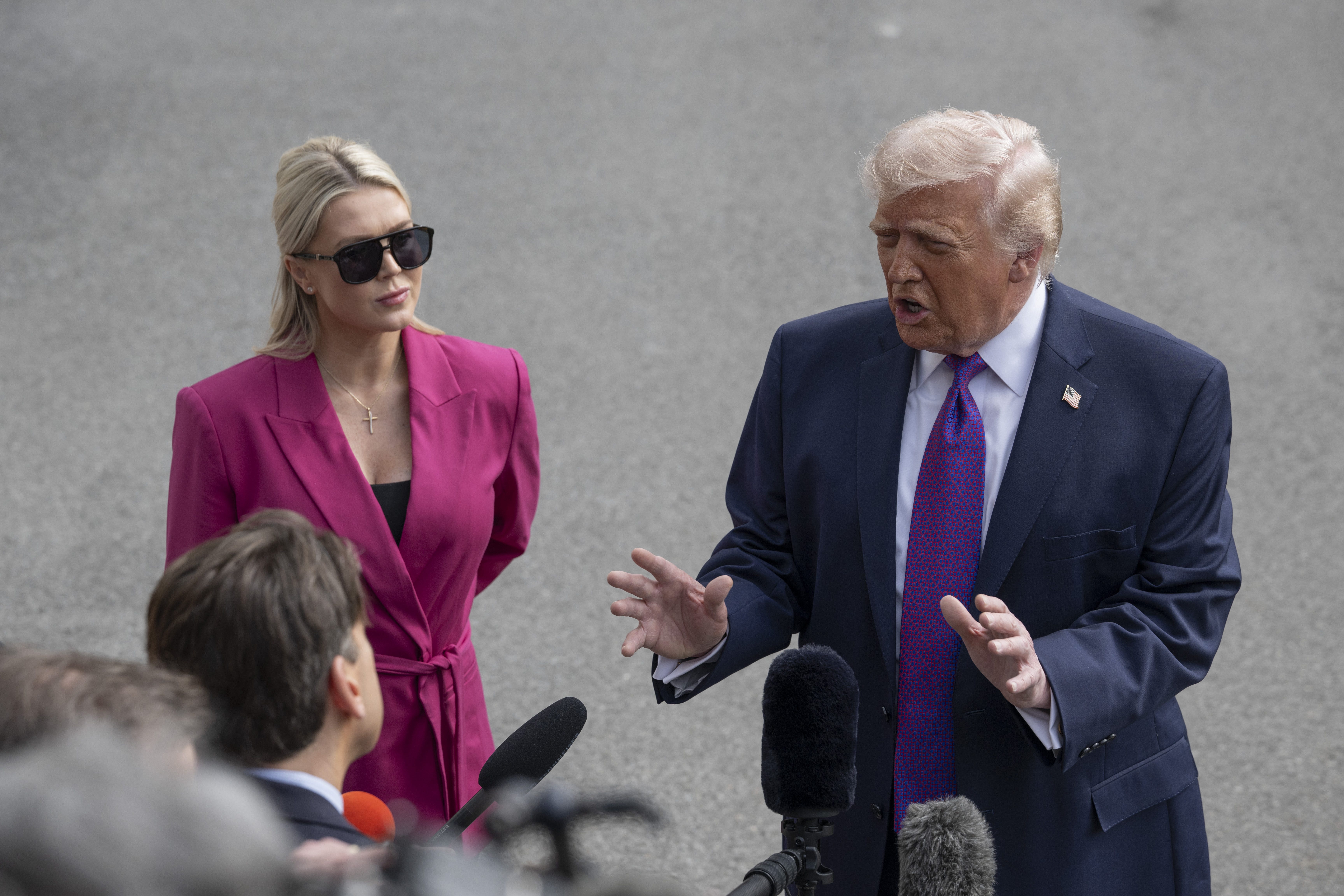
It is hard to overstate what a complete shambles American foreign policy has become since Donald Trump launched his war against Iran on February 28. Trump clearly believed that the initial decapitation strike would lead to the collapse of the Islamic regime and its replacement by a new leadership willing to work with the United States. He seems to have had Venezuela on his mind as a model, as he referred to it several times during the war’s first week. He and his associates failed to anticipate Iran’s capacity to strike back, as it launched rounds of missiles and drones at U.S. allies and bases in the region, disrupting Gulf economies and raising gasoline prices in the United States.
What is particularly maddening about this is that anyone who has lived through the last quarter century of U.S. Middle East policy should have understood that war would produce multiple unintended and devastating consequences.
After the Twin Tower attacks on September 11, 2001, the United States had good cause to intervene against the Taliban regime in Afghanistan, since it had sheltered al-Qaida terrorists who were directly responsible for the deaths of thousands of Americans. The apparent success of this regime change operation emboldened the Bush Administration to intervene in Iraq in March 2003 and topple Saddam Hussein’s Ba’athist government.
The United States then had two collapsed regimes on its hands. The problem was not one of democratic nation-building. Before you can have a democracy, you need to have a state, and the United States was completely at a loss as to how to create a state that, by Max Weber’s famous definition, could exercise a legitimate monopoly of force over a defined territory. Both post-invasion Afghanistan and Iraq hosted multiple militias and power centers that challenged the authority of the friendly governments that the United States tried to install. This mistake was then repeated by the Obama administration during the Arab Spring, which used airpower to stop Muammar Gaddafi’s attempt to reassert control over Benghazi.
The Libyan civil war that broke out thereafter is still ongoing; the Taliban is back in power in Afghanistan; and Iraq is ruled by a corrupt and shaky government that has been more closely aligned with Iran than the United States over the years.
The single lesson that should have been drawn from these debacles is that military power itself is not sufficient to bring about the kinds of political change desired by U.S. foreign policy. This was true in Afghanistan and Iraq, where the United States was willing to place hundreds of thousands of “boots on the ground.” Airpower by itself has an even lower chance of directing political outcomes.

Let’s be clear. Regime change is often the only solution to the problem of rogue states that oppress their own people and spread instability to wider regions. The disruption they cause can be contained by other means, but containment does not solve the underlying problem. The Iranian Islamic Republic is one such regime, whose nearly 50-year reign has produced brutal oppression inside the country and seeded dangerous Shiite proxies throughout the Middle East.
The problem is thus not the concept of regime change, but what is required to bring it about. Despite its deep unpopularity, the Islamic regime is rooted in parts of Iranian society. The Islamic Revolutionary Guard Corps (IRGC) and Basij that sustain it have strong self-interests in not losing power; such a loss would mean not just an end to their economic livelihoods, but an end to their lives as popular forces take revenge. It is hard to judge the strength of the religious ideology that remains today, but it clearly motivates a certain core of regime supporters and is something that did not exist in either Latin America or Eastern Europe after their experience with military dictatorships and communism.
Conversely, the opposition in Iran is highly fragmented. There is no organized leadership, much less a democratic one, comparable to María Corina Machado’s movement in Venezuela. Like Libya, Iraq, and Afghanistan, Iran is ethnically divided with Kurdish, Azeri, Baluch, Turkmen, and other ethnic minorities clustered in different regions. During the Eastern European transitions, the United States was working with a European Union that served as an inspiration to democratic opposition forces; today, it is working with a right-wing Israeli government that is widely distrusted and detested in the region.
Replacing the current regime with a more U.S.-friendly one is thus an enormous task, and one that cannot be accomplished by airpower alone. Indeed, earlier experience indicates that it could not be accomplished even with large numbers of ground forces in the country. As I noted in a previous post, the United States and Israel have by now taken out most of the visible military facilities in Iran, and are moving, for lack of other targets, to attack infrastructure that serves ordinary people. These include oil storage facilities, electrical grids, desalination plants, and other dual-use civilian targets. This shift puts the United States directly at odds with the Iranian people that it claims to want to support.
The United States has thus far avoided strikes on Iran’s major oil terminal at Kharg Island. Why it has done so is not clear; perhaps some in the Trump administration think that they could have access to Iranian oil under a new regime. But the temptation to go after the economic base of the Iranian regime’s power will only increase over time as the regime fails to capitulate.
The Trump administration is behaving as if it were born yesterday, innocent of any of the accumulated understanding of regional politics or of the sources of earlier American policy failures. Indeed, it has expressed contempt for experts coming out of the establishment—diplomats, intelligence analysts, military officers, and many others—and sidelined them. Instead, it has relied on a small circle of sycophantic Trump loyalists, none of whom are likely to give the president realistic assessments of the way forward.

Consequently, the administration is making it up from day to day. At one moment, Trump says the war is essentially over; the next day Pete Hegseth says it will continue for some time. One day President Trump says the U.S. objective is “unconditional surrender”; another day his press spokesperson Karoline Leavitt says that it is America that will decide when Iran has unconditionally surrendered. I can just imagine the contortions she will resort to at the press conference after such a declaration, when Iran is continuing to lob drones and missiles across the Middle East.
The world has become a very dangerous place because its most powerful country is under the control of a ten-year-old boy. That boy discovered a flamethrower in his parents’ back yard, and is now enjoying the ability to burn things up with it.
His parents need to get him under control.
Francis Fukuyama is the Olivier Nomellini Senior Fellow at Stanford University. His latest book is Liberalism and Its Discontents. He is also the author of the “Frankly Fukuyama” column, carried forward from American Purpose, at Persuasion.
Follow Persuasion on X, Instagram, LinkedIn, and YouTube to keep up with our latest articles, podcasts, and events, as well as updates from excellent writers across our network.
And, to receive pieces like this in your inbox and support our work, subscribe below:
Oh geesh. Trump has communicated the exact preference for Iranian regime change. See Venezuela. I think the Trump admin could give the Trum-hating media and chattering class a 500-page detailed plan and they would still write "Trump's plan is ill thought out.".
You really cannot fix TDS without years of needed cognitive behavior therapy.
As Tom and Ray Magliozzi might have put it, Trump is "unencumbered by the thought process". Not only he, but his close advisors. What a terrible thing America has visited on the world. What will it take to crawl out of this?