



This article is brought to you by American Purpose, the magazine and community founded by Francis Fukuyama in 2020, which is proudly part of the Persuasion family.
Have we been here before? Scholars and pundits alike have identified striking parallels between today’s political developments and those of the interwar years: democracy in retreat, radicalized parties going from strength to strength, ethnic minorities scapegoated, dictators and would-be dictators advancing, economic crisis, the breakdown of a liberal international order. We even find a deadly pandemic in both periods, the Spanish flu of 1918-20 and Covid-19 in 2020-23.
The parallels send shivers down the spine. Tellingly, the economic crisis that began in 2008 was branded the “Great Recession”—a deliberate echo of the “Great Depression” that began in 1929. If that era is where we are headed, it is time to buckle up. Two dark premonitions are often combined: that democracy has experienced a decades-long rollback, and that we are now on the eve of something like the early 1930s, with democratic setbacks poised to turn into freefall.
For nearly two decades, the American organization Freedom House and the British magazine The Economist have published annual assessments of democracy with strikingly bleak titles, such as “Discarding Democracy: Return to the Iron Fist,” “The Global Expansion of Authoritarian Rule,” and “Global Democracy in Retreat.” These reports have been accompanied by a surge of books from scholars and public intellectuals, many of whom draw comparisons with the interwar period during which democratic systems collapsed across much of Europe and Latin America.
Take the following three books: How Democracies Die, by Harvard political scientists Steven Levitsky and Daniel Ziblatt, with the telling subtitle What History Tells Us About Our Future, the American historian Timothy Snyder’s On Tyranny: Twenty Lessons from the Twentieth Century, and former U.S. Secretary of State Madeleine Albright’s Fascism: A Warning. These books point to what the authors see as striking parallels between developments in Europe during the 1920s and 1930s and those unfolding today, particularly in the United States.
Yet the claim that today’s troubling developments mirror those of the interwar period is misleading—rooted in a superficial reading of that era and a flawed historical analogy. As the interwar U.S. Supreme Court justice Benjamin N. Cardozo once warned, metaphors and analogies intended to free our thinking can just as easily end up enslaving it.
To begin with, the extent of our current predicament has been exaggerated. We have certainly seen instances of democratic backsliding and assertive authoritarian behavior since the turn of the millennium. But many studies—including some mentioned above—have overstated both the severity and the persistence of the negative democratic trend. In fact, global democracy measures and long-term historical analyses show that democracy grew substantially in the late 20th century, reached a high point around 2015, and has only recently shown a downturn, which is so far—with the very recent exception of the United States—confined to weaker democracies or reflects authoritarian regimes shedding superficial democratic features; it does not reflect a broad retreat within well-established democratic systems.
The more specific warnings about a repeat of the interwar developments are also problematic, for two reasons. First, they ignore crucial differences in the historical context, which we outline below. Second, the resilience of interwar democracies has been overlooked. Observers have mainly focused on the democratic failures of the 1920s and 1930s, and especially those of Italy and Germany. But this perspective ignores the fact that many long-established, well-institutionalized democracies successfully weathered the crises of the 1920s and 1930s, avoiding both widespread political radicalization and a breakdown at the ballot box or in the streets.
It is important to note just how different the interwar period is from what we find today. The very term conjures up an image of crisis. It denotes the 21-year interval between the two most destructive conflicts in modern history, from the end of World War I in 1918 to the outbreak of World War II in 1939.
The war between 1914 and 1918 profoundly destabilized European societies. Around ten million men died in the trenches under conditions that are difficult to comprehend today, while millions more returned home physically injured or psychologically scarred. Many veterans found it hard to reintegrate into civilian life, and large numbers gravitated toward extremist paramilitary movements in countries such as Germany, Austria, and Italy. In the 1920s and 1930s, these groups contributed to widespread violence and instability. The brutal clashes between police and protesters on May 1, 1929, in Berlin—“Bloody May” (Blutmai)—left 33 civilians dead by police gunfire. A staggering 89 demonstrators were killed by the police in Austria on July 15, 1927, after the Ministry of Justice was set on fire. In Germany, right-wing militias bearing menacing names such as Stahlhelm and Sturmabteilung fought with left-wing militias like the Reichsbanner Schwarz-Rot-Gold. Similar events took place in Italy in the early 1920s, where fascist blackshirts (Squadristi) fought communists and socialists.
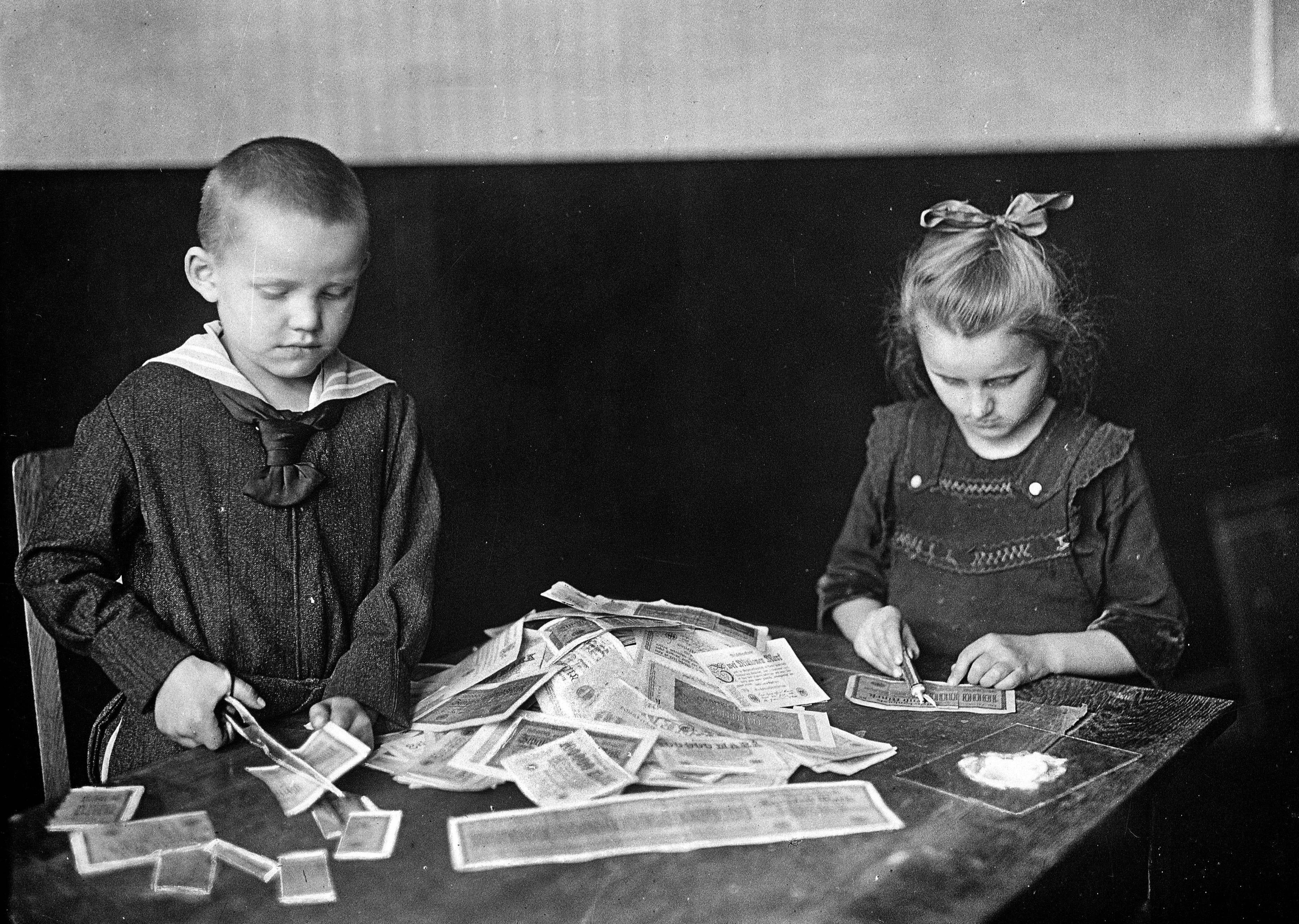
Meanwhile, the economy was in tatters. In the years after the 1918 armistice, Europe experienced a severe inflationary crisis that far exceeded the levels seen during the high-inflation episodes of the 1970s and 1980s. In 1923, the Weimar Republic experienced hyperinflation on a nearly unimaginable scale. Postage stamps were issued with face values in the billions of marks, and wages were sometimes paid multiple times per day because money lost value so quickly that it had to be spent immediately. This hyperinflation wiped out savings while also creating opportunities for speculation and enrichment. Inflationary pressures also spread to Italy and the newly established states of Poland, Czechoslovakia, and Hungary, where they caused significant economic and social strain.
There was a brief respite in the second half of the 1920s. The Locarno Treaties of 1925 normalized relations between France and Germany, and Germany was admitted to the League of Nations, the precursor to today’s United Nations. The years from 1924 to 1928 are often referred to as the “Golden Years” of the Weimar Republic, a period during which Germany’s young democracy appeared to be gaining stability and confidence.

These golden years came to an abrupt end in the autumn of 1929 with the onset of a new and terrible crisis. The Great Depression was and remains the most severe economic downturn of the modern era. Between 1929 and 1933, global industrial production fell by an estimated 37 percent, world trade declined by 68 percent, and agricultural prices dropped by as much as 75 percent. In response, many governments introduced high tariffs and turned toward economic self-sufficiency—a policy chillingly known as “beggar-thy-neighbor”—which nearly brought international investment to a standstill. In Germany, the economic collapse led to mass unemployment, creating fertile ground for anti-democratic movements. Support for Communists and National Socialists surged as the crisis deepened between 1929 and 1933.
Meanwhile, the international order created by the victors of World War I collapsed. In 1933, Japan disregarded the League of Nations’ ruling that its occupation of Manchuria was illegal, and in 1936, the League futilely condemned Italy’s invasion of Abyssinia (Ethiopia). That same year, Mussolini’s Italy formed an alliance with Hitler’s Germany, while the democratic great powers were largely preoccupied with their own domestic challenges. On the international stage during the 1930s, might did make right.
While the world has experienced many crises in recent decades, they pale in comparison with what we have outlined above. For this reason alone, political developments are unlikely to repeat themselves. But there is another fascinating facet of interwar democratic stability that has too often been ignored.
A large democratic wave engulfed Europe after the victory of Western democracies in 1918: In 1919, only a small number of European countries—including the Soviet Union, Hungary, Spain, Portugal, and Albania—were governed by regimes that had not come to power through free elections. Two decades later, the situation had dramatically reversed as the number of European democracies effectively halved, with the democratic breakdowns equally distributed in the 1920s and the 1930s.
This is what keeps today’s observers awake at night. It seemingly shows that even democracies in Europe are not immune to breakdown during crises. But what is often forgotten is how these breakdowns took place in countries that had only democratized after the armistice in 1918. A large body of research has demonstrated that such new democracies are fragile during crises in general and economic crises in particular. The fact that half of the democratic breakdowns took place before the onset of the Great Depression in the autumn of 1929 illustrates their fragility.
More interesting is the resilience of the old democracies. Faced with the same cocktail of crises—economic, social, political, and international—all European countries that already had been democratic in 1918 survived the crises of the 1920s and 1930s. In these countries, democracy had developed gradually from within through long-standing internal political struggles between established elites and emerging mass movements, including those of peasants and workers. This history gave democracy a strong foundation, as both political parties and the broader population came to cultivate mutual respect and to internalize the basic principle of democracy: “sometimes we win, sometimes we lose.”
In countries such as Denmark, Sweden, the Netherlands, Norway, the United Kingdom, and Switzerland, extremist parties attracted little or no support during the 1920s and 1930s. In countries such as Belgium and France, there was more radicalization, both in the streets and at elections. But throughout the old democracies, we find a pattern where the democratic center was able to come together and hold the forces of radicalization at bay.
As political scientist Kurt Weyland has noted, contemporary debates are often marked by conceptual stretching, with terms such as “coup” and “fascism” being used in loose and expansive ways.
A closer look at the interwar period shows that many observers have made false historical analogies with that period. On the first page of How Democracies Die, Steven Levitsky and Daniel Ziblatt note about their native country, the United States, that “…even though we know democracies are always fragile, the one in which we live has somehow managed to defy gravity.” Upon inspection, it becomes clear that a surprising number of countries have, in fact, managed to defy gravity. The resilience of old and established democracies during crises is perhaps the most important lesson to be derived from the interwar developments.
This is not to make a case for complacency. The challenges facing democracy today are real, and the trendline of the past decade is certainly worrying. But the interwar analogy, however vivid and emotionally compelling, is the wrong lens. It conflates the structural fragility of brand new post-1918 democracies, in a world marked by war and about to face a series of dramatic and mutually reinforcing crises, with the very different situation of long-established systems today. It mistakes turbulence for terminal decline. And, as Cardozo cautioned, it risks enslaving our thinking precisely when we need clear thinking most, by obscuring what today’s democracies actually require to defend themselves, and what history suggests they are capable of withstanding.
Jørgen Møller and Svend-Erik Skaaning are both professors of political science at Aarhus University. This article is based on their new book, Seven Myths about Democracy (open access).
Follow Persuasion on X, Instagram, LinkedIn, and YouTube to keep up with our latest articles, podcasts, and events, as well as updates from excellent writers across our network.
And, to receive pieces like this in your inbox and support our work, subscribe below:
 | A guest post by
|
 | A guest post by
|
We are not in the 1930s, but the crises we face now may prove just as serious. Donald Trump and his MAGA followers are edging closer to the fascist agenda. Trump's last performance on NBC's Meet the Press was definitely a case of 'non compos mentis.' Killing USAID will lead to increased famine and millions of deaths in the Third World. Iran is not yet a nuclear power, but North Korea is fast turning itself into a rogue Walmart for anyone who wants to buy ballistic missiles and nuclear weapons. In Trump's rambling, narcissistic performance on NBC, he took credit for adjusting his supposed deal with Iran to include a ban on buying nuclear weapons as well as developing them. The only conclusion is that someone in U.S. intelligence told Trump about North Korea. Since Trump accuses the Iranians of lying and ignoring any deal they sign, it does not make sense to think that Trump believes that signing a deal now will accomplish much except as a public relations gimmick to escape from the mess he has created. Since Trump killed several levels of Iran's leadership, it is less than clear who he can negotiate with. All this is likely to be exacerbated by the upcoming super El Niño, which, combined with rising fuel and fertilizer costs, will make worldwide famine an even greater problem at precisely the moment when Trump has dismantled the protective mechanisms designed to alleviate this kind of emergency. You are correct. This is not 1929 or the 1930s; it may prove far worse. There is hope. We've learned a great deal in the last decades, and communications are far better than they were back then, but we've also seen a drift to a new kind of modern Dark Ages, in which public apathy has allowed idiocy to prevail. Trump is a symptom of a greater malaise, the kind that rained plagues down on ancient Egypt. You are right. Hope springs eternal, but it will take action and common sense to prevent yet another catastrophe.
In a posting on my blog, The Shouting Match in which I pushed the point that protests against Trumpism can be helpful, but that it can only be defeated at the polls, I noted that the scholars of authoritarianism, some of whom you mention, write as though we have already crossed the red line into autocracy. Levitsky and Ziblatt wrote, ”[H]istory shows us that electoral competition alone is insufficient to fend off extremist threats. Good ideas don’t always win out. And candidates seeking to subvert democracy don’t always lose…. Democracy’s last bastion of defense is civil society.”
No. Free and fair elections are the last bastion.
Timothy Snyder in his book On Tryanny, gives us 20 rules for resistance. For all of the important reminders Snyder provides of the power and importance of civic institutions and organizations to resist, there is no mention of reclaiming power from would-be authoritarians at the ballot box.
As long as we still have a democracy, the ballot remains stronger than the bullet.