

RIP8.5
The very worst case climate change scenario is officially dead. You shouldn’t let that reassure you.

Join us on May 19 at 6pm ET for a Book Club with Freya India! Freya will be interviewed about her book GIRLS: Gen Z and the Commodification of Everything. Tune in on Substack Live (click here to add to your calendar). Don’t forget to read the book and prepare your questions for the chat!
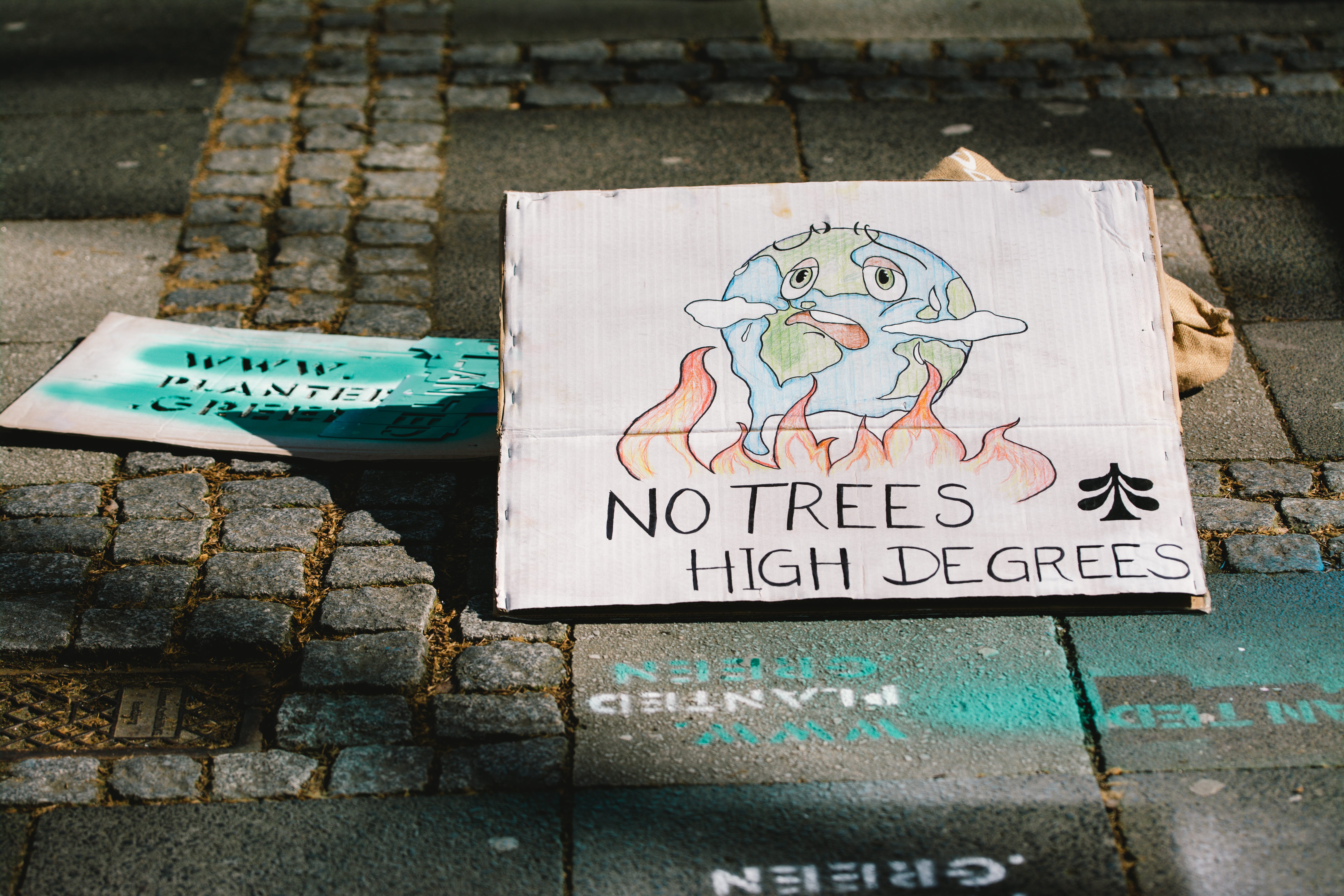
Last month, UN scientists announced publicly what climate researchers have known for years: the most extreme climate change pathway is now so implausible, it really shouldn’t be part of our climate debate. The culprit—known as the Representative Concentration Pathway 8.5, or RCP8.5 to habitués—suffered a peculiarly nasty case of context collapse: a tool developed by a bunch of nerds was set loose on the world only to be wildly misinterpreted, generating mass confusion and buckets of activist dollars on the way to thoroughly disfiguring our climate debate.
Now the UN is mothballing it. Good riddance.
The “8.5” in RCP8.5 refers to the amount of added solar energy the atmosphere will trap by 2100—specifically, 8.5 watts per square meter. That’s very high—likely to bring about a shocking 5 degrees of global warming above pre-industrial levels.
RCP8.5 was the kind of climate scenario lurking behind Greta Thunberg’s accusation, in her September 2019 speech at the UN Climate Action Summit, that “we are in the beginning of a mass extinction.” It’s the kind of pathway young people in England were thinking about when they decided they needed to launch “Extinction Rebellion.” It’s been a fundraising bonanza for climate activist groups from Adelaide to Zurich, the main player in every single alarmist climate critique you’ve read in the last 15 years.

And it’s been the default setting for literally thousands of climate science papers—Google Scholar lists more than 30,000 published since 2018 alone. It was from this kind of research that we got lurid papers like “Future of the human climate niche,” where respectable Dutch climate scientists claimed that one in three human beings live in regions that will become unlivable in the next 50 years. It was this kind of research that gave rise to countless breathless headlines about how outdoor labor was about to become impossible across much of the tropical world, and alarmist documentaries claiming the ocean was about to end up without any fish. It was RCP8.5 that turned David Wallace-Wells’s “The Uninhabitable Earth” into the most read story in the history of New York Magazine, and later propelled the book version to the top of the New York Times best-seller list.
The story of RCP8.5 is ultimately the story of what goes wrong when people convinced they are defending “The Science” catastrophically misunderstand how science works, and when politicized activists glom onto legitimate scientific tools and insist on ramming the round peg of probabilistic forecasting into the square hole of fundraising emails. It’s one of those stories that’s at once illustrative, hopelessly wonky, and exceedingly easy to get wrong—so strap in, because we’re going for a ride.
Imagine you’re an engineer tasked with designing a highway bridge. You need to figure out where your structure’s weak points are—and what it would take to cause it to break.
To figure that out, you’re going to want to simulate what would happen to your structure in really extreme circumstances. Maybe you’d want to whip up a computer simulation and ask what would happen if 250 fully loaded M1 Abrams battle tanks drove onto your bridge at the same time. Not, you see, because there’s any conceivable scenario in which 250 army tanks really are going to drive onto your bridge, but because modeling that possibility allows you to gain valuable knowledge about the bridge, about its structure and its failure points, about the way the bridge would fail if it did fail.
This, basically, was the original intent of RCP8.5. The UN scientists who initially proposed it characterized it as exactly what it was: a very high-emissions scenario that would allow modelers to puzzle through how the Earth System would behave under what’s known as extreme radiative forcing.
It’s important to understand that this is fully legitimate science: Earth’s atmosphere and oceans are chaotic systems, and there is a lot of noise and not a lot of signal. Run a simulation under realistic atmospheric scenarios and it’s very hard to pick out the signal from the noise. To really understand the underlying relationships, to see clearly what causes what, it’s useful to turn the forcing dial up to 11: that’s when relationships that look fuzzy in the real world start to come into theoretical focus. To scientists, the usefulness of RCP8.5 has never been in question.
The problem is downstream from the science. What happens when people who aren’t trained in Earth Systems science start to read the outputs of these modelling studies? They freak out. Of course they do! RCP8.5 was designed specifically to tease out worst-case scenarios, so naturally the models you run on it are full of hideous possibilities.
Which, obviously, doubles as a fundraising goldmine: nothing gets donors to whip out those checkbooks like a good scare story. Pretty soon, every climate advocacy organization was putting out sensationalist stories on the basis of research showing what would happen if you piled 250 tanks onto the damn bridge. Activists were haranguing shareholders about how the IPCC was predicting that “business as usual” would mean tanks were going to get piled onto that bridge and the bridge was definitely going to collapse and we were all going to die. Mental health professionals all around the world started treating people for the toll that RCP8.5-mediated climate anxiety was causing. And if you tried to explain that this was all a massive misinterpretation of what the IPCC was doing, you got slammed as a climate denialist.
Lost in the melee was the reality that RCP8.5 was never a plausible pathway for human emissions. This was well understood in the scientific community right from the start. The original 2011 paper laying it out was titled, with deliberate care, “RCP 8.5—A scenario of comparatively high greenhouse gas emissions.”
The modelers characterized it as what would happen if you combined very high population growth with virtually no technological change towards cleaner power. In practice, it was a world where the population grew to 12 billion by the year 2100, the economy grew very fast, and the majority of the global energy needs of these 12 billion people were met by burning coal. Back in 2011, researchers reckoned that RCP8.5 sat near the 90th percentile of the no-policy baseline scenarios—meaning that roughly nine out of ten futures with no climate policy at all would still produce less warming than RCP8.5.
Since 2011, it’s become clear that this 90th percentile risk is not where the world is headed. Populations are growing considerably less quickly than RCP8.5 implied—the UN’s 2024 World Population Prospects now projects the global population to peak at 10.3 billion in the mid-2080s and decline to 10.2 billion by 2100, well below the 12 billion baked into RCP8.5. And the energy story is even more striking: in 2023, solar and wind made up almost 91% of net new global power capacity additions, while fossil fuels contributed just 6%—the lowest level on record.
If we lived in a more rational world, RCP8.5-alarmism would’ve ended in 2017. That was the year when the energy economists Justin Ritchie and Hadi Dowlatabadi published research showing that RCP8.5 wasn’t just implausible; it was straight-up impossible as a pathway for human carbon emissions (this last part, “for human carbon emissions,” is important—more on that later). The paper showed that to reach the anthropogenic levels implied by RCP8.5 would require burning more coal than there is estimated to be in the world’s recoverable coal reserves. There’s just not enough mineable coal in the world to bring us to this level of emissions, even if we were satisfying all of our new energy needs with coal—which is definitely not what we’re doing.
It’s as though engineers had shown conclusively that 250 M1 Abrams tanks wouldn’t even fit on the highway bridge we want to build.
That should’ve been the end of the story. But it wasn’t, because by the time Ritchie and Dowlatabadi’s paper came out, too many activist groups had built business plans around scaring the bejeezus out of people on the basis of highly emotive, RCP8.5-inspired catastrophist research. By then, everyone from the Bloomberg Philanthropies to the Union of Concerned Scientists was referring to RCP8.5-style scenarios as “the business-as-usual” or the “no action” scenario—something it was emphatically never intended to be.
Scientists, for their part, quickly realized that research based on RCP8.5 would give rise to flashier findings, which would have a better chance of being accepted by prestigious journals. RCP8.5 amplified their results and turned journal editors’ heads; and besides, everyone else was doing it. Those inflated findings then got recycled into activist discourse and fundraising pitches, creating a hermetically sealed system where the science and the activism fed back on one another in an unbreakable loop of messed-up incentives.
RCP8.5, which had started life as a useful climate modeling tool, had subtly morphed into an engine for disinformation. The ideology it spawned—climate catastrophism—captured the Democratic Party, murdered The Liberal Patriot, and locked center-left elites in a disinformation chamber of their own making. A calamity, any way you slice it.
Perhaps belatedly recognizing how badly off the rails the discourse has gone, the scientists preparing the IPCC’s next assessment report have decided to pull the plug on RCP8.5. The new “high emissions” scenario to be used in climate modeling going forward is considerably less pessimistic than RCP8.5, less pessimistic even than RCP6, the second-worst case scenario in the old IPCC reports.
It’s a significant step towards a saner climate debate. Thank God for that.
But if you’ve read this far and found yourself thinking: “oh, so it turns out climate alarmism was so much activist bullshit, finally we can relax!” I’m afraid I have bad news for you.
I’m not even a little bit relaxed about climate change. Here’s why.
In reality, we’re likely to come in at below 6 watts per square meter in added trapped energy, which likely puts us on track for 2.5 to 3 degrees of global warming.
But there’s an old saying among Earth System scientists: “nobody lives at the global mean temperature.” Nobody actually cares about cumulative global averages. People care about the weather in the places where they live: the floods and the droughts, the storms and the sea levels and the fires. And while Earth Science has made pretty good progress in connecting the pollution we emit to likely global radiative balances and temperatures, it’s on much shakier ground when it comes to relating those averages to the actual, on-the-ground conditions people care about.
The emissions path we’re on is clearly less hazardous than it would’ve been under RCP8.5. Activist groups plainly shot themselves in the foot by latching onto an unrealistic standard that couldn’t really be defended scientifically. But that categorically does not mean the path we’re on is safe. The reality—less useful for fundraisers, but much more honest—is that science has only the haziest idea of what the path we’re on means for the kinds of outcomes people care about.
And there’s another, subtler, reason to hold off on those victory laps. It’s now clear that anthropogenic carbon emissions are not likely to bring us to the kinds of catastrophic scenarios RCP8.5 implies. But talk to Earth System scientists and you’ll find plenty of other ways we could end up in other catastrophic scenarios. The Earth System has many poorly-understood, hard-to-measure, hard-to-model feedback loops that could drop us right back in RCP8.5-type scenarios.
The one you hear about most often is Siberian permafrost: it could be that it thaws quickly enough to emit masses of new methane, which is a much more powerful greenhouse gas than CO2. But that’s just one; there are plenty of others. Seabeds contain huge amounts of methane that could be stirred as ocean temperatures rise. Or the ocean nitrogen cycle could shift to expand nitrous oxide emissions, which traps heat even more effectively than methane. There are small groups of scientists working on quantifying each of these risks, and I’m sorry to report that the error bars around their estimates are often very wide.
Those are the known-unknowns. But what about the unknown-unknowns? The Earth System is hugely complex, and there’s no guarantee that we’re even aware of all the most relevant processes, or how they interact with each other. Could there be an Earth-changing feedback loop out there nobody’s identified yet? We… just don’t know.
So it may be that we were only ever going to pile 100 M1 tanks onto that bridge, not 250. But maybe we’re also creating conditions for a herd of elephants to pile onto the bridge at the same time. Maybe the bridge is being built on an unidentified seismic zone. The fact that our original stress scenario with the 250 tanks was never realistic shouldn’t lure us into complacency. There’s more than one way for a bridge to collapse.
The fever dream that was RCP8.5 research sent the climate community down a series of idiotic rabbit holes and badly distorted our climate conversation. But treating the demise of RCP8.5 as reason to let down our guard could be an even more damaging mistake. The maddening reality about climate change is that Earth System science is not really up to the task of quantifying the risks for the worst outcomes.
We’re forced, just now, to face them “naked”—in the terrifying awareness that our best guesses about the hazards we face probably aren’t very good.
Quico Toro is a contributing editor at Persuasion, the founder of Caracas Chronicles, Director of Climate Repair at the Anthropocene Institute, and writes the Substack One Percent Brighter. He lives in Tokyo.
Follow Persuasion on X, Instagram, LinkedIn, and YouTube to keep up with our latest articles, podcasts, and events, as well as updates from excellent writers across our network.
And, to receive pieces like this in your inbox and support our work, subscribe below:
I think its important for scientists ("The Science") to be humbe and to admit that they don't really know, aren't sure and might be wrong. It's also important to allow free no taboo debate among scientists and citizens about climate. I remember when sceptics were called "climate deniers." Just like the vaccine debate, you had to be all in, or otherwise you are an anti-vaxxer or a climate denier!
I am more worried about the chemical tsunami that is in our water, our soils, our food, our bodies. The most fertile land is being gradually contaminated with chemicals that dont degrade, some of it from sewage sludge as well as conventional agriculture that sprays and sprays and sprays! Then there are microplastics which apparently are everywhere including the arctic.
The above problems could be solved more easily than climate change - or at least reduced. Example: Ban plastic water bottles, ban most plastic packaging. Instead of an energy transition, we need an agriculture transition. Over a generation get agriculture back to mostly organic. Many of the young people unemployed by AI would love to be regenerative farmers!
Let's pay heed to what Churchill once said “Why, you may take the most gallant sailor, the most intrepid airman or the most audacious soldier, put them at a table together - what do you get? The sum of their fears.” except substitute different scientific disciplines for sailor, airman and soldier. That is not to say that there is zero chance for climate or pandemic (e.g. hantavirus) catastrophe, but the catastrophe that you expect and try to avoid is not the catastrophe that you get.