

In Cuba, Socialism Has Morphed Into A Racket
What I saw on the island that once considered itself the future.

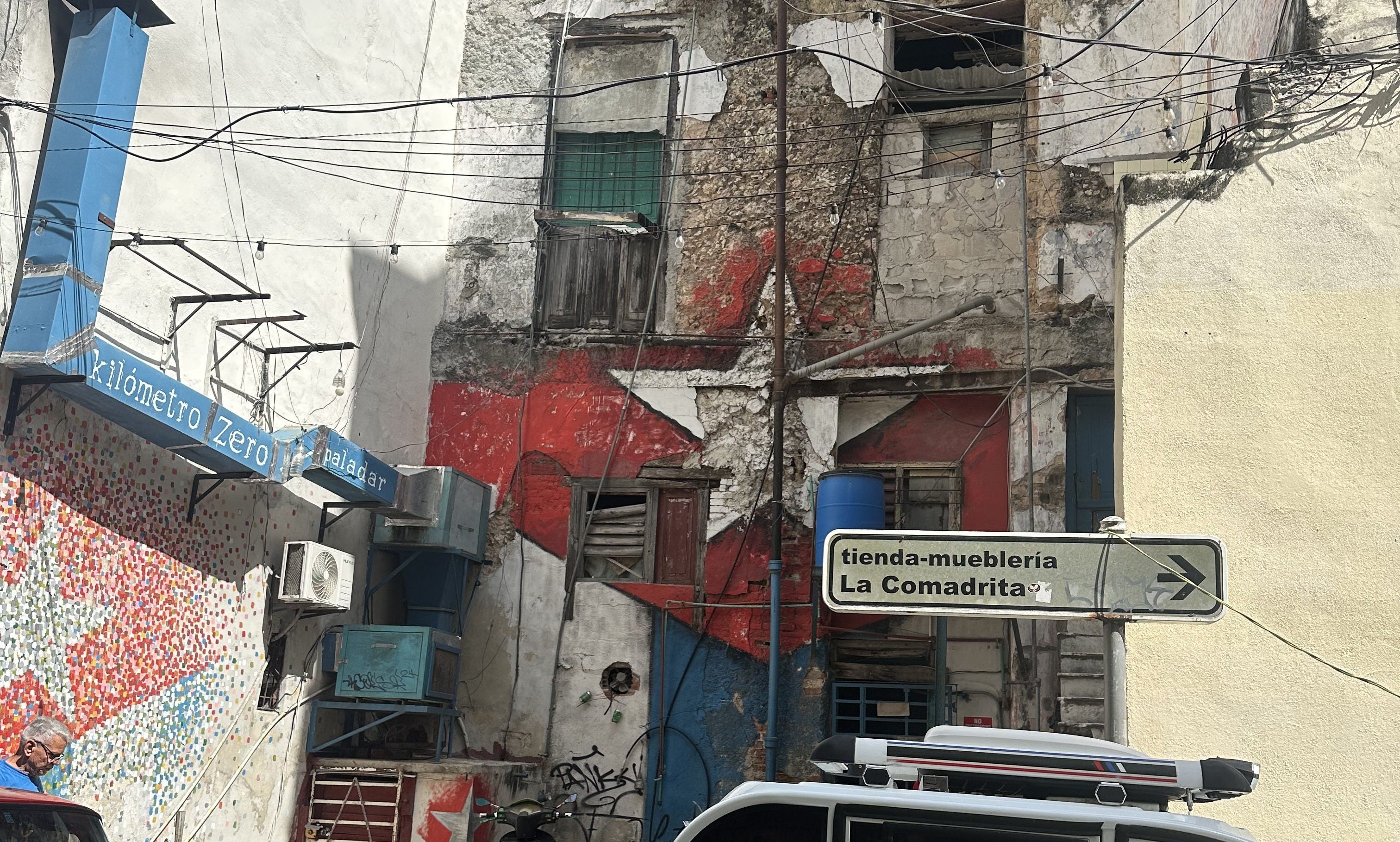
On a scorching hot afternoon in Havana, the line outside the state bakery stretches down the block. Inside, the shelves are almost bare. A man in a faded baseball cap tells me he’s been waiting for two hours for bread that might not arrive.
Across the street, a gleaming black SUV with tinted windows idles outside a hotel mostly reserved for foreigners. Its lobby is stocked with imported whiskey; the air-conditioning is turned up to Arctic levels.
This is not an unusual juxtaposition in today’s Cuba.
I walk through Central Havana with Antonio Rodríguez, a 60-year-old university history teacher who supplements his income by working as a tour guide. His state salary amounts to around 9,000 Cuban pesos a month—worth little in an economy increasingly geared toward dollars.
“I work two jobs and eat one meal a day,” Antonio tells me matter-of-factly. We pass shuttered shops and darkened apartment blocks (this is during one of the regular blackouts) before turning onto San Rafael Boulevard. “There are a lot of prostitutes here,” he says, gesturing down the street. The lights are out in parts of Havana, but here the informal economy is still very much open.

In the past, apologists for the Cuban government, wanting to show that the people have enough to live on, would point to the monthly ration book—the libreta—through which Cubans received a basic food basket. But since Raúl Castro succeeded Fidel in 2008, the ration book has been steadily pared back. Today it supplies, on average, enough to subsist on for perhaps 10 days at most, and only with careful rationing. Everyday items such as toothpaste and shampoo have disappeared from it altogether.
In their place is the unforgiving market: a tube of toothpaste can now cost as much as 600 pesos, around 15 percent of a typical monthly salary. That is the equivalent of spending something like $800 on a single tube.
A few days earlier, I walked through Havana with a friend, who stopped me whenever we passed the window of one of the big department stores, pointing incredulously at the goods on display. He works as a bartender, and on a good night he earns around 200 Cuban pesos—less than fifty cents at the informal exchange rate. If he wants to buy something as basic as a pound of rice, it will cost him between 250 and 350 pesos: the better part of a day and a half’s wages.
When I first visited Cuba in the 2010s, one dollar would get you around 24 Cuban pesos. This year, the informal exchange rate has climbed to as high as 545. There’s no guarantee you will have access to your money. Many ATMs in Havana don’t work, and those that do often run out of cash extremely quickly. The goods, meanwhile, are there, behind glass. But most people can’t access them.
For decades, Cuba has presented itself—both to its citizens and to the world—as a socialist alternative to the inequalities of global capitalism. That story still has its defenders abroad. But spend any time on the island today and it becomes clear that something else has taken its place: not socialism in any meaningful sense, but a post-ideological system run by a military-commercial elite that continues to speak the language of revolution long after the revolution itself has faded.
Socialism has already fallen in Havana, even if some of the country’s intransigent foreign admirers remain staunchly ignorant of the fact. That the implacable state continues to wave a red flag is neither here nor there.
The scale of the island’s economic deterioration helps explain why the old ideological framing feels so hollow. Cuba’s GDP has contracted by an estimated 23 percent since 2019—a collapse that has filtered down into daily life in the form of shortages, blackouts, and a steady exodus of working-age people. Antonio’s two jobs—one in the official economy, one tied to tourism—are increasingly the norm.
The most powerful economic actor in Cuba today is not a workers’ cooperative or a state ministry accountable to the public. It’s a sprawling military-linked conglomerate known as Grupo de Administración Empresarial S.A. (GAESA). Through a web of subsidiaries, GAESA controls much of the island’s tourism sector as well as significant parts of retail, real estate, and hard-currency trade. If you stay in a hotel, rent a car, or buy imported goods in Cuba, there is a good chance your money is flowing, directly or indirectly, into its accounts.
What makes GAESA unusual—even by the standards of opaque state capitalism—is not just its size but the degree to which it appears insulated from the state itself. It operates largely outside the formal budget, pays no meaningful taxes, and—based on leaked financial data—does not transfer dividends into public coffers. Its revenues are estimated to exceed those of the Cuban state by a factor of more than three. Yet there is little sign that these resources are being channeled into the country’s collapsing infrastructure or depleted public services.
More striking still is how those revenues are generated and where they end up. Between 2024 and 2025, according to analysis by the Real Instituto Elcano, roughly 60 percent of the oil shipped from Venezuela to Cuba did not stay on the island at all. Instead, it was re-exported to Asian markets by Cuba Metales, a GAESA-linked entity. The proceeds, rather than being channeled into Cuba’s failing electricity grid or its crumbling infrastructure, reportedly accumulated in offshore accounts linked to the same military-commercial network.
Why maintain such a system? Fidel Castro himself conceded in 2010 that Cuba’s economic model was not working. Yet meaningful reform has remained elusive. One explanation is that the institutions that now dominate the economy are controlled by a narrow elite with a direct stake in preserving them. To loosen their grip would not simply require an economic adjustment but a loss of elite privilege.
Cuba today endures rolling blackouts, fuel shortages, and a transport system that barely functions. The recent decision by the Trump administration to restrict oil shipments to the island has intensified the crisis, bringing parts of daily life to a halt and disrupting even the distribution of humanitarian aid. The UN Resident Coordinator in Cuba, Francisco Pichón, has warned that 170 containers of essential supplies already in the country are not reaching people because of the fuel shortage.
Walking with Antonio through darkened streets, it is hard to reconcile the official narrative about scarcity with a system that appears, at least in part, to be synonymous with it.
The same logic is visible in the state’s spending priorities. Healthcare—long touted as one of the revolution’s defining achievements—now receives a strikingly small share of public investment. At the same time, more than 30 percent of spending has been directed toward tourism infrastructure even as visitors increasingly stay away. The result is an island dotted with new or half-empty hotels while hospitals lack basic supplies and patients are often forced to rely on family members to source medicines.
What you see, in effect, is a bifurcated economy. On one side, the dollarized enclaves—hotels, resorts, and well-stocked shops—cater to tourists and a narrow slice of Cubans with access to foreign currency. On the other, the peso economy continues its long decline, marked by scarcity, inflation, and a steady erosion of living standards.
Talk to ordinary Cubans and what emerges is less a sense of embattled revolutionary purpose than of exhaustion. Many are trying to leave; those who remain navigate a landscape of shortages and informal workarounds. The language of socialism still appears on billboards and in official speeches, but it feels entirely detached from the reality it purports to describe.
Recently, a series of humanitarian missions and “solidarity” flotillas by Western leftists arrived in Cuba to deliver aid. Some of their participants, ensconced in generator-powered hotels, blame the island’s economic crisis entirely on American imperialism. This is possible only if you ignore the many ways in which Cubans are not just impoverished but oppressed by their own state.
Speak to people in Havana—away from official minders—and a more complicated picture emerges. One 33-year-old resident told me, only half-jokingly, that if Donald Trump sent in the American army “everybody would be out in the streets” (he quickly conceded that Trump is “loco”). Others are more wary of foreign intervention, and probably with good reason. But the fact that such sentiments are expressed at all is revealing. The level of frustration is such that some are willing to entertain almost anything that brings about the possibility of change. As the Cuban dissident writer Guillermo Cabrera Infante once joked about the prospect of a McDonald’s in Havana, plastic food is better than no food at all.
What struck me most about Cuba was not a single viewpoint but the range of them. People often begin by insisting they are “not political,” only to speak at length once they feel it is safe to do so. These conversations tend to start in hushed tones and grow more candid in private. The official narrative remains loud; dissent, by contrast, is uttered sotto voce.
American hostility has, over time, furnished the Cuban state with a ready-made alibi—an explanation for failure that is not entirely false, but which is far from complete. Many Cubans, even with limited access to information, grasp this dual reality. They will tell you how things really are if given the chance. It is striking, then, how often Westerners with far greater freedom to read, speak, and organize choose not to listen.
It is tempting, particularly for observers outside Cuba, to interpret the island through the lens of the Cold War: socialism versus capitalism, resistance versus imperialism. But that framing obscures more than it reveals. The system that exists in Cuba today is not meaningfully egalitarian, nor is it moving toward greater democratic control over economic life.
In that sense, the Cuban Revolution has long since ended. What remains is a self-serving military elite that invokes the revolutionary tradition while clinging steadfastly to its own privileges. “Socialism or death” was once the official slogan. Today, it has curdled into something closer to “privilege or hunger.”
James Bloodworth is a journalist and the author of Hired: Six Months Undercover in Low-Wage Britain and Lost Boys: Undercover in the Manosphere. He writes the Substack “For the Desk Drawer.”
Follow Persuasion on X, Instagram, LinkedIn, and YouTube to keep up with our latest articles, podcasts, and events, as well as updates from excellent writers across our network.
And, to receive pieces like this in your inbox and support our work, subscribe below:
 | A guest post by
|
I think socialism is better off when and if a society evolves it later in its history! Cuba is yet another example of a socialist society that started with socialism…. Sweden is one that evolved a socialist system and they are a lot better off than Cuba. Of course there are a lot of other differences between the two countries but I think the economic history can tell us something 😎
Two questions I have not seen answered: First, is the US embargo on Cuba helping or hurting the Cuban people? Second: Would ending the embargo help or hurt the Cuban people?
One thing is clear: The embargo has not ended the Cuban government’s hold on power. And starving people cannot be expected to lead a revolution.