

Nobody Cares About Cubans
Not Trump. Not left-wing activists. And certainly not the Cuban regime.

“Within the revolution, everything; against the revolution, nothing.”
This Fidel Castro slogan has been the governing principle in Cuba for nearly 67 years. Independent media is crushed, dissent criminalized, and surveillance embedded into daily life through neighborhood committees designed to ensure that, as Castro himself once put it, everyone knows what each person does.
Before 1959, the island was governed by a strongman who maintained order while American business (and mafioso) thrived. Castro’s revolution was, in part, a rejection of that arrangement. It held out the promise of sovereignty and dignity. What it delivered instead was another form of domination: a centralized, authoritarian state that co-opted the language of social justice to shore up the power of a new ruling class.
Castro himself was less of an ideologue than a caudillo in the classic Latin American mold—opportunistic, charismatic, and intolerant of rivals. As his Argentine sidekick Che Guevara later admitted, Cuba’s alignment with the Soviet bloc was “half the fruit of constraint, half the result of choice.” Communism provided not just an economic model but a bureaucratic structure through which Castro was able to consolidate power.
That model has failed in ways that are by now familiar from the old Soviet bloc. Systems that could build rockets and project power proved unable to provide basic goods.
I’ve seen this with my own eyes. In my early twenties I spent around a year in Cuba. On some days it was impossible to find toiletries or basic medicines in the state-run shops. The monthly ration booklet—which every Cuban is issued by the government—barely stretched to a week. Cuban friends would spend hours queuing for basic goods or quietly working out an exit strategy—often marriage to a foreign national.
This is the reality of Cuba today. The country’s economic problems are exacerbated by the long-running American embargo but not solely caused by it. In recent years, millions of Cubans have emigrated. Those most dissatisfied are also those most able to leave. Exit has become the system’s most reliable safety valve.
Since the loss of Soviet subsidies in the early nineties, Havana has adapted through a familiar pattern: limited economic openings followed by political retrenchment. Power remains concentrated in the military and security apparatus, which dominates key sectors of the economy. The result is stagnation—enough flexibility to survive, but not enough to loosen the grip of the ruling elite.
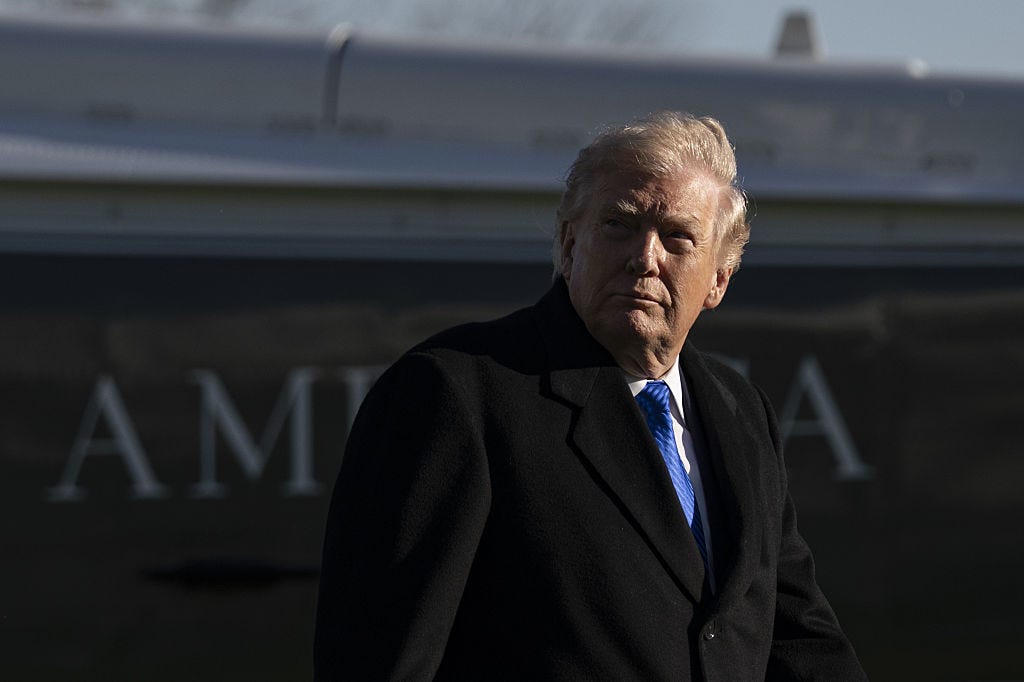
There are many good reasons to despise such a system. The real question is what follows from that judgment—and whether U.S. policy under Donald Trump represents a serious attempt to help the Cuban people achieve something better.
For decades, Washington has (to varying degrees) relied on a simple formula: apply enough external pressure and the regime will either reform or collapse. Trump has intensified this approach by tightening the embargo, restricting remittances, curbing travel, and cutting off sources of hard currency.
Washington’s goal is to induce sufficient hardship on the island to provoke internal pressure for change. But what sort of change? Democracy or human rights? Unlikely. Trump’s underlying vision is probably far less noble: a Cuba reshaped into a compliant, economically open client state—one that admits American business on favorable terms and aligns itself with U.S. interests.

Trump’s policy in Venezuela is illustrative here. In January, Nicolás Maduro was replaced with someone more willing to bend the knee. Delcy Rodríguez cut a deal with the Americans that let them profit from the country’s oil. As for the Venezuelan people, they are still waiting.
The Cuban people are also waiting. But even if Trump were interested in improving their lot, current policy probably won’t do that. Sanctions tend to weaken civil society more effectively than they weaken the state itself. In Cuba, the government retains control over resources, institutions, and—most importantly—the security apparatus. When remittances are restricted, it is Cubans who lose their lifeline. When tourism declines, it is small private businesses—one of the few areas of relative autonomy—that suffer. When shortages deepen, daily life is stripped back to a grinding, undignified struggle for the necessities.
It is a mistake to assume that such hardship will automatically translate into mass rebellion. It is just as likely to produce exhaustion or exodus. Under current conditions, sustained political mobilization is difficult. Add to this the steady outflow of intellectuals as well as younger, more disaffected citizens, and the result is a society whose remaining citizens are preoccupied with more quotidian concerns.
Meanwhile, the regime can prop itself up with the narratives it has long relied upon. Economic hardship can be blamed on the American aggressor. Corruption and brutality can be waved away. Hardliners are strengthened, able to argue that reform is too dangerous in the face of foreign pressure.
This dynamic is well understood on the island itself. Many Cubans are perfectly capable of holding two ideas at once: that their government is repressive and incompetent, and that American policy makes their lives harder rather than easier.
This is frequently misunderstood abroad. For decades, sections of the Western left have responded to Cuba’s failures by defaulting to boilerplate anti-Americanism, treating the regime as a kind of proxy for their own dreams of a better world. That this vision of a city on the hill has not been borne out by half a century of “revolution” is almost beside the point.
Just this weekend, more than 500 left-wingers from around the world arrived in Havana to deliver five metric tons of food supplies and medical equipment to the Cuban government. The delegation included the former British Labour Party leader Jeremy Corbyn, the streamer Hasan Piker, and the Irish rap group Kneecap. The trip was organised by the Progressive International—which describes the Cuban model as “sustaining hope in moments of global retreat”—in collaboration with the Cuban government. Some have posted triumphant selfies of themselves with Miguel Díaz-Canel, the country’s dictator.
When Cubans took to the streets to protest against their government in 2021, chanting “liberty” and “motherland and life,” the Cuban president sent his government’s “black beret” special forces to beat them up—they were subsequently prosecuted in summary trials. According to human rights groups, as of February there were 1,213 political prisoners and prisoners of conscience in Cuba.
They are conspicuously absent from left-wing calls for “peace and justice.”
If the aim were genuinely to support Cuban society in loosening the grip of the state, American policy would look different to the one that Trump is pursuing. There was an imperfect logic—but a logic nonetheless—behind the thaw in relations that took place during the Obama era. The dictatorship did not fall. But increased travel, expanded remittances, and diplomatic engagement were not concessions to the regime so much as attempts to bypass it. The policy created modest but real changes: a growth in economic autonomy, greater exposure to the outside world, and a subtle shift in expectations.
Trump has attempted—and more or less succeeded—in reversing Obama’s policies. Cuba and the United States are once again locked in a standoff. In Havana, the state-planned marches continue; the left-wing solidarity missions touch down at José Martí airport; and Cuba’s president promises to fight to the last drop of blood—someone else’s, of course. Cubans have seen this film before. Fight imperialism? A decent meal would be nice.
Trump has one strategy—in war and in life—based on a belief that his instincts, which typically mean his desire for American domination and enrichment, are superior to any reasoned analysis by experts. It’s a shame Fidel is not still around: he would have understood.
James Bloodworth is a journalist and the author of Hired: Six Months Undercover in Low-Wage Britain and Lost Boys: Undercover in the Manosphere. He writes the Substack “For the Desk Drawer.”
Follow Persuasion on X, Instagram, LinkedIn, and YouTube to keep up with our latest articles, podcasts, and events, as well as updates from excellent writers across our network.
And, to receive pieces like this in your inbox and support our work, subscribe below:
 | A guest post by
|
Cubans revolted to destroy and loot a growing prosperous system due to individual class resentment and envy and thus created for themselves a fantastic misery loves company declining system. Even today the majority of Cubans blame external actors instead of their own stupidity in believing communism was going to work.
The culture of Cuba is so broken in lost enterprise and work-ethic, that it will take generations to repair.
Aside from being 90 miles from Florida, Cuba should be of only limited interest to the United States. The Cuban government lost the resources to foment revolution decades ago. Nothing is produced there that the US and ROW can't get elsewhere. Admittedly, there are still those trapped in the '60s who romanticize the so called revolution, but the world has moved on while the island has stagnated.