

How the War Splits Iranians
U.S. attacks are a gift to regime hardliners.

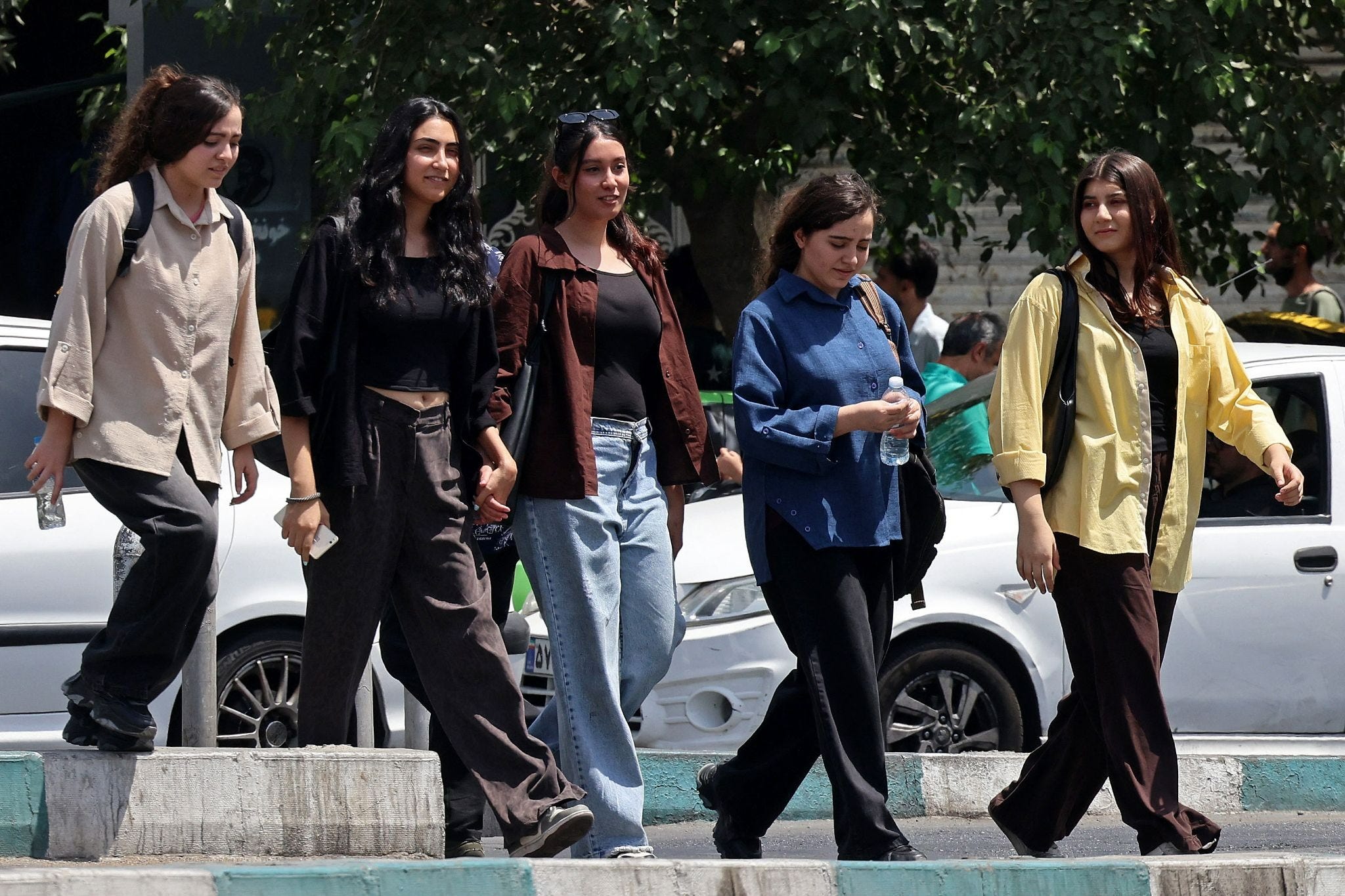
It is not surprising that June’s Islamabad Memorandum of Understanding between Iran and the United States has proven to be shaky to the touch.
Nothing about this conflict has ever been resolved, only paused. Not because either side is incapable of diplomacy, but because neither side has ever fully believed the other side to be trustworthy. But for people inside Iran, the news meant what it has always meant: life was about to get harder.
Both countries hold competing narratives about why, but the result is the same: the war has returned to Iran’s southern provinces.
For Iranians, the geography of these recent attacks carries its own psychological weight, especially for those old enough to remember the Iran-Iraq War. The scenes of airstrikes in Iran’s southern provinces have opened the kind of wounds they thought belonged to another era.
For my generation this is especially resonant. We were called the Burnt Generation, growing up in a country trying to restore itself after eight years of war. We were entertained by war films, listened to songs about the front lines, and fell asleep to stories of young men who became martyrs before they were old enough to become anything else. Many people, including myself, lost family members in that war and had to visit uncles who returned carrying unspeakable PTSD. We were even taken to the minefields on school-organized trips, carrying the collective memory that a foreign country, with the help of the United States, had violated our borders and had killed our children. Whether or not we fully understood the politics, we inherited the trauma.
Iranians have experienced many promises over several generations: the Shah promising modernization, the Revolution promising justice, the reformists promising gradual change, the Green Movement promising a fair election, the United States-Israel campaign promising the removal of the regime and democracy.
Many promises, none of which materialized over the lifespans of our parents, ourselves, or our children. And those who once asked the outside world to stand with them now find themselves watching “help” arrive in the form of bombs.
There is so much that is unbearable, and heartbreaking, in the experience of Iranians. Perhaps what hurts the most is the knowledge that there is another Iran that never makes international headlines, that is unseen by the outside world, and that—if not for the war and the current ascendancy of the hardliners—could signal a new, and more open, era.
A friend who recently left Iran described it to me:
It’s like you’re walking in the streets of Paris. Young men and women are sitting in cafés, listening to music, holding hands, and women no longer wear the hijab.
He told me that women simply refuse to wear it anymore. Walk into an art gallery, a café, or a restaurant, and people are singing, dancing, enjoying this limited freedom, and, if you ask discreetly, someone might even bring you a drink under the table.
“It’s this young generation—they’re something else.”
And it’s not just Tehran. This is a shift moving through Iran, even in religious cities like Mashhad and Qom—cities that the Islamic Republic built its identity around—where young people are quietly testing the boundaries.
When my generation was going through our early adolescence and adulthood, fear was a major part of everyday life. We were constantly monitored by the Ministry of Culture and Morality Police for everything. They had set up shop on the streets, at schools, in universities, at public offices, even hospitals, as though no space was beyond their reach. It often felt impossible simply to breathe. We demanded reform and asked for freedom, but each time, we were met either with empty promises or with the full force of the state’s oppression machine.
There are still reports of restaurants and cafés shut down by the Islamic Republic over the issues of hijab violations or live music. But the new generation is no longer waiting for the Islamic Republic to grant them their rights, however small. They have nothing to lose. They’ve grown up connected to the outside world, armed with knowledge, and far less willing to live by rules they do not believe in. Rather than waiting for permission, they quietly claim what they see as already theirs: the dignity of living freely.
“This is not the Tehran we grew up in,” I am told, “where we went to jail for listening to music.”

Even before the latest U.S. strikes, Iranians were deeply divided over the joint U.S.-Israel military campaign against Iran. Some believed military pressure was necessary to weaken a regime that had proven unwilling to reform. Others feared that foreign intervention would ultimately inflict more suffering on ordinary Iranians than on those in power.
The way Iranians experience Iran can vary vastly from community to community.
Iran is governed by an aging theocracy but is home to one of the youngest, most vibrant populations in the region. It is deeply ideological and fundamentalist, and deeply pragmatic at the same time. A large portion of the population is religious and nonetheless opposes the Islamic Republic. And it has some of the most secular people in the region, yet remains governed by a robust theocracy. People move between these worlds, contradict themselves, and hold beliefs that cannot fit neatly into labels.
This war has not united Iranians toward a common enemy, but it has exposed their proximity to power and what that proximity costs or buys them. Those connected to the Islamic Republic, either physically or ideologically, feel like the winners of this war. This is not only the older generation clinging to power. Support for the regime cuts across age, class, and background in ways outsiders don’t often expect. Loyalists have no fear of hardship—the regime has survived almost half a century of sanctions imposed by one of the world’s most powerful countries; it doesn’t have to answer to citizens because it was not elected but chosen by greater powers; and it has dragged the United States into a longer-than-expected war that the U.S. didn’t want. As far as the loyalists are concerned, they’re the winners.
During the negotiations and even after last month’s ceasefire, hardliners continued to use bellicose rhetoric, threatening not only the U.S. president and American officials but also their own leaders, including Parliament Speaker Mohammad Bagher Ghalibaf and Foreign Minister Abbas Araghchi, for agreeing to negotiate with the United States.

“I hate the regime,” a friend who was arrested for protesting and who recently became a mother in Tehran told me, “but I hate bombs dropping more. Nothing good ever comes from it. Plastic used to be the cheapest thing there was. Now you can’t even afford that.”
Her concern was not abstract. When factories are bombed, roads are destroyed, and supply chains are disrupted, the consequences are felt first by ordinary people already struggling under inflation, poverty, and sanctions. People postpone their futures. Businesses close before they have a chance to grow. Debts go unpaid. Even paying rent or buying groceries becomes an exhausting daily calculation.
Within days of the latest wave of strikes, civilians had been killed, roads were destroyed, schools closed, aid struggled to reach affected communities, and daily life once again began to organize itself around the possibility of the next air attack.
It is often in moments like these that an entrenched regime becomes stronger, not weaker. When survival is at stake, people turn to whatever structure that is functioning, even the one they hate.
Even with all that, the hardliners’ ascendancy may only be temporary, and the Iran that the world doesn’t see must not be forgotten. The new generation is pushing boundaries in a way that our generation couldn’t imagine. I see it on social media too. Sometimes I barely recognize Tehran. I see brave young women and men pushing the boundaries of what is possible every day, quietly reclaiming pieces of ordinary life that once felt unimaginable.
“Maybe it all had to happen—the massacre of people, the silence of the international community, the bombing of Iran—for the needle to move,” my father told me over the phone. “Sometimes even an enemy can bring about good, if God wills it.”
The psychological cost of war layered upon trauma will shape both Iran and the United States in ways only time can measure.
Wars eventually end, ceasefires are signed, negotiators return to the table, but what remains is what the next generation inherits.
Mitra Vand is an Iranian-American writer from Tehran. Her work examines authoritarianism, exile, and the emotional consequences of political violence. She writes under a pseudonym.
Follow Persuasion on X, Instagram, LinkedIn, and YouTube to keep up with our latest articles, podcasts, and events, as well as updates from excellent writers across our network.
And, to receive pieces like this in your inbox and support our work, subscribe below:
 | A guest post by
|
I appreciate this story, but it misses the larger point that the Iran terrorist regime has been exporting terrorism around the world. It would be a completely different and justified story against the US and Israel's actions against the Iran terrorist regime had the regime just terrorized the people of Iran. Frankly, Iran is the last holdout of Mideast reform to peace and acceptance of Irael. The misery of the Iranian people is because of this international malice and ongoing threat of terrorism that the Iranian regime sponsors. 47 years ago these Islamic terrorists took Americans hostage. Since then, tens of thousands have been butchered by the Regime.
There is a saying that people generally get the government that they deserve. The Iranian people have not risen up against the Regime. I think the US and Israel had expected that. So maybe all the bombing creating more misery is what is needed to finally motivate the people to action.
Okay. So what are the authors answers and solutions? Or are these to remain unsaid? One is sympathetic but ……