


We are delighted to feature Francis Fukuyama in the pages of Persuasion once again. Some of you may not know that he writes a regular column, “Frankly Fukuyama,” which is proudly part of the Persuasion family, and which you need to manually opt in to receive.
To get all of Frank’s writing—and to get articles from American Purpose, the magazine he founded, and its culture-focused podcast, Bookstack—simply click on “Email preferences” below and make sure you toggle on the relevant buttons.
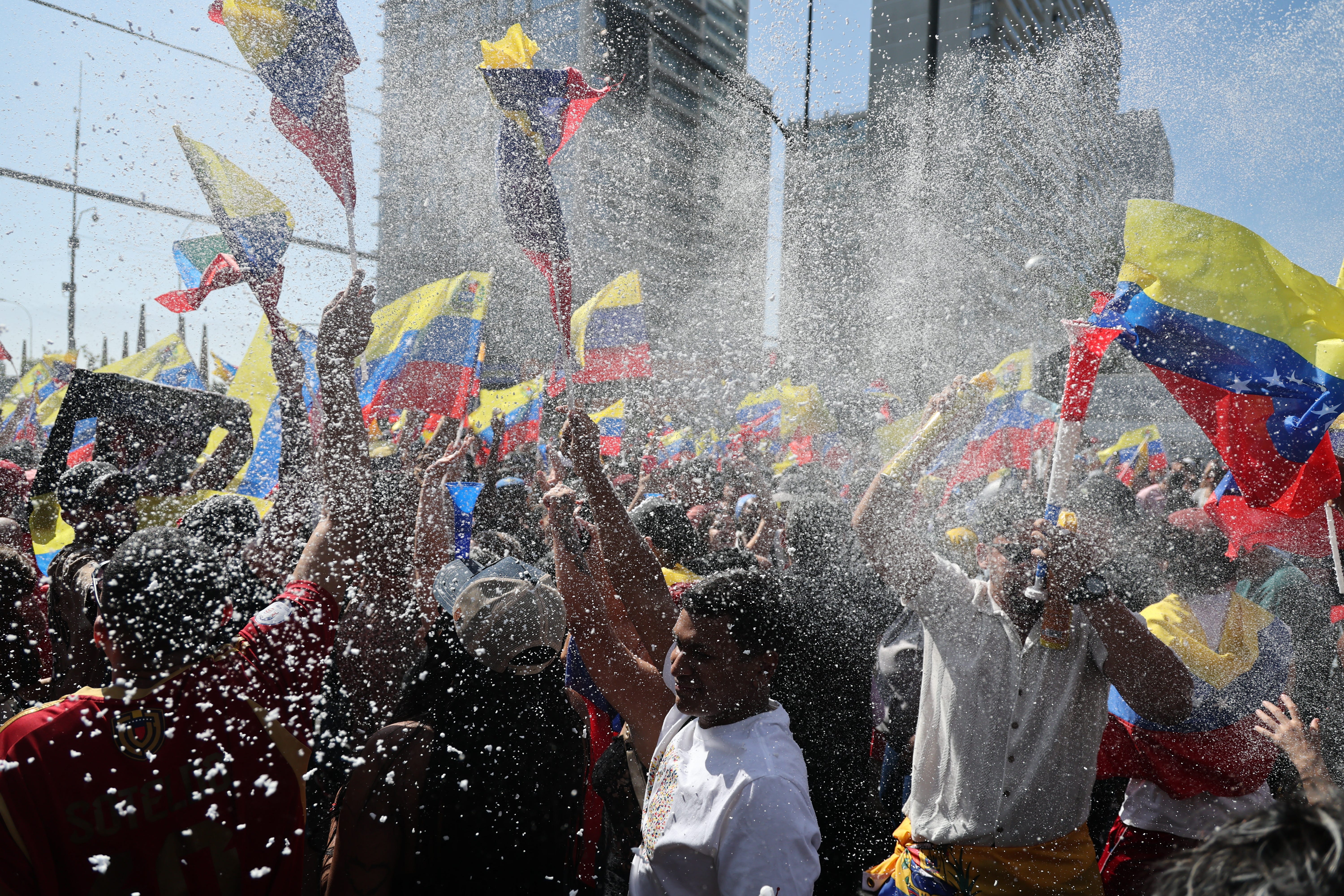
Now that the Trump administration has gone ahead and captured Venezuela’s leader Nicolás Maduro, we need to shift quickly from debating the wisdom of the intervention to thinking about how to deal with the aftermath. I don’t think that the legality of the American action should be our critical focus right now, for reasons I will get into at the end of this article. The real issue should be how to restore democracy to Venezuela, and how to create the conditions under which the 8 million people who have fled the country can return home.
The Trump administration is now engaged in bringing about regime change in Venezuela, and will be embroiled in a nation-building exercise there for the foreseeable future. This is very ironic, of course, given Trump’s earlier attacks on America’s “forever wars” in the Middle East. There is a powerful logic to regime change, however, since bad international behavior stems largely from bad domestic politics, and you’re not going to change one without changing the other. The problem, of course, is that nation-building is really, really hard, and the United States doesn’t have a good track record in this regard.
The United States has had a lot of experience with regime change in recent years, most of it pretty unpleasant. It was not able to transform either Afghanistan or Iraq into stable democracies, despite the expenditure of hundreds of billions of dollars and tens of thousands of lives—Afghan, Iraqi, and American. America has also used military force multiple times in the Western hemisphere: in Cuba in the 1890s, in Mexico in the early 1900s, in Nicaragua in the 1930s, in Central America in the 1980s, and in the Dominican Republic, Panama, and Grenada. Only the latter three interventions could be deemed successful in producing stable democratic outcomes.
However, there is a danger of jumping to premature conclusions from these historical precedents. Afghanistan and Iraq in particular are very different countries from Venezuela, and the challenges they posed were very different from what we will likely experience in our hemisphere.
The problem in Afghanistan began with the fact that it never possessed a real state, much less a modern one. The country was more like a federation of powerful tribal and ethnic groups that, even under the monarchy, only paid nominal allegiance to Kabul. The reason it had no centralized state was due to its mountainous geography, which over the centuries prevented the kind of state formation that had occurred in neighboring Iran and Turkey. The country was divided ethnically, religiously, and linguistically, and subject to intervention from its better-organized neighbors. The ruling Pashtun ethnicity was split between Afghanistan and Pakistan, and that porous border made it impossible to exert authority from Kabul.
Iraq, by contrast, did have a state—a state that was too strong and tyrannical. It was not, however, a coherent nation, but rather a country assembled in colonial times from three very different Ottoman vilayets. The Sunni, Shia, and Kurdish regions had little in common, and were only being held together by a brutal Ba’athist dictatorship. The United States moreover sought to stabilize both Iraq and Afghanistan in a period when an extremist form of Islam promoted by Saudi Arabia was sweeping much of the Muslim world.
A final consideration is that Afghanistan and Iraq were as different culturally from the United States and other Western democracies as one can imagine. Islam was critical to the identities of both countries, and neither had any prior historical experience with liberalism or democracy. The populations of both countries were distrustful of the United States because of Washington’s support of Israel. Both countries, particularly Afghanistan, were at a low level of economic development, with Iraq suffering from all of the dysfunctions of a resource-dependent country.
It should be obvious that Venezuela is in a very different historical and cultural context. It has always regarded itself as part of “the West.” It has been a reasonably successful democracy since the 1958 Pacto de Punto Fijo ended the Jiménez dictatorship. The two leading parties, COPEI and Acción Democrática, were elite-led, and presided over a society with high levels of socio-economic inequality (as in many other Latin American countries). Nonetheless, there were regular elections, a growing middle class, and citizens who enjoyed a high degree of individual freedom.
All of this ended when Hugo Chávez was first elected president in 1998, to be succeeded upon his death by Maduro. Their management of the economy was disastrous, with GDP shrinking by two thirds, and eight million of the country’s 28 million inhabitants fleeing as refugees.

The strength of the democratic tradition in Venezuela could be seen in last year’s presidential election. María Corina Machado, who was awarded this year’s Nobel Peace Prize, was disqualified on specious grounds, and replaced by Edmundo González as a stand-in. The democratic opposition placed observers in every polling place around the country, and made careful copies of the actual vote tabulations. These demonstrated that González won the election by over 30 percentage points; the regime nonetheless declared Maduro the winner and began to systematically jail leaders of the opposition still in the country.
Thus Venezuela has a legitimately elected democratic leadership in González and Machado. None of this existed in Afghanistan or Iraq, where the Bush administration struggled to find someone—anyone—to take over the country. The democratic opposition is not only legitimate, but well-organized, drawing on the huge Venezuelan émigré community all over Latin America and in the United States. It has been busy making plans for a transition back to democracy.
The Trump administration may get plaudits in the short run for having removed Maduro, but will face a turbulent and potentially violent situation in Venezuela itself, as regime survivors try to protect themselves. Trump in his initial news conference after the intervention has said that the United States will run Venezuela directly for the time being. He doesn’t have the faintest idea what he is getting into.
The central challenge in Venezuela today is different from the interventions of the 2000s. The Maduro regime’s power was based on the military, and a network of supporters hailing from poor neighborhoods around the country that it organized into militias. While there is strong evidence that many enlisted soldiers voted for Machado last year, the regime created a huge number of generals and admirals who have a direct stake in the regime’s survival, running various kinds of drug-smuggling and sanctions-busting operations. These senior officers have no future in a democratic Venezuela; indeed, many of them would be subject to criminal charges locally and in the United States were the regime to fall. They can be expected to resist a new regime fiercely, and have the weapons and organization to do so.
This is what happened in Cuba. The Castro regime was originally driven by ideology, but after the passing of Fidel Castro and the retirement of his brother Raúl, it has fallen into the hands of a powerful security apparatus that profits directly from criminal activity and foreign supporters like Russia and China that want to defy the United States. Indeed, that Cuban apparatus has been critical to the Maduro regime’s survival.
In the course of his career, Trump has shown no interest in promoting democracy abroad, just as he cares little for it at home. At his news conference on Saturday, he made it clear that his major objective was securing Venezuela’s oil resources, which he claims the United States “owns.” Keep in mind that Trump once said that the United States made a mistake in not grabbing Iraq’s oil reserves after invading the country. If this is the real motive going forward, then Trump will be strongly tempted to make a deal with some strongman leader, including one coming out of the Maduro regime, who promises to stabilize the country through any means necessary.
All of this moves us further into a world where “the strong do what they can, and the weak suffer what they must.”
I promised to return to the question of the legality of the intervention. There has already been a chorus of criticism based on assertions that the administration was acting illegally, in terms of both international and domestic law.
Of these two arguments, the latter is stronger than the former. The sad fact is that there is no such thing as legally binding international law. The United States has signed up to a number of international conventions that theoretically limit its unilateral use of force, but it has regularly violated them, or gotten around them on dubious legal grounds. This was, notably, true in the interventions in Kosovo under Bill Clinton and the Iraq War under George W. Bush, when the United States could not secure UN Security Council approval for the operations.
There is a stronger case to be made for violating American law regarding war powers. After Vietnam, Congress tightened up the conditions under which a president could use military force abroad. George H. W. Bush and his son were careful to get Congressional approval for their Persian Gulf interventions. However, U.S. courts have granted presidents much more discretionary authority in foreign policy than in domestic affairs. Secretary of State Marco Rubio has argued that seeking prior Congressional authorization of war powers would have undercut the element of surprise. Whether or not he is right about this, it is easy to see the courts approving the move as part of the president’s authority as Commander-in-Chief of the armed forces.
Rather than focusing on the issue of the legality of intervention, we ought to focus on motives and outcomes. For better or worse, the use of force internationally is justified more often by the results it achieves than by its legality. There is a powerful moral argument to be made that Maduro was an illegitimate dictator, one who not only oppressed his own people, but destabilized the entire region by fostering criminal gangs and sending millions of countrymen fleeing into nearby countries.

If the United States succeeds in restoring to power a democratically elected regime that is stable and able to welcome back the millions of refugees currently in exile, then people are not going to worry about the means by which this was accomplished. On the other hand, if Venezuela falls into anomic violence, or if the United States puts a new dictator in place and grabs its oil assets, then history will judge this as an unprecedented act of piracy that will set a horrible example for world order.
The same could have been said about Iraq. If the Bush administration had discovered WMDs after the invasion, if the Iraqi people had greeted the Americans as liberators, and if the country had emerged as a stable liberal democracy, then the lack of a Security Council resolution would have been a minor footnote to history.
The real historical lessons that we should have learned are not that the Afghan-Iraqi quagmires will inevitably repeat themselves; there is indeed a hopeful path forward towards a democratic outcome in Venezuela. Rather, the real lesson is that the United States isn’t very good at nation-building, and seldom has the patience or expertise to bring it about.
Given the second Trump administration’s track record in its first year in office, I am unfortunately not counting on it to be either wise or effective in its management of a post-Maduro Venezuela. On behalf of my Venezuelan friends, I hope that I will be proven wrong about this.
Francis Fukuyama is the Olivier Nomellini Senior Fellow at Stanford University. His latest book is Liberalism and Its Discontents. He is also the author of the “Frankly Fukuyama” column, carried forward from American Purpose, at Persuasion.
Follow Persuasion on X, Instagram, LinkedIn, and YouTube to keep up with our latest articles, podcasts, and events, as well as updates from excellent writers across our network.
And, to receive pieces like this in your inbox and support our work, subscribe below:
“The Trump administration is now engaged in bringing about regime change in Venezuela, and will be embroiled in a nation-building exercise there for the foreseeable future.”
The really strange part is that I don’t think this follows. Not really. The isolationist bit of MAGAworld will lose its mind if American soldiers start coming home in body bags. The temptation to declare victory and call it a day will be strong.
The one thing we can say with relatively high certainty is that Trump’s policy will be incoherent, and disregard the well being of Venezuelans entirely. The highest likelihood path for U.S. policy is a cyclothymic pattern of disengagement punctuated by violence. The chances of the rump chavista regime just disintegrating without further military action are, I dunno, in the 20-30% range. It wouldn’t surprise me, but it’s not the most likely outcome.
This is thoughtful commentary, thank you Frank. Your point about the legality and whether anyone will care depends very much on the outcome is the most salient IMO. Even I, a staunch libertarian especially when it comes to executive war powers, thought that the Iran nuclear facility bombing was maybe not so bad given that it appears to have been a good outcome for preventing a growing nuclear power. Outcomes matter very much, and I also agree that there is little reason to have any faith in the administration’s ability to shepherd a good one.
The other point I think is important is I recall how very often the retort against Bush Jr’s war in Iraq was “war for oil” which is plausible but debatable.
In this case, Trump is saying it very directly that we want the oil to flow.
I find this concerning for two reasons:
1) it is so morally reprehensible to pursue an invasion for purposes of resource extraction
2) as warming from climate change accelerates, threatening our entire society with destabilizing tipping points like our food system or insurance markets collapsing, a literal war for oil is the very last thing we need.