

What I Told Students At the College of William and Mary
Our liberal heritage will only survive with a revival of civic leadership.

Will you be in London on Sunday, September 6? Yascha Mounk will be interviewing Francis Fukuyama about his life and thought to mark the publication of his memoir In the Realm of the Last Man at the Sekforde at 5pm. Find out more and book tickets here. (Paying subscribers can access a code for free tickets here.)
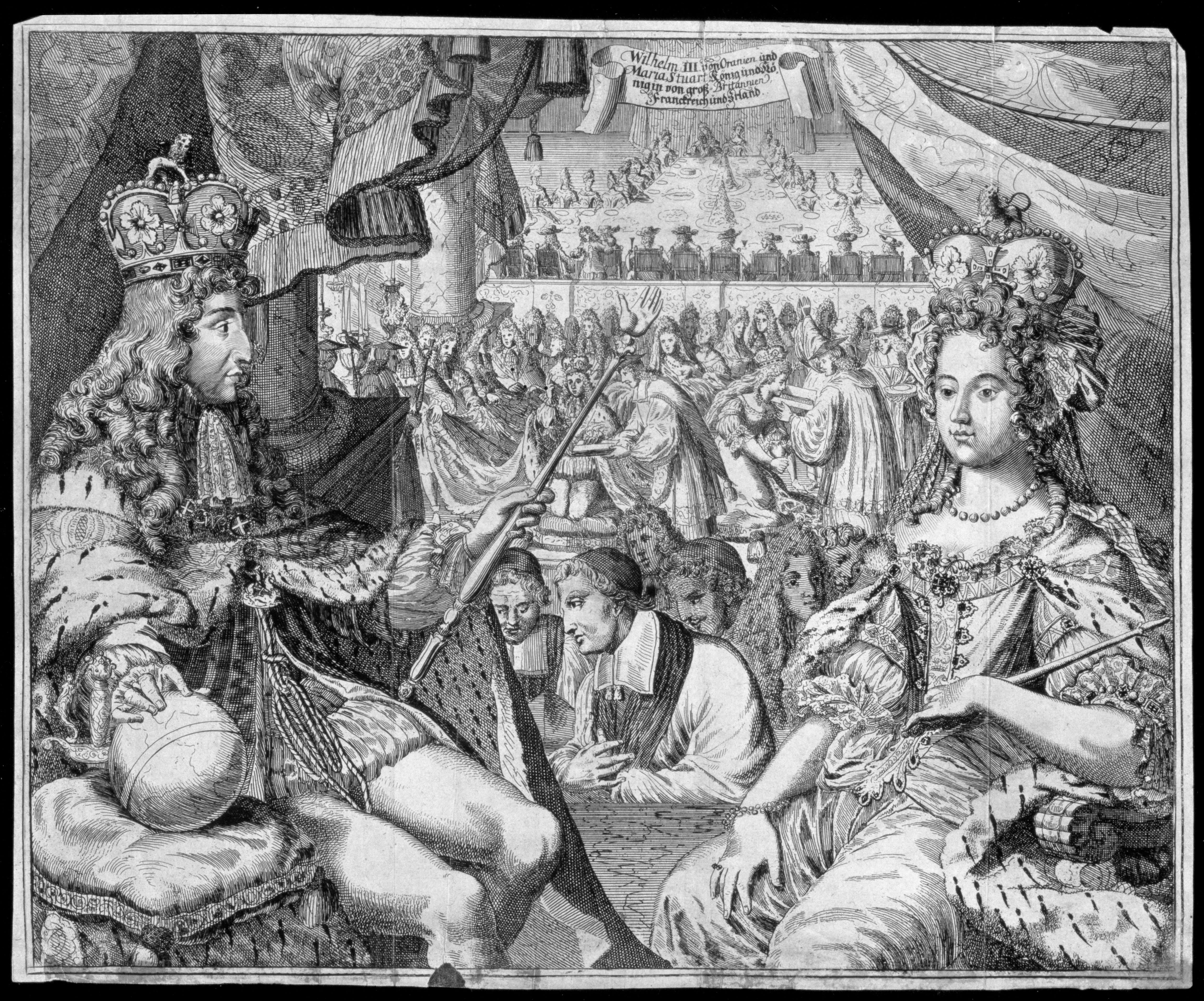
Today, it was my pleasure to speak at William & Mary’s 2026 Commencement ceremony. The namesakes of this college played an underappreciated role in the birth of liberalism, so I’m delighted to share my remarks and their story with you now.
—Frank.
Chancellor Gates, Rector Poston and members of the Board, President Rowe—thank you for the beautiful video and introduction and for the honor from this distinguished university.
To the students, faculty, parents, relatives, and friends of the graduating class of 2026, I am very honored to be able to speak to you on this day. This year is part of William and Mary’s “Year of Civic Leadership,” as well as the 250th anniversary of the signing of the Declaration of Independence. I’m grateful for the introduction, and want to add one small biographical note.

Back in 1989, I published an article entitled “The End of History?” with a question mark at the end. I don’t want to spend any time today explaining the meaning of that phrase, which was not mine but that of the German philosopher Hegel. Suffice it to say the article set off a firestorm of discussion about democracy and world politics. It eventually led to my getting my first academic appointment at George Mason University. I was told by my sponsors that I had received a huge number of references in the citation index that is used to evaluate the work of scholars.
What they didn’t say was that probably 99 percent of those citations said I was completely wrong.
With your permission, I would like to talk to you a little about history and the role that your college’s namesakes played in it.
William of Orange was a Dutch prince, married to Mary Stuart, the young daughter of King James II of England. William was invited by a group of English nobles to help overthrow Mary’s father. This was the culmination of a series of events starting in 1688 known as the Glorious Revolution.
At the heart of the Glorious Revolution was a crisis over constitutional authority. The Stuart kings Charles I and James II had insisted on their right to unilaterally impose taxes and make laws without the consent of Parliament. This led to an English Civil War, the beheading of Charles, an interregnum under Oliver Cromwell, and finally the restoration of the Stuart dynasty.
But the principle of parliamentary supremacy had not been fully established by the late 1680s. The Catholic King James refused to consult with Parliament on a host of policy issues, and he appointed Catholic officers to key posts in the army. Fear that he would return England to Catholicism led to an uprising, James’s abdication, and his replacement by William and Mary.
The Parliamentary side in the Glorious Revolution rallied under the banners of two principles: “no taxation without representation,” and, more broadly, legitimate government coming from the “consent of the governed.” William and Mary ascended to the throne with the understanding that hereafter, English monarchs could no longer operate with absolute authority, but needed to get the consent of Parliament first. The philosopher John Locke had accompanied Mary Stuart back to England from the Netherlands, and wrote his Second Treatise of Government that set these principles in a universal context.
The American Founding Fathers read John Locke. Thomas Jefferson studied John Locke while a student at William and Mary College, and incorporated the principles of “consent of the governed” and “no taxation without representation” into the Declaration of Independence. This, of course, is the document whose 250th anniversary we are celebrating this year. The College of William and Mary played a role in this Founding; John Locke himself wrote a letter in 1699 to James Blair, the college’s first president, inquiring into the progress it had made.
The Glorious Revolution established the principle that the King’s authority is not absolute, and is limited by the need to get approval from a representative body. Neither England in 1689 nor the American colonies in 1776 were democratic in the sense of universal citizenship, but they accepted the idea that government authority needed to be limited by a rule of law, and the idea of constitutional checks and balances. This is the meaning of “liberal democracy”—a government that gets its authority from the consent of the governed, but also limits that authority with a rule of law.

We are today living in an historical period in which liberal democracy has been in retreat around the world. Liberal democracy went through a huge expansion beginning in the 1970s and reached a peak in the years after the collapse of communism. But according to Freedom House, the aggregate level of democracy leveled off around 2008, and has been falling ever since.
This new world has been characterized by the rise of authoritarian great powers like Russia and China. But the regression from democracy has occurred as well in existing democracies, including several that were long established. What we call “democratic backsliding” has centered in the first instance on a deterioration in respect for the rule of law, rather than attacks on the principle of democratic representation per se. We have seen this taking place in many countries, including Hungary, Turkey, India, El Salvador, and, unfortunately, the United States.
Take the example of Hungary, a small country in Central Europe that nonetheless became a model for democratic regression. With the rise of Viktor Orbán and his Fidesz party in 2010, the government progressively packed the courts with Fidesz supporters, put the media under the control of Orbán’s friends and cronies, changed the electoral laws and constitution to make it ever harder to unseat the ruling party, and assumed control of large parts of the Hungarian economy. Hungary shifted sides in the great global struggle between democracy and authoritarian government by supporting Russia in its aggressive war against Ukraine and blocking efforts by the rest of the European Union to help the latter country.
Orbán explained that he was creating what he labeled an “illiberal democracy,” that is, a country that would continue to hold democratic elections, but would burst the limits of existing laws and use state authority arbitrarily. His party and country served as an inspiration to many other would-be “illiberal democrats” around the world.
The good news in 2026 is that Hungary voted in April by huge margins to eject Viktor Orbán and Fidesz from power. Hungary had fallen from one of the richest Eastern European post-communist countries in the 1990s to one of its poorest as a result of the gross corruption of the Orbán regime. Voters saw this and overwhelmingly rejected Fidesz. As in Poland three years earlier, Hungary proved that elections remain one of the most important checks on arbitrary power, and that citizens can still exercise agency by withholding consent from those who seek to govern them.
At the College of William and Mary, the 250th anniversary of the Declaration of Independence has been declared the “Year of Civic Leadership.” It is critical for you who are graduating today to understand the great opportunity that you have to exercise that leadership in future years.
You are living, as Abraham Lincoln explained, in a democracy “of the people, for the people, and by the people,” that by the end of the Civil War received a “new birth of freedom.” Citizenship in such a country does not mean that you should passively enjoy the benefits of life in a free society; it is not enough to simply follow the law and pay your taxes. Civic leadership requires active participation in the democratic process. You need to pay attention to public affairs, and to understand that you personally have a responsibility to improve the common life of our country. You need to honor the legacy of King William and Queen Mary by playing your part in supporting a constitutional order built around John Locke’s contention that legitimate government arises out of “consent of the governed,” and the Declaration of Independence’s assertion that “all men are created equal.”
Thank you very much for your attention.
Francis Fukuyama is the Olivier Nomellini Senior Fellow at Stanford University. His latest book is Liberalism and Its Discontents. He is also the author of the “Frankly Fukuyama” column, carried forward from American Purpose, at Persuasion.
Follow Persuasion on X, Instagram, LinkedIn, and YouTube to keep up with our latest articles, podcasts, and events, as well as updates from excellent writers across our network.
And, to receive pieces like this in your inbox and support our work, subscribe below:
The idea that liberal democracy is in decline reflects a basic truth. Liberal societies don’t exist for very long. The U.S. was a stable democracy for a long time because it was not liberal. It was in fact, deeply conservative (socially conservative, not politically conservative). Something called the “American Code” governed (severely restricted) personal behavior. Now it doesn’t and quite predictably political democracy is in decline. The US (much less the world) is not Sweden and pretending it is doesn’t change that fact. Sweden’s laws and system of government don’t work in other places. Increasingly, Sweden is not Sweden either. For example, two very different countries with no liberalism have systems that work. China has not abandoned liberalism. China never had it. Does China’s combination of authoritarian government and a (mostly) market economy work? You bet it does. China has 25,000+ miles of HSR. California has zero miles of HSR (but plenty of liberalism). Of course, California does have men with dresses. El Salvador was once ‘liberal’. Now it is not. The current president (Nayib Bukele) has cracked down on the gangs plaguing his country. He has achieved a remarkable reduction in crime (murder). Like it not, but mass immigration means the end of liberalism and probably democracy throughout Europe. A quote from Helmut Schmidt should make this clear “Multicultural societies have only … functioned peacefully in authoritarian states. To that extent it was a mistake for us to bring guest workers from foreign cultures into the country at the beginning of the 1960s.” Of course, mass immigration can not be stopped by liberal means. Either Europe (and the USA) will adopt illiberal policies to stop mass immigration or will adopt illiberal policies to deal with the consequences of mass immigration. Either way, illiberalism is the future (if there is any future). The world (really the US and Europe) were lulled into temporary tranquility by the post-war (WWII) economic boom. The boom is over (and has been since the 1970s). Now we have an era of conflict.
Bukele only enjoys a 91% approval rating. Did I mention that the murder rate has only gone down by 98%? The practical choice is CECOT or MS-13. The people of El Salvador have picked CECOT.