

The Democrats Sabotaged Their Own Autopsy
The report into the 2024 election was perfectly fine. So why will nobody say so?

As a reminder, Persuasion’s Intellectual Bootcamp meets on Zoom on Fridays at 12pm EST! (Click here to read my reasons for starting the bootcamp.)
This event is open to paying subscribers of Persuasion. To save your inboxes, we will send the meeting link out to people who opt in to a mailing list. If you are a paying subscriber, please write to events@persuasion.community and ask to be put on the mailing list.
- Sam
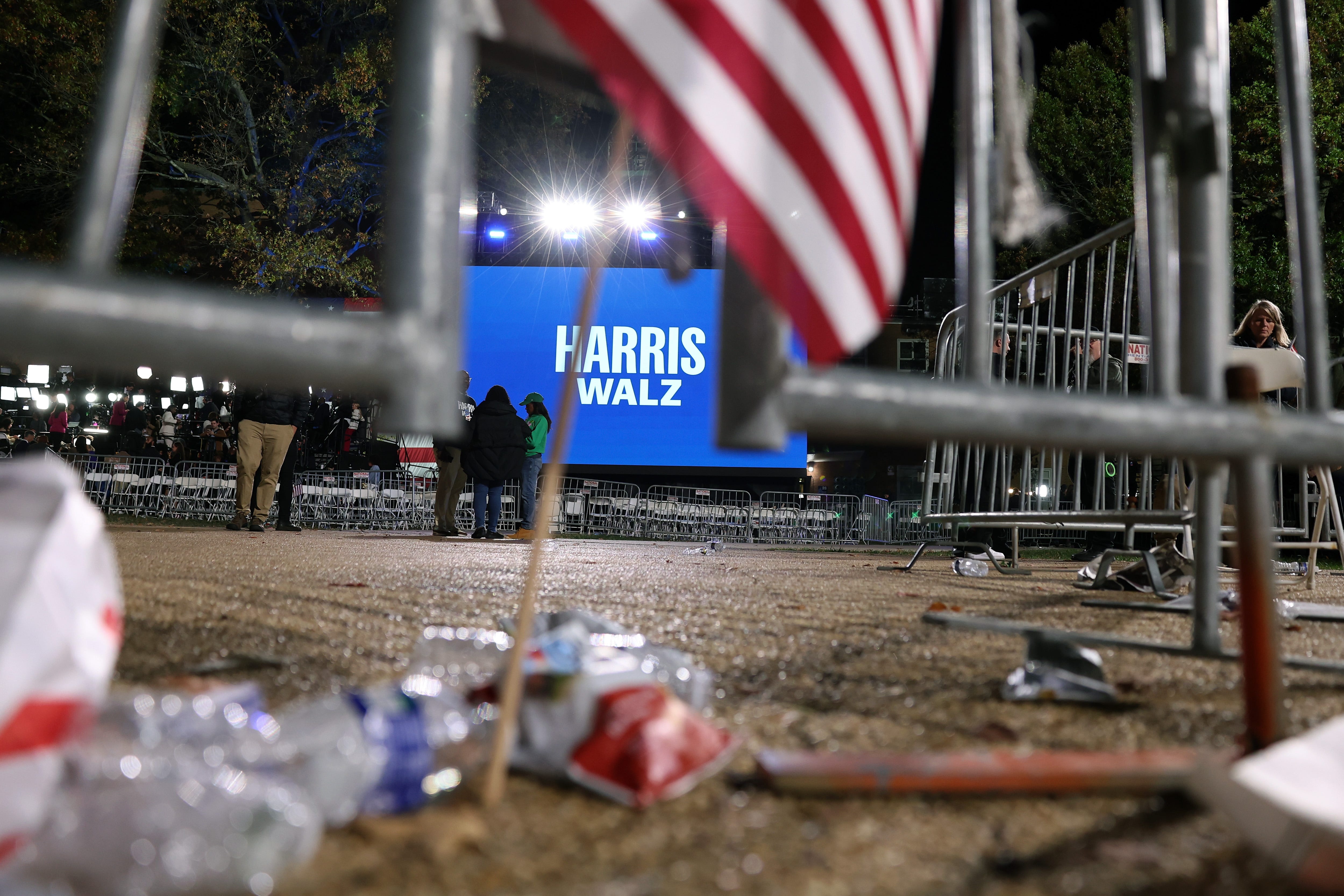
Well, now it’s just embarrassing. The party that lost power to a man last seen shepherding a mob in the direction of his own Congress, that tried to run a vegetable under the campaign promise that he wasn’t a vegetable, that decisively lost a Blue Wall which had held solid for generations, that lost ground with demographic groups it had spent a decade shamelessly courting, that welcomed the new podcast medium by… declining an interview with the most popular podcast of all, has gone well beyond being the gang that couldn’t shoot straight to being the party that can’t even conduct its own autopsy. What should have been an ordinary after-action report on the 2024 election defeat turned into a political hot potato. That spoke, more eloquently than anything in the report itself, to the chronic dysfunction within the Democratic camp.
The story of the report is that Ken Martin, Chair of the Democratic National Committee, ran for his office promising an autopsy on what went wrong in 2024. Martin turned to Paul Rivera, a veteran Democratic consultant and ally, who produced the report on a volunteer and part-time basis. Rivera didn’t present the report to the DNC until nearly a year after the election, at which point Martin twice delayed its release before announcing in December 2025 that the DNC wouldn’t release the report at all.
That, naturally, led to more questions—what exactly was in the report that the DNC was running away from? The case of the missing report dogged Martin’s tenure, reportedly leading to funders withholding donations from the Democrats. But when CNN got hold of the report, the DNC had no choice but to release it, although annotated and accompanied by the strange disclaimer that “This document reflects the views of the author not the DNC.”
Martin took to Substack to give an even more scathing review of the report. “I am not proud of this product; it does not meet my standards and it won’t meet your standards,” he wrote. “When I received the report late last year, it wasn’t ready for primetime. Not even close.” That verdict is supplemented by the DNC’s truculent annotations to the report, which point out various factual errors, and note on a significant number of sections, “No sourcing or evidence provided for many claims in this section.”
So that becomes the sad denouement to the case of the missing report—no smoking gun revelation about what went wrong in 2024, but the dispiriting spectacle of a party that can’t even figure out how to cast blame properly. The spin by the DNC is about misplaced trust—basically, that Rivera has been out of the game for a long time and slow-walked his investigation and then made unaccountable errors in the presentation.
But the story is actually worse and stranger than that. Because here’s the thing: the report is (mostly) perfectly fine. It was never going to set the world on fire, and it has its shortcomings, but it’s a professional, often technically-minded analysis of flaws within the Democratic Party organization—pretty much exactly what one would expect an after-action report like this to be.
Some of the more fanciful speculation about what it contained had to do with questions about the extent to which it indicted Kamala Harris and her team for running a poor campaign. But, actually, Rivera barely touches on that at all. There is nothing in there about the hiding of Joe Biden’s mental state, only a brief mention of the changing-of-the-candidate in the aftermath of the disastrous June 2024 debate. Joe Rogan’s name is not mentioned. And there is none of the salty inside-the-campaign-trail gossip reporting that tends to characterize journalistic autopsies of elections.
You could argue—as the media is reflexively doing—that it’s those omissions that make the report worthless. “The document, it’s now clear, was kept under wraps not because it was impolitic, but because it’s a disaster,” writes Michelle Goldberg in The New York Times. The commentator Chris Cillizza also uses the “d” word and headlines his segment on the report, “I read the DNC’s 192-page disastrous autopsy report so you don’t have to.”

But the media—falling for a bit of spin from Martin and the DNC—is misunderstanding what the report was intended to be. “There has to be some lessons that we glean on [2024] so we can operationalize it, not just here in DC, but through all of the 57 state parties,” Martin said at the time of commissioning the report. It was always going to be fairly technical and forward-looking, and that clearly is how Rivera interpreted his assignment. “There are many books already written, and many more to come presenting analyses of ‘what happened’ [in 2024] for both sides,” Rivera reasonably writes. The point of the report was to “develop, organize, and implement a 10-year strategic plan to align the infrastructure, partnerships, and people we need to win,” using lessons from 2024 as a starting point.
In that vein, the report is full of riveting material on the performance of a North Carolina attorney general candidate relative to the national ticket; on the glitchiness of the Democrats’ voter database software; on the efficacy of spending campaign funds on a year-round basis as opposed to pouring it into an electoral surge; and on the alignment of Super PAC messaging with that of the campaign. Martin may well have been right that a document like this isn’t exactly “ready for primetime,” but it’s far from clear that “primetime” was ever going to be its destination. It locks into various electoral fundamentals and makes detailed suggestions for areas of improvement.
Beyond this, Rivera often does write trenchantly and contends that Democrats have essentially given away large swathes of the voting populace. Here he is on the electorate gender gap: “Male voters require direct engagement. The gender gap can be narrowed. Deploy male messengers, address economic concerns, and don’t assume identity politics will hold male voters of color.” Here he is on a geographic strategy: “Strong urban + competitive suburbs + limited rural losses. You need all three.” Here he is on a digital strategy: “The fundamentals have changed. It’s no longer enough for campaigns to push information out—they have to pull people in—and digital and social platforms are tools designed for this engagement.”
Not necessarily breathtaking, but in line with a common-sense verdict on what happened in 2024—and, crucially, a sharp critique of the play-to-the-base direction the Harris campaign went in. If we were to draft an executive summary—Rivera and the DNC seem never to have gotten around to writing one for the actual report—it would be something like this:
Democrats have to close some of the gap with male voters and rural voters—and down-ballot races show that inroads are possible with both groups.
Democrats have to fight even in places they know they’ll lose. “Limiting losses matters,” Rivera writes.
Messaging should be constant, as opposed to rushed during an election. Rivera cites the Trump-backing Turning Point USA in particular as having a year-round model that Democrats should imitate. “Early money is like yeast—it helps the dough rise,” Rivera writes.
Handle the adjustment to new media. Rivera contends that Democrats’ digital ads tend to just be shortened versions of TV ads, as opposed to truly working with the form.
Lean into negativity. “When they go low, we go lower” might make a decent subtitle for the report—with Rivera chiding the Democrats for trying to walk a high road in 2024 as opposed to drilling into Trump’s negatives.
If there is a substantive critique of the report, it would be that Rivera focuses less on specific issues than he might. Immigration, for instance, is barely discussed. But Rivera likely felt that that was not his mandate; future Democratic nominees will choose what issues they want to focus on. Rivera noted that identity politics did poorly with voters compared with meat-and-potatoes economic campaigning, and otherwise stays within more technical aspects of electioneering.
It’s also possible to argue that Rivera misses the forest for the trees and fails to discuss the kind of group-think that resulted in the party failing to have genuinely open primaries in 2024 or to question Biden’s mental acuity before it was far too late. Which is fair, but Biden—presumably—isn’t going to be on the ballot in 2028, and it’s understandable that Rivera would try to be forward-looking in his recommendations.
So, all in all, a perfectly serviceable report. Had Martin and the DNC released it when it came in, there might have been some media annoyance at not going more stridently after the Biden or Harris campaigns, but the press would have forgotten about the report by the next day, and there might have been some real lessons to take in for party operatives.
But that’s not what happened. Faced with a message he didn’t exactly like—or found underwhelming—Martin elected to shoot the messenger, and to do so in a very public, graphic way. Yes, there are some errors in the report. Rivera, for instance, misreports Mark Robinson as winning 45% of the vote in the North Carolina gubernatorial race, when the actual number is closer to 40%. The former New Jersey governor Jon Corzine is incorrectly spelled as “John Corzine,” and former Kentucky governor Matt Bevin as “Matt Brevin.” The writing can be clunky in places.
But the DNC, in its annotations to the report, tries to rip basically all of it apart.
We’re kind of falling into the same trap that Martin and co. did if we make too much of the annotations to the report, but the annotations, pedantic and supercilious—I think the more technical term is “bitchy”—speak with remarkable vividness to what’s gone wrong within the Democratic Party. There’s a suspicion of common sense, of forthright thinking, a demand always for more sourcing, for, presumably, footnotes, as if it’s more footnotes that stand between the Dems and beating Trump.
Let’s take a sample of a few of the DNC’s annotations to the report:
To the line “This was a blatant attempt by the Republican power base to take advantage of name recognition”—a reference to the 2022 Georgia Senate election—the DNC annotator helpfully notes that “In 2022, Joe Biden was president,” as if Rivera didn’t know that, and as if a “Republican power base” couldn’t exist if the Republicans didn’t hold the White House.
To the line “states which had consistently and reliably voted for Democratic candidates, including Pennsylvania, Michigan, and Wisconsin,” the annotator informs us that “all three of those states voted for Trump in 2016,” as if Rivera weren’t, obviously, talking about the decades-long voting patterns of the Blue Wall.
To a line referencing the “deaths of five people” during the 2021 Capitol attack, the annotator writes, “Claim contradicts public reporting”—even though that’s exactly the number that most sources give.
The DNC’s chief contention is that the report provides inadequate sourcing for many of its claims. That’s largely accounted for by Rivera’s method of operation of “promis[ing] confidentiality” to the “more than 300 organizations and individuals” who were interviewed in the process of researching the report in order to “encourage their participation and candor.” But that perfectly-reasonable approach seems not to have satisfied the DNC. And the annotator jumps all over anything analytic or opinion-based.
For instance, to the perfectly common-sensical line “we failed to meet these voters in the ecosystems where they spend the majority of their time and where narratives are built”—part of a discussion of young and chronically-online voters—the annotator writes “No evidence or sourcing provided for these claims,” as if anyone who was paying attention to U.S. politics in 2024 wouldn’t tell you the exact same thing.
The annotated copy of the report is a breathtaking imitation of the U.S. Army as depicted in Joseph Heller’s novel Catch-22, and as run, sub rosa, by ex-P.F.C. Wintergreen, a mail clerk who takes it upon himself to critique the literary style of any generals’ orders that come in and to throw the ones he doesn’t like into the wastepaper basket. “Too prolix” determines ex-P.F.C. Wintergreen—and that’s the last anybody ever hears of one particular battle order. “No evidence or sourcing provided for this claim,” write the ex-P.F.C. Wintergreens working at the DNC—and so much for Rivera’s common-sensical analyses or suggestions.

That kind of spin works, to an extent. The response by the media to the heavily-redlined report is to assume that it must be deeply flawed—with spelling and occasionally math mistakes, with sections missing. But that’s to be taken in by Martin’s blame-shifting game. I have a feeling—although no evidence provided!—that Rivera expected the typos to be corrected before publication, and was intentionally leaving sections like the executive summary blank because he anticipated a productive back-and-forth with the DNC, as opposed to the DNC sitting on the report and then eventually dumping it, unedited, to the public.
But, as ex-P.F.C. Wintergreen would be the first to point out, why proofread or edit when you can just shoot the messenger for their spelling mistakes and typos? And so the DNC hits the button on the console that initiates the spin cycle and in so doing dives into a morass of blame and meta-blame. “It’s… Keystone Kops,” one former DNC official said to CNN.
But that may be overly generous. What it really is is weird and insular—the Democrats somehow not understanding that the essence of electoral politics is extroversion. They could have just released the report, whatever its shortcomings, and moved on from there, trying to attack the next news cycle. The Keystone Kops, at least, have no shortage of energy.
But the Democrats just can’t seem to resist these cycles of self-sabotage. Unless the party manages to focus, even the task of casting blame is going to be too much for them. The Keystone Kops are enviable when the party, really, is being run by ex-P.F.C. Wintergreen.
Sam Kahn is associate editor at Persuasion, writes the Substack Castalia, and edits The Republic of Letters.
Follow Persuasion on X, Instagram, LinkedIn, and YouTube to keep up with our latest articles, podcasts, and events, as well as updates from excellent writers across our network.
And, to receive pieces like this in your inbox and support our work, subscribe below:
"Ex P.F.C. Wintergreen!" I was a little iffy about reading the article at first, but Sam Kahn has been pretty on-point for me, so I gave it a shot, and while I appreciate the take, I was lukewarm.
But then Ex P.F.C. Wintergreen showed up, and I laughed out loud. (I very seldom laugh out loud at politics and political writing) A perfect analogy, a perfect and welcome call back. Made my day!
The DNC has finally stumbled over the truth about the 2024 election disaster. However, in true bureaucratic fashion, the DNC has got up, dusted itself off and is now proceeding into the midterm elections as if nothing untoward had happened.