

The University As We Know It Is Finished
That’s a good thing.

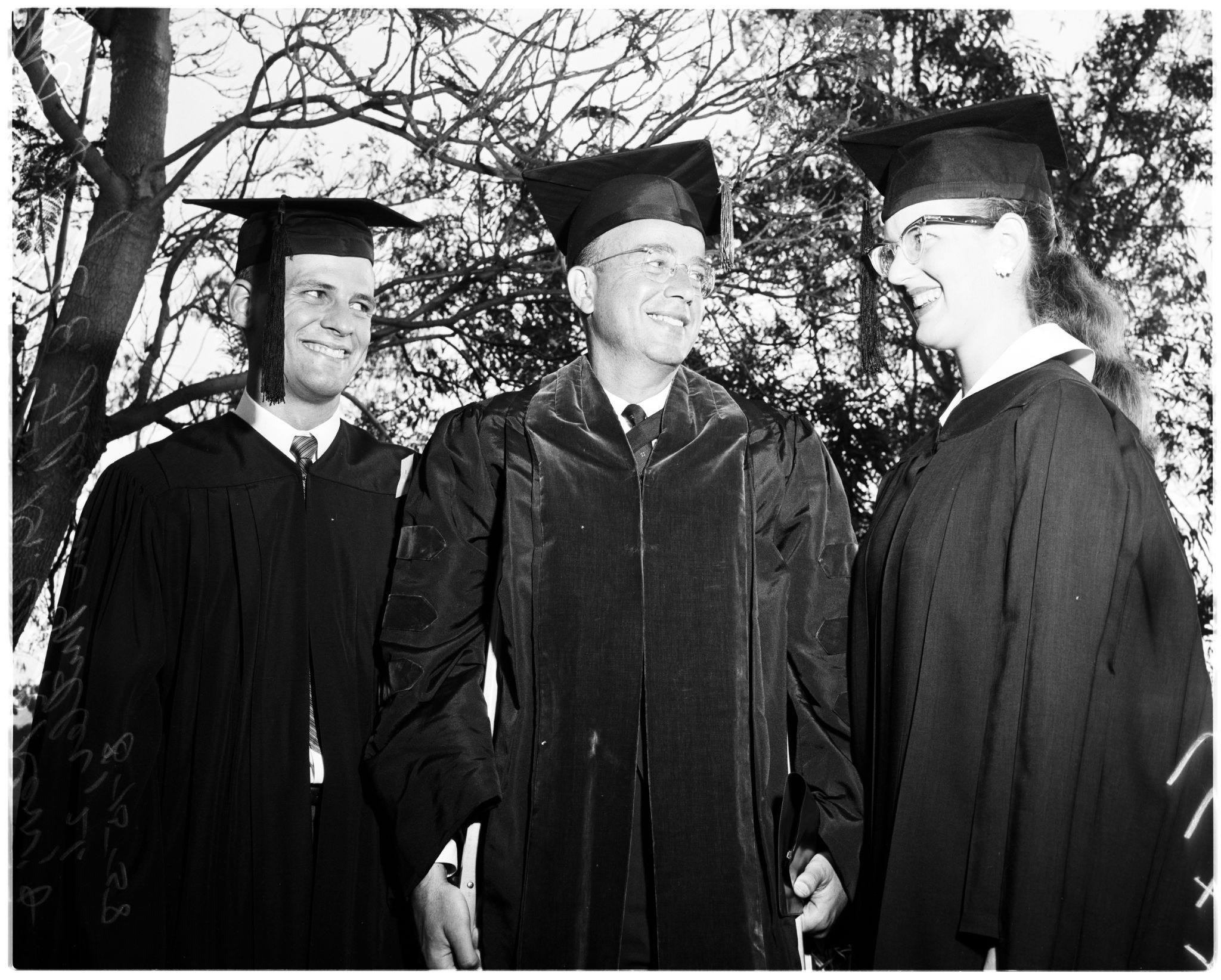
When University of California President Clark Kerr delivered the Godkin Lectures at Harvard in 1963, published shortly thereafter as The Uses of the University, he was doing something unusual for an academic administrator: he was offering a sophisticated social theory, and doing so with wit. In these lectures, Kerr coined the term “multiversity” to describe what the postwar American research university had become. In Kerr’s account, the modern university was no longer to be understood as a community of scholars united by a shared ideal of learning, but rather as a sprawling institutional conglomerate serving at once as a research engine, a job-training facility, a credentialing mechanism, a coming-of-age experience, and an incubator of the national technical elite. The University of California, which Kerr had just finished steering through a near-decade of explosive growth, was his exemplar.
Kerr was a droll man. He once observed that the three great problems facing any university president were “parking for the faculty, athletics for the alumni, and sex for the students.” He described the university faculty (and I can confirm from personal experience that this remains accurate) as “a series of individual faculty entrepreneurs held together by a common grievance over parking.” And when Ronald Reagan made good on his 1966 gubernatorial campaign promise to fire him for being too lenient with the Free Speech Movement protesters, Kerr offered one of the great farewell lines in American academic history: “I leave the University of California as I arrived: fired with enthusiasm!”
Despite the jokes, Kerr was a serious man. The argument underneath The Uses of the University was that the multiversity, precisely because of its sprawl and apparent incoherence, was the institutional master key of mid-century American civilization. It was the nexus at which basic scientific knowledge was produced, technical and professional talent was credentialed, democratic citizenship was cultivated, and the national project of technological supremacy was advanced. The multiversity didn’t need to be coherent in order to be functionally useful as a platform for what Kerr called “administering the present.” He wrote with the high modernist confidence of someone who believed that hierarchical technocratic institutions, if competently managed, could keep these various volatile elements in balance.
Kerr’s dismissal by Reagan in 1967 was, in a sense, the first indicator and warning of the crisis of the high modernist technocratic model that he championed and sought to institutionalize through the multiversity.
It is time to acknowledge that Kerr’s model of higher education is finished: long on its last legs, the arrival of AI announces its death-knell. What comes next is disaggregation: the multiversity as we know it being disassembled into its component parts. This need not, however, be a catastrophe for higher education. Actually, in many ways, it represents an opportunity to return to roots, in a classical model of education and in attentive pedagogical instruction. But higher education can only weather this period of disruption if it is clear-eyed about what is happening and moves confidently toward a new model.
The Crisis of the University Is Not New
The present crisis of the American university began building already sixty years ago as the postwar bargain that Kerr’s vision embodied started to fray. What followed was a slow-motion privatization of university finances, producing a slow-motion tuition hyperinflation that has burdened a generation of students with debt while hollowing out the public mission of the university. The shift from grants to loans, from tenured faculty to mass adjunctification, and from a broad education in the liberal arts to vocational credentialism all occurred under the banner of making universities more “responsive to market demands.” In practice, this has meant transferring cost from the public to the individual “student consumer,” while defunding the parts of the institution that didn’t produce monetizable outputs. The net result has been the ever-upward-spiraling costs of undergraduate education, without a corresponding increase in the value of educational training or credentialling, and a loss of political support for the mission of universities. These financial and political travails have heightened the contradictions between the disparate missions and functions of the multiversity.
Into this increasingly unstable compound, add AI.
The arrival of large language models is acting as a catalytic solvent, titrating out the incoherence that was always there. When a student can produce a plausible term paper in twenty minutes using Claude Opus or Google Gemini, what is the point of assigning term papers? When an AI tutor can explain any concept at any level of sophistication with infinite patience, what is the value of a lecturer reading from notes? When AI can ace most standardized professional examinations, what is a credential certifying? These are old problems that AI has made it impossible to ignore.
Beyond the pedagogic challenges posed by the arrival of LLMs, AI is also exposing that the Kerrian bundle held together for as long as it did because its components shared a common and venerable set of technologies of knowledge transmission: the book, the lecture, the problem set, the written examination. In a pre-LLM world, these formats made cognitive demands of students that were difficult to simulate or shortcut. That is no longer true. AI doesn’t just automate some of the tasks associated with these formats; it renders the formats themselves obsolete as instruments of either intellectual discipline or assessment. And when the shared technological substrate dissolves, the contradictions built into the multiversity from the beginning become impossible to paper over. The world-class research mission and the undergraduate teaching mission have always been in tension. The prestige economy that rewards publications over pedagogy always distorted faculty incentives. The credentialing function was always only loosely connected to the educational one. These were the open secrets of the American research university. In a post-AI world, these divergences are being rendered untenable.

It is striking, then, that the most widely discussed recent attempt at university self-examination, the April 2026 Report of the Yale Committee on Trust in Higher Education, barely registered any of this reality. The report was in some ways an admirable document. It was clear-eyed about costs, scathing about admissions opacity, and candid about the political monoculture that has eroded public trust across partisan lines. Yet its treatment of AI was cursory to the point of negligence: a few sentences in the section on the classroom, expressing uncertainty about AI’s effects and noting that faculty are “scrambling to redesign syllabi.” It is remarkable that a report tasked with understanding why public trust in higher education is collapsing would fail to reckon with the technology that is restructuring the economics and logic of knowledge work. It suggests that even the most self-aware corners of the academy are still treating AI as a pedagogical inconvenience (or literal cheat-code) rather than what it actually is: the force that is making the entire inherited architecture of the multiversity impossible to sustain.
The Co-curricular Dodge
So how should the university respond to this crisis of purpose, identity, and even faith? The most popular present answer in certain administrative circles to this question is an emphasis on the “co-curricular,” that is, on residential life and human connection as the university’s irreducible value in an age of AI tutors. Perhaps the most cited proposal is Molly Worthen’s New York Times piece from three years ago, “Why Universities Should Be More Like Monasteries,” which argued that universities should offer radically low-tech, high-presence educational environments.
This argument isn’t meritless: there is evidence that learning works differently when embedded in community, that chance hallway encounters with faculty members, late-night bull sessions in the dormitory common room, and heated dining hall debates are often the most generative moments of learning. Students’ own accounts of what matters most in college consistently center on relationships, belonging, and dialogue. The argument for residential education, for the ancient model of the Platonic Academy as gymnasium and garden as much as classroom, is stronger now than it has been in decades.
This is continuous with a long-standing function of universities as sites for passage from childhood to adulthood, for coming to a new understanding of oneself. In the 1960s more than four fifths of college freshmen reported that a major goal of college was to help themselves “develop a meaningful philosophy of life,” a number which collapsed by half in the 1970s and 1980s. A reemphasis on the co-curricular could help revivify this ideal, which would in turn help prepare students for the AI-forward world they are entering. As Anthropic cofounder Jack Clark recently argued, the people who will most benefit from AI are those who have first built deep, idiosyncratic human capacities through “repetitive practice and creation.” The machines will work best when helping you to amplify what you’ve already made of yourself.

But by itself, the co-curricular is an evasion. It leaves untouched the question that determines what students and families are paying for: what happens in the curriculum, in the classroom, in the formal educational encounter. That is where reform needs to be most radical, and where the response of universities so far has been most quavering. If the primary response of universities to the most dramatic new knowledge technology in decades, one that employers everywhere are expecting employees everywhere to use, is to demand that students stick cotton in their ears and keep rowing, it will only hasten their decline into institutional redundancy, if not irrelevance.
Cognitive Requirements in the Age of AI
Any reimagining of the university in the age of AI must begin with an honest reckoning with what AI cannot do—and what therefore becomes relatively valuable precisely because AI can do everything else. The key distinction is between work that AI does well (such as synthesis of known patterns, argument elaboration, template instantiation, and generating local coherence) and work it structurally cannot do because of the architecture of the technology as such. AI cannot build the trust on which institutional cooperation depends, because trust is not a conclusion reached by processing information about another agent but instead is a relationship constituted over time between persons who have staked something on each other, and who can be betrayed. AI cannot give a person good taste or style, because taste and style are about personal distinctiveness within a community which shares an aesthetic. AI cannot constitute goals, because that act requires a valuing subject. These are not gaps that more compute will close. They are absences that follow from the ontology of the technology itself.
A curriculum designed around AI’s limitations should be seen neither as an exercise in nostalgia nor as a denial of the burgeoning power of these systems. In fact, given the trajectory of AI capabilities, it is the only curriculum with any hope of finding a stable foundation.
What does this mean in practice? Start with the most obvious casualty: the term paper, as an assessment instrument, is dead. Written homework assignments were meant to push (and test) a student’s ability to produce a well-structured, coherently argued text. But this is exactly what LLMs do effortlessly and without demanding of the user any of the underlying cognitive work for which the traditional term paper was supposed to be a proxy. This included sustained argumentative reason: the ability to construct and maintain a complex argument across an extended piece of discourse, distinguishing claims from evidence, handling counterarguments, and reaching a defensible conclusion. Written assignments also demanded epistemic self-regulation, that is, the metacognitive capacity to monitor one’s own understanding, recognize gaps in evidence, revise positions in response to what the evidence shows rather than what one hoped to find. This pedagogically valuable work always operated below the waterline of the actual output of a term paper; what LLMs do is deliver results that simulate these actions without putting the students through their cognitive paces.
The replacement, as many education researchers are arguing, is live assessment and demonstration: real-time diagnosis of novel situations, design critique, structured adversarial debate, and Socratic examination. These formats test the ability to sense-make under pressure, defend a frame against live challenge, revise a model when evidence contradicts rather than confirms it, and recognize when uncertainty is too high to proceed. In practical terms: collaborative student projects will require documented decision logs tracing reasoning behind commitments, the canonical deliverable shifts from polished artifact to demonstrated live reasoning, and oral examinations and hand-written exams will become the primary assessment instruments. But despite this emerging consensus among education researchers, institutional practice has barely moved.
If the post-AI university’s pedagogic value proposition is the formation of cognitive capacity in conditions that cannot be replicated on a screen, then the function and responsibilities of faculty members must also be reconceived. It clearly no longer makes sense for professors to stand in front of a hall full (or, too often, only half full) of students delivering lectures. As a mechanism of information conveyance, AI can now provide the same at near-zero cost, tailor-made to the specific knowledge gaps of individual students. Instead, professors must reconceive of themselves as interlocutors, serving as performative models of how to calibrate uncertainty and revise frames in real time. The classroom experience should focus on helping students to understand how to constitute a goal rather than generate a text in response to a prompt provided by the professor.
This is something closer to the Oxbridge tutorial system, the clinical ward round, or the seminars of many small liberal arts colleges in the United States. These pedagogies were once defended on grounds of tradition or prestige. The post-AI argument is structural: they are the delivery mechanisms for exactly the cognitive capacities that the architecture of AI cannot replicate, because those capacities are developed only by being exercised, not described. Interestingly, this means that the coming of AI is going to mean there will be demand for more professors, rather than fewer.
None of this implies that faculty should pretend AI does not exist, or that the tutorial and seminar should be conducted in proud ignorance of a tool students will be spending the rest of their professional lives using. The opposite is true. Faculty should integrate LLMs directly and deliberately into their instruction as tools that need to be used correctly in order to not be harmful. (The analogy of a blowtorch or a chainsaw comes to mind: these are useful tools, but you need to learn how to use them safely.) Teaching a student to prompt effectively is teaching them to think precisely about what they want to know and why; it is, in this sense, an exercise in goal constitution. Teaching students to evaluate an LLM’s output critically by scrutinizing the machine’s often over-confident syntheses against evidentiary standards defined by the phenomenological reality of the external and material world is teaching them epistemic provenance tracking and calibrated self-assessment. LLMs can also become objects of critical study in their own right: students should be asked to assess why the model did not produce exactly what they had a priori in mind when they initiated the interaction. Handled this way, LLMs can serve as clarifying instruments in the pursuit of the classical objectives of enlightened education: the inculcation of critical thinking and logical reasoning, rhetorical and communicative competence, aesthetic appreciation and the cultivation of taste, moral and ethical reasoning, and ultimately the ideal of self-knowledge and Bildung.

This brings us to the content of the curriculum itself. As I recently argued in Noema, if the goal of a college curriculum is (as it should be) to inculcate oral reasoning and persuasion, ethical analysis and moral judgment, historical and comparative thinking, and the cultivation of taste and discrimination, then we are precisely in the domain of the classical curriculum of the liberal arts. Skills such as goal constitution, situated judgment, and value alignment are exactly the capacities that a serious engagement with history, philosophy, literature, and political theory develops. History trains temporal imagination and frame revision; philosophy trains epistemic precision and the discipline of distinguishing solid argument from vapid sophistry; literature sharpens an appreciation for style and a feeling for hidden meaning; political theory trains the recognition of suppressed goal contestation and the conditions for legitimate alignment. Together they enable students to imagine lives unlike their own, a hugely valuable experience in a world changing as fast as ours.
How to convey the content of these disciplines to students is going to have to change dramatically from the homogenous one-to-many mass-delivery model of the postwar multiversity, but the content is perfectly classical. The university’s present crisis of purpose is, in this light, at least in part a crisis of having abandoned its own best tradition in pursuit of vocational or technical training that AI is now rendering obsolete.
But Does It Scale?
The central challenge for universities will be how to move toward this model at scale. The tutorial and seminar model is labor-intensive by design: a professor working as interlocutor rather than lecturer can engage only a fraction of the students she could previously reach from a podium. The skills required of faculty will also need to change substantially. Under the old model, a brilliant researcher delivered expected value simply by speaking one-to-many; the new model requires someone with the pedagogic sensitivity to calibrate each student’s specific confusions and capacities—qualities that research prowess neither produces nor rewards. Elite universities in particular have built their faculties almost entirely around research achievement, with teaching treated as a secondary obligation. Reconceiving the professoriate will mean altering tenure criteria and promotion incentives, and it will face fierce resistance from scholars whose professional identities are bound up in the research function. None of this is impossible, but none of it will be easy. No doubt some tenured faculty will pour boulders and boiling oil down the side of their ivory towers to prevent these changes from taking place.
Longer term, however, we should expect the disruption caused by AI to be not just pedagogical but to the structure of the university as such. Kerr’s great insight was that the multiversity’s incoherence was not a bug but a feature—that a loosely bundled institution mirrored a loosely bundled society by providing something for everyone, from the Nobel laureate to the newbie grad student, from the NIH grant-seeker to the remedial English student. What held those disparate functions together was a social infrastructure of knowledge transmission: the laboratory, the lecture hall, the examination, the credential. Once AI can provide information delivery at near-zero cost there is no longer a compelling reason why research, teaching, and credentialing need be co-located in the same institution. What will replace the multiversity is likely to be not one thing but several: research centers that focus exclusively on the new-knowledge-production business; independent communal residence facilities that know they are in the coming-of-age business; and teaching systems that are honest about what skills they are inculcating. Even credentials from the most exclusive universities may not retain much social signaling value.
Clark Kerr would have recognized this moment. He was no naïf about the multiversity’s contradictions; but he also believed that competent management could hold them in productive tension. What he did not foresee was that the tension would be dissolved not by political upheaval—as it nearly was in 1964, when the student movement that eventually got him fired also signaled the coming fracture of the postwar liberal-technocratic consensus—but by technological rupture. The irony is that the research university, which Kerr celebrated as the engine of American technopolitical supremacy, incubated the very instrument that is now rendering untenable the research university’s inherited form.
What the students who booed the mention of AI at recent commencement ceremonies this spring were registering, in the way that students have always registered institutional failures, is that they were not getting what they came for. But as with more than one student movement before them, just because they rightly identified a structural problem doesn’t mean that they have particularly good ideas about what a better institution would look like. Just as Kerr recast the University of California to match the liberal-technocratic imperatives of the postwar period, so do visionary college leaders today have an opportunity to remake the university to match the requirements of an economy that will be redefined by AI. Achieving this will be a generational project.
Nils Gilman is Senior Advisor to the Berggruen Institute and former Associate Chancellor of UC Berkeley.
Follow Persuasion on X, Instagram, LinkedIn, and YouTube to keep up with our latest articles, podcasts, and events, as well as updates from excellent writers across our network.
And, to receive pieces like this in your inbox and support our work, subscribe below:
 | A guest post by
|
I am writing a difficult book. I use AI. What AI cannot do is Plenty! But what it can do is also plenty. It can point out when I am deceiving myself about the coherence of my own beloved arguments. It can point me in new directions for additional research. But it cannot read the books for me. It cannot create my arguments for me. It can help me organize my thoughts and keep me on track when I have become lost in the confusion of too many contradictory ideas. It is a guide, a sort of super professor who actually reads your work tirelessly, every single word. And has, for example, the entire Stanford Encyclopedia of Philosophy to draw from in less time than it takes to create a prompt. It cannot however synthesize novel ideas or say the truly crazy things that I have found essential to lead up to genuinely creative ideas. It does not think; it correlates. It has enough information to be a superb critic, but it is weighted for coherence over everything else. If it writes a paper, as many of my naive students have attempted, it will be an utterly benign, utterly mediocre paper. If you use AI correctly it will hurt your feelings regularly; if you let it use you it will flatter your brilliance subtly and kindly, and your own insights will soon vanish, and your work will be as mediocre as mere coherence always is. It is a parasite but it can be a symbiotic one or a malignant one. But it is always a parasite, always gulling us in for its own survival, gulling us in to keep using it and keep paying for it. https://youtu.be/hzy2fwJ_hwM?si=wmWskWdS7D6N7syd
The author is a very well known academic and in my peonic (there is no such word but should be) opinion this is one of the best articulated essays on AI in the University and Academic setting that I have come across. The reader below has pointed out how AI assists all of us who write books, short stories, reviews etcetera. The assumption that AI cannot "think" nor come up with "new ideas" will in my opinion be proven wrong in the area of the arts. This is especially in the knowledge of the fields of the literary and musical arts. AI will never paint a masterpiece on a canvas - like the Mona Lisa, will it? But in the literary arts as AI gathers more and more information about what were "original ideas." when consulted, AI will be able to give the enquirer a list of ideas that have been "original: on this subject" - one of which may well be that original idea of the enquirer. Publishers of books and stories point out that every author has to have their "voice" come through in their writing. This is so true in the world of music as well. A danger of AI in these artistic endevours that the author or composer gets so tied up in the syntax, phraseology, word/ note order or what have you, so what is produced as the end product is a bland product devoid of the authors/ composers "voice." The musical arts have already been polluted in the same way as to have all modern music all sound the same as as the song before. Just a practical POV on the Arts and AI but this writers call for the need for changes in present University curriculum and how it is presented is absolutely correct IMHO and music to the ears of some of us who have children or grandchildren facing the new technology of AI and about to launch their lives at University.